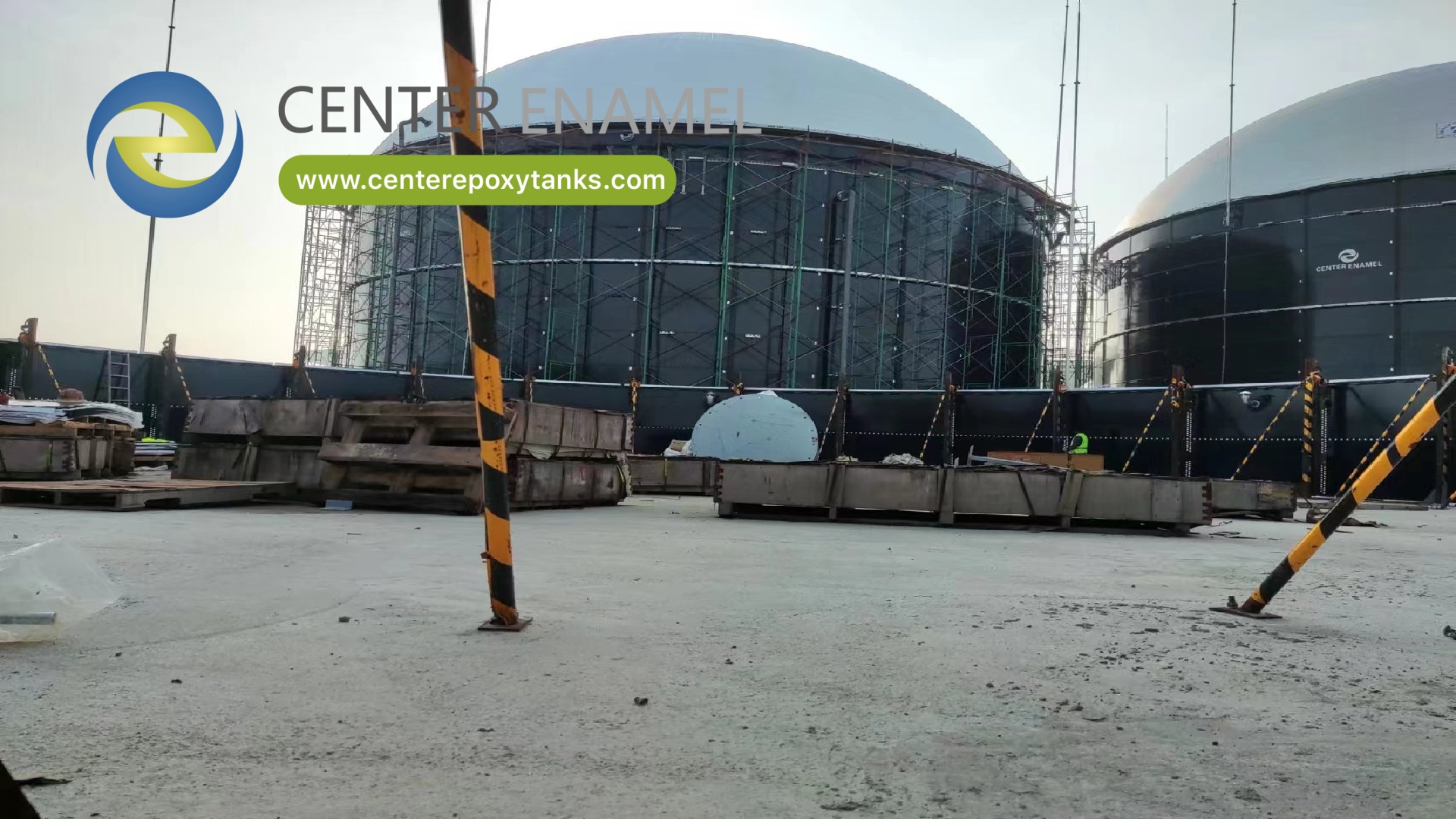
Double Membrane Biogas Balloons: A Modern Cover Solution for Anaerobic Digestion Tanks
For modern anaerobic digestion (AD) facilities, the roof is not just a lid—it is a critical pressure-regulation and storage component. Double Membrane Biogas Balloons (Gas Holders) have become the industry standard for high-efficiency biogas plants, replacing legacy concrete or fixed-steel covers. By utilizing a flexible, dual-layer pneumatic system, these covers provide a dynamic, airtight environment that manages fluctuating gas volumes while maintaining consistent delivery pressure for downstream energy equipment.
1. The Engineering Advantage: Dual-Layer Functionality
The core value of the double membrane system lies in its ability to separate the storage function from the environmental protection function.
Inner Membrane (The Storage Chamber): This membrane is in direct contact with the biogas. It is highly elastic and non-permeable, allowing it to inflate and deflate in direct response to the production and consumption of gas. This provides a "buffer" that prevents system bottlenecks during peak production or engine downtime.
Outer Membrane (The Protective Shield): Permanently inflated by an air-support blower, this layer maintains a constant shape regardless of the gas volume inside. It provides the structural rigidity needed to withstand wind loads, snow, and UV radiation, acting as a durable weather barrier that protects the inner membrane.
Pressure Regulation: The space between the inner and outer membranes is continuously monitored and adjusted by a pressure control unit. This ensures that the gas output remains at a constant, stable pressure—an essential requirement for the efficient operation of CHP (Combined Heat and Power) engines and boilers.
2. Integration with Center Enamel GFS Tanks
The synergy between Glass-Fused-to-Steel (GFS) tanks and double membrane balloons is one of the most efficient design choices for modern biogas infrastructure.
GFS tanks provide an ultra-smooth, glass-hard rim that acts as the perfect, corrosion-proof anchor for the membrane mounting profile. Unlike concrete rims, which can be porous or abrasive, the vitreous enamel surface ensures a gas-tight seal that lasts for decades, preventing fugitive methane emissions.
Feature | Double Membrane Balloon | Concrete/Steel Fixed Roof |
Storage Capacity | Variable (Flexible Volume) | Fixed |
Maintenance | Minimal (Automated) | High (Requires Painting/Coating) |
Pressure Control | Dynamic (Constant Output) | Static |
Corrosion Resistance | Excellent (Inert Materials) | Low (Needs frequent protection) |
Installation Time | Rapid (Modular) | Slow (Heavy construction) |
3. Interactive Storage Sizing Simulator
For facility engineers and project managers, sizing the gas holder correctly is the key to balancing capital expenditure with operational storage needs. Use the tool below to estimate the required volume based on your digester capacity.
4. Why Modern Facilities Choose Membrane Solutions
The shift away from rigid covers is driven by three operational imperatives:
Emission Control: Rigid roofs are prone to stress cracks and seal failures, leading to methane leaks. Membrane balloons act as a sealed, flexible system that adapts to movement, maintaining a 100% gas-tight seal.
Operational Flexibility: As the biogas market trends toward "gas-to-grid" and peaking power, the ability to store large gas volumes safely for later use (peak shaving) provides a massive financial advantage over static storage.
Low Lifecycle Cost (TCO): Because the membrane materials are inert and the system is largely automated, the long-term maintenance requirements are significantly lower than those of traditional mechanical roofs, which require painting, structural inspection, and frequent repair.
By combining the structural longevity of GFS tanks with the flexibility of double membrane balloons, operators secure a future-proof, high-yield asset capable of meeting the rigorous demands of modern sustainable energy production.


