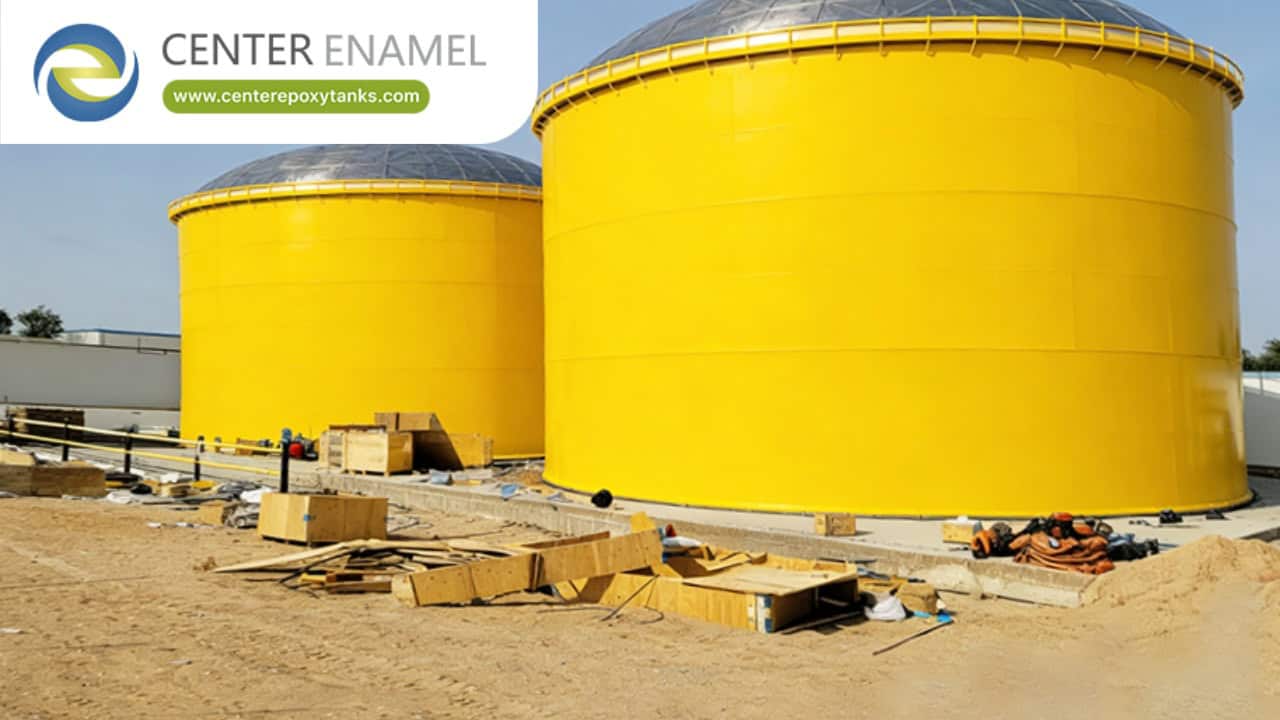
Diesel Bulk Storage Tanks: A Comprehensive Guide for Industrial Operations
A diesel bulk storage tank is a large-scale industrial vessel designed to store significant quantities of diesel fuel for commercial, industrial, or logistical operations Unlike small, portable fuel containers, bulk systems are permanent or semi-permanent infrastructure engineered to ensure operational continuity, cost-effective fuel procurement, and stringent environmental compliance
In the 2026 regulatory environment, these systems are no longer just "containers"; they are sophisticated infrastructure components that must adhere to strict safety standards, such as AQ 3063-2025, to mitigate fire hazards and prevent soil or groundwater contamination.
1. Why Businesses Invest in Bulk Diesel Storage
Bulk fuel storage provides two main strategic advantages: cost efficiency and operational security
Cost Savings: Purchasing diesel in bulk often allows businesses to secure volume pricing, significantly reducing per-unit costs compared to frequent retail refueling.
Operational Security: Having an on-site reserve ensures that critical equipment, fleet vehicles, and backup power generators remain operational during supply chain disruptions or intermittent fuel availability.
2. Key Types of Bulk Storage Solutions
Selecting the right tank depends on your site’s spatial constraints, safety requirements, and local regulations.
Aboveground Storage Tanks (ASTs)
ASTs are the most common choice for industrial and commercial sites due to their accessibility and maintenance advantages .
Accessibility: Because they are located above ground, leaks are easily visible, and maintenance is straightforward .
Compliance: Most industrial ASTs are manufactured to UL 142 or UL 2085 standards, which include mandatory fire resistance and secondary containment features .
Bunded (Double-Walled) Tanks
The "gold standard" for modern bulk storage. These feature an inner tank (primary containment) inside a sealed outer shell .
Environmental Protection: The outer shell acts as secondary containment, holding at least 110% of the inner tank's capacity .
Regulatory Alignment: Natively satisfies most Spill Prevention, Control, and Countermeasure (SPCC) regulations without requiring expensive external concrete dikes .
Underground Storage Tanks (USTs)
USTs save surface space and protect fuel from extreme temperature fluctuations, making them ideal for urban locations. However, they require complex installation, advanced continuous leak detection systems, and strict monitoring to prevent corrosion.
3. Compliance and Safety Standards (2026)
To ensure safety and meet environmental mandates, bulk storage systems must be sourced based on recognized engineering standards:
Standard | Governing Body | Focus Area |
UL 142 | Underwriters Laboratories | Standard for Steel Aboveground Tanks; ensures structural integrity . |
AQ 3063-2025 | National Safety Standards | Safety management for flammable liquid atmospheric storage tanks . |
NFPA 30 | National Fire Protection Association | Flammable and Combustible Liquids Code (fire safety, venting) . |
API 650 | American Petroleum Institute | Design and fabrication requirements for large-scale welded steel tanks. |
Frequently Asked Questions (FAQ)
Q: Why are "bunded" tanks considered safer for bulk diesel storage?
A: Bunded tanks have a built-in secondary outer wall that acts as a containment vessel. This is essential for environmental compliance because it captures potential leaks internally, removing the need for costly external concrete bunds.
Q: Is a UL 142 tank mandatory for my facility?
A: While regulations vary by region, complying with UL 142 is the industry benchmark for safety in aboveground steel tanks. It ensures the tank has passed rigorous testing for structural integrity, leakage, and fire resistance, which is often required for insurance and fire department approval .
Q: How do modern tanks prevent environmental contamination?
A: Modern bulk tanks utilize interstitial monitoring systems—sensors placed in the gap between the inner and outer walls. These provide continuous, real-time alerts if any compromise in the inner vessel's integrity is detected, allowing for immediate action before a spill occurs
Q: What is the benefit of bulk storage in the current regulatory environment?
A: Beyond cost savings, bulk storage allows for better control over fuel quality and security of supply. With new regulations like AQ 3063-2025 and emission control guidelines, modern bulk systems help companies meet sustainability and safety mandates efficiently


