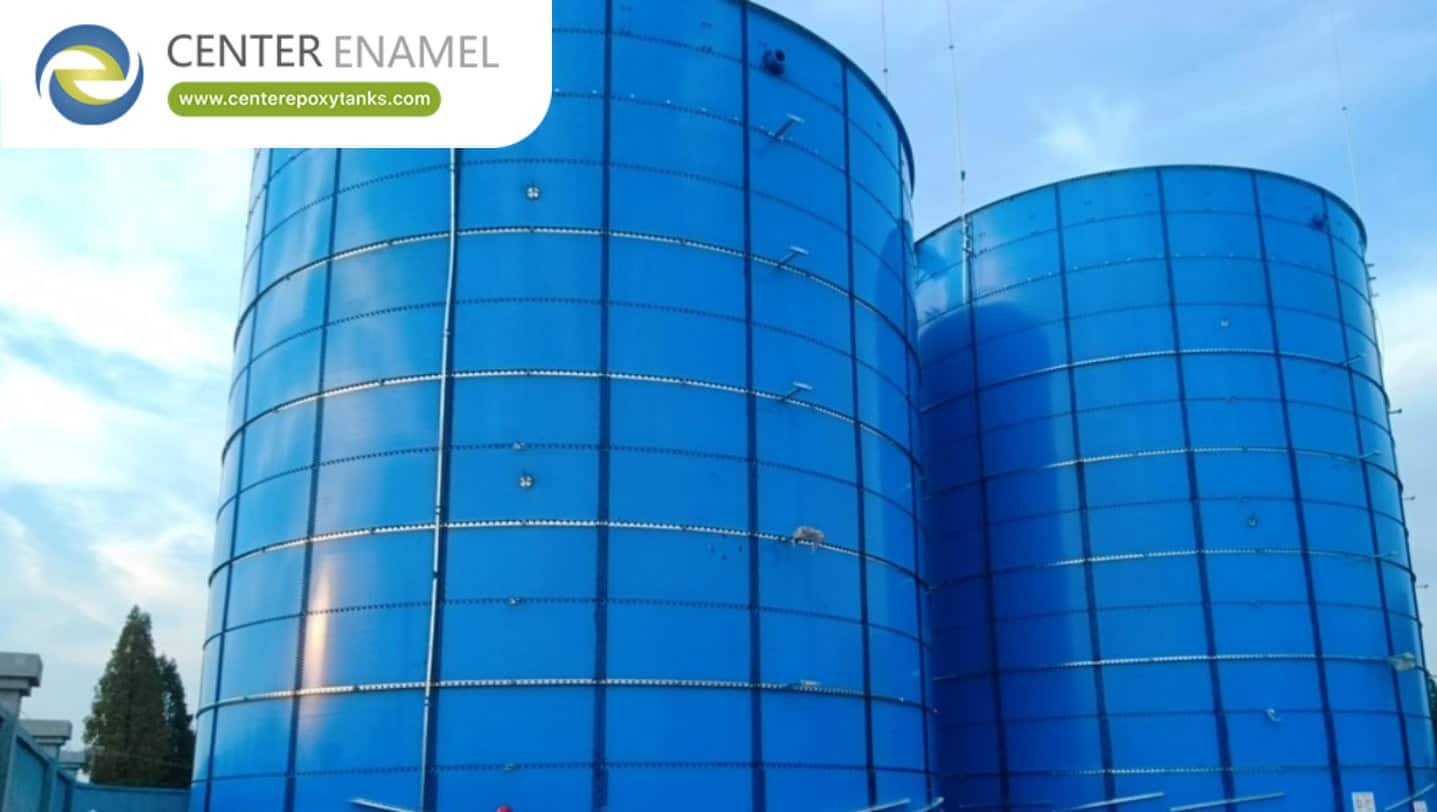
Desalinated Water Storage Tanks: Engineering, Corrosion Control & Material Selection
Storing desalinated water (permeate) presents a unique challenge in industrial infrastructure. Because the desalination process (Reverse Osmosis or Multi-Stage Flash) removes nearly all minerals, the resulting product water is "aggressive"—it lacks the buffering capacity to prevent corrosion. Storing this water in standard carbon steel or concrete tanks without specialized treatment leads to rapid metal leaching, structural degradation, and water quality failure. This article explores the engineering requirements for designing and selecting storage assets capable of handling the chemically unstable nature of desalinated permeate.
1. The Engineering Challenge: Why Desalinated Water is "Aggressive"
Standard water storage tanks are designed for water that is naturally buffered by calcium and magnesium ions. Desalinated permeate, however, has a very low Total Dissolved Solids (TDS) count and low alkalinity.
The Chemistry of Aggression
The instability of permeate water is often measured using the Langelier Saturation Index (LSI). Permeate typically exhibits a negative LSI, meaning the water is "undersaturated" with respect to calcium carbonate. It aggressively seeks to dissolve metals (iron, zinc, lead) and concrete (calcium hydroxide) to achieve chemical equilibrium.
● Leaching: Without a protective internal barrier, permeate water leaches metal ions directly from tank walls, potentially causing toxic levels of heavy metals in the final distribution water.
● Corrosion Rates: The corrosion rate of mild steel in pure, unbuffered permeate can be orders of magnitude higher than in standard municipal water.
2. Material Selection Matrix: Optimal Storage Solutions
Engineers must choose materials that are either inherently inert or protected by high-performance barriers.
Material | Suitability for Permeate | Key Considerations |
Stainless Steel (316L) | Excellent | Highly corrosion-resistant; low leaching potential; premium cost. |
Epoxy Coated Steel | High (w/ Prep) | Must use high-performance, NSF/ANSI 61 certified linings; requires strict Holiday testing. |
GRP / FRP (Composite) | Good | Chemically inert; non-corrosive; requires specialized structural design for large volumes. |
Cast-in-Place Concrete | Poor (Requires Liner) | Requires high-quality, impermeable membrane liners; concrete alone will dissolve/leach lime. |
3. Critical Design & Maintenance Standards
To ensure long-term integrity, any storage facility for desalinated water must incorporate specific engineering protocols.
Remineralization (Stabilization)
Storage should never be the first step for raw permeate. Before entering the tank, the water must undergo a stabilization process:
1. Calcite Contactors: Passing water through limestone beds to add calcium and alkalinity.
2. Chemical Dosing: Adding lime, sodium hydroxide, or soda ash to shift the LSI toward a slightly positive value (making the water "scaling" rather than "corrosive").
Internal Lining Protocols
If using factory-coated steel or concrete, the lining is the single most important failure point.
● Permeability: The coating must have a low moisture vapor transmission rate (MVTR).
● Bond Strength: High-solids, high-build epoxy or polyurethane linings should be applied over a NACE No. 2 (SSPC-SP10) near-white metal blast profile.
● Holiday Detection: Because the water is aggressive, even a microscopic pinhole will result in "tuberculation" (a pit of corrosion) that can penetrate the steel shell over time. 100% Spark Testing (Holiday Testing) is non-negotiable.
4. Operational Best Practices for Desalination Plants
● Ventilation: Desalinated water is easily contaminated by atmospheric carbon dioxide, which can further lower pH. Tank vents should be fitted with $text{CO}_2$ scrubbers or high-efficiency air filters.
● Turnover Rate: Stagnant water in a storage tank can lose its residual disinfectant. Design tank geometry to promote "plug flow" to prevent stagnant zones.
● Instrumentation: Use dedicated probes for real-time monitoring of pH, conductivity, and ORP (Oxidation-Reduction Potential) at both the tank inlet and outlet to ensure the water quality remains stable during its storage period.
5. Frequently Asked Questions (FAQ)
Q: Can we store raw permeate (before remineralization) in a steel tank?
A: It is highly discouraged. Raw permeate acts as a solvent. Even with a high-end coating, the risk of coating failure leading to catastrophic steel corrosion is significant. Remineralization should occur upstream of the storage tank.
Q: How often should we inspect the tank lining?
A: For desalinated water, visual inspections should be performed annually. If using epoxy-coated steel, a spark test may be required every 3–5 years depending on the results of routine water quality sampling for iron and manganese levels (which indicate internal corrosion).
Q: Why is stainless steel (316L) often the preferred choice?
A: While the capital cost is higher, stainless steel provides the lowest lifecycle risk. It does not require a lining that can chip, blister, or delaminate, making it the safest long-term choice for highly aggressive water types.
Selecting the correct storage infrastructure for desalinated water is a balance of initial capital expenditure and long-term risk mitigation. By prioritizing materials that are chemically inert—such as 316L stainless steel or rigorously tested NSF-61 epoxy-coated steel—and ensuring the water is stabilized through remineralization before storage, plant operators can protect their assets and ensure a safe, high-quality water supply for the distribution network.
Are you currently evaluating infrastructure requirements for a specific desalination facility, or would you like to review the seismic and wind load design calculations for large-capacity storage tanks?


