Data Center Thermal Energy Storage Tank Manufacturer Comparison: Capable vs Weak
Selecting the comparison data center thermal energy storage tank manufacturer comparison is a capability decision, not a price-line item. This article covers what to evaluate: engineering, codes, QA, and verified delivery for data-center cooling projects.
Evaluate a data center thermal energy storage tank manufacturer comparison on four axes: pressure-vessel and tank engineering (ASME Section VIII, AWWA D103, ISO 28765), certified quality (ISO 9001, NSF/ANSI 61, WRAS where relevant), proven large-shell delivery, and engineering support from specification through commissioning. A capable, documented supplier reduces commissioning risk more than a low quote.
Engineering and Codes
Confirm the shop's coding: ASME U-stamp for vessels and documented bolted-tank standards for atmospheric shells. Ask for the design basis, weld procedure qualifications, and material traceability.
A supplier that only builds atmospheric tanks cannot deliver a coded pressurized vessel, and vice versa - match the capability to your loop's pressure class.
Quality and Certification
Strong manufacturers provide calculation notes, drawings, and a test/inspection plan. Look for in-house thermal and structural engineering rather than outsourced guesswork.
QA should cover coating thickness, bolt torque, hydrotest, and liner verification, with records you can audit. ISO 9001 is the baseline; water-contact certification matters for potable loops.
Track Record and Support
Ask for comparable deliveries: large-diameter shells, coded vessels, and projects in similar climate or water chemistry. A verified record is the best predictor of your outcome.
Evaluate engineering support from specification through commissioning; a partner who disappears after shipment adds risk you did not budget for.
Manufacturer Evaluation Criteria
Axis | Capable supplier | Weak supplier |
Engineering | In-house thermal/structural design, calculation notes | Outsourced or absent |
Codes | ASME U-stamp, AWWA D103, ISO 28765 | Unverified claims |
Quality | ISO 9001, NSF/ANSI 61, WRAS, audited records | Limited documentation |
Delivery | Verified large-shell references, export QA | No comparable record |
Technical Specifications
Parameter | Specification |
Tank type | Atmospheric, stratified, or ASME-coded (duty dependent) |
Shell material | bolted glass-fused-to-steel (GFS) |
Capacity range | 20-60,000 m3 (bolted GFS, water/liquid duty) |
Stored medium | Chilled water (sensible) or phase-change medium (latent) |
Design temperature | -10 to 50 C (site / water dependent) |
Corrosion protection | Glass enamel, FBE, stainless, or galvanizing |
Insulation | Optional PU / mineral wool for chilled duty |
Codes / standards | AWWA D103, ISO 28765, EN 1090, ASME VIII |
Erection | Bolted modular panels, short site schedule |
QA | ISO 9001, NSF/ANSI 61, WRAS where applicable |
Foundation | Ring wall or slab per geotech report |
Verified Tank Engineering Reference
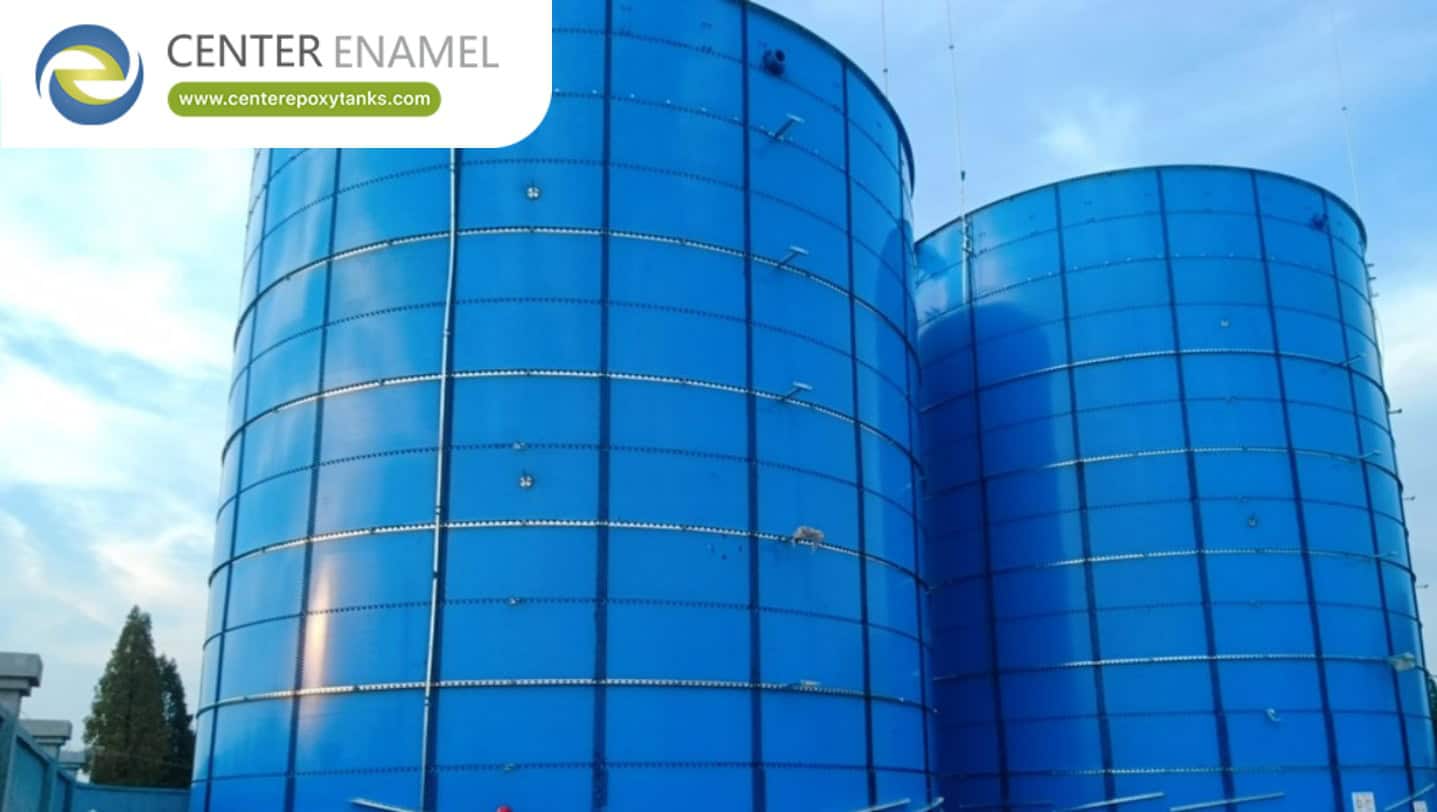
Center Enamel's verified record includes a 2022 Drinking water project in Namibia - 4 unit(s), φ41.26*8.4m (H) 4 set, 44,900 m3 total, GFS (Glass-Fused-to-Steel) bolted tank. Center Enamel has no published thermal-energy-storage or data-center TES project; this reference demonstrates the comparable large-tank manufacturing capability relevant to supplying stratified chilled-water TES vessels.
Project location | Namibia |
Application | Drinking water |
Tank type | GFS (Glass-Fused-to-Steel) bolted tank |
Scale | 4 unit(s), φ41.26*8.4m (H) 4 set |
Total volume | 44,900 m3 |
Year | 2022-09 |
Note | Cited as manufacturing-capability evidence, not a thermal-energy-storage project. |
Center Enamel Capability
Center Enamel (Shijiazhuang Zhengzhong Technology) manufactures bolted glass-fused-to-steel (GFS) tanks and ASME-coded pressure vessels for water and thermal-energy storage duty. For thermal-energy-storage (TES) service, the relevant products are large-diameter bolted GFS tanks, FBE-coated tanks, stainless steel tanks, welded shells, and ASME Section VIII vessels for pressurized or stratified chilled-water storage.
Quality is managed under ISO 9001, with bolted tanks built to AWWA D103 and ISO 28765 and available certified to NSF/ANSI 61 and WRAS where potable or indirect-potable contact applies. GFS shells are fired at 820-930 C to fuse the glass enamel, giving a durable, inert liner suited to treated chilled water; stainless and FBE options serve aggressive or high-purity loops. CE's verified delivery record - including a large Namibia installation - demonstrates the manufacturing capability behind these specifications.
Frequently Asked Questions
Q: Is ASME certification mandatory?
A: For pressurized vessels in most jurisdictions yes; confirm the U-stamp and design basis.
Q: What QA evidence should I request?
A: Calculation notes, weld procedures, coating and hydrotest records, material traceability.
Q: Why does track record matter?
A: Verified comparable deliveries predict your outcome better than a brochure claim.
Q: Should engineering be in-house?
A: Preferably - in-house thermal/structural engineering avoids outsourced guesswork.
Q: Which certs matter for water contact?
A: ISO 9001 baseline, plus NSF/ANSI 61 and WRAS where potable or indirect-potable.
Q: How do I choose the comparison data center thermal energy storage tank manufacturer comparison?
A: On coding, certified QA, verified large-shell delivery, and engineering depth - not price alone.
The comparison data center thermal energy storage tank manufacturer comparison is chosen on engineering and verified delivery, not the lowest line item. The right partner reduces commissioning risk across the data-center cooling cooling loop.
Suggested Next Step
Request our capability dossier - coding, QA scope, and verified large-shell references - to qualify us for your project.


