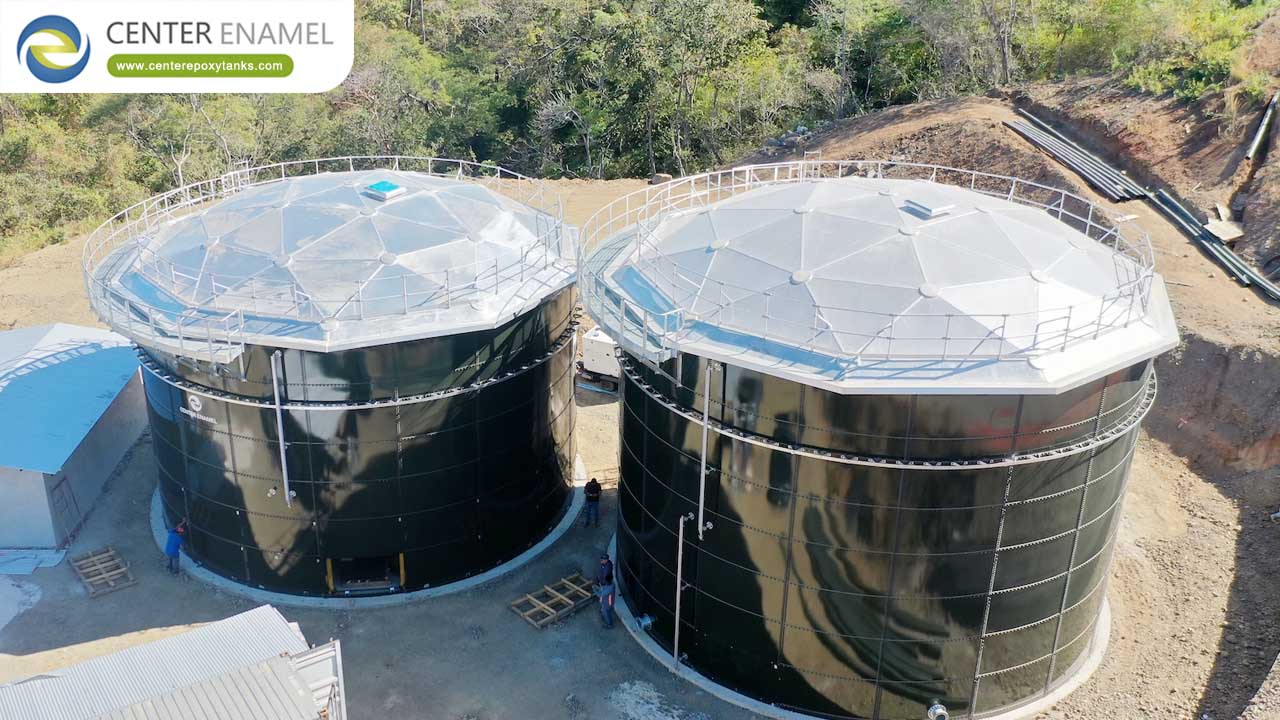
Customized Aluminum Geodesic Dome Roof Solutions: Engineered for Longevity
In the industrial and municipal storage sector, the roof is the most vulnerable point of any tank. Exposure to harsh environmental elements, chemical vapors, and heavy loads can accelerate degradation in traditional steel or concrete roofing systems.
Customized Aluminum Geodesic Dome Roofs (AGDRs) have emerged as the gold standard for long-term asset protection. By leveraging the geometric strength of the geodesic design combined with the inherent properties of aerospace-grade aluminum, these roof systems offer a maintenance-free, lightweight, and high-performance solution for a wide range of storage applications.
The Geodesic Advantage: Structural Engineering Explained
The structural integrity of an aluminum geodesic dome is derived from its geometry, not its mass. By organizing lightweight aluminum struts and panels into a series of interconnected triangles, the system achieves maximum structural rigidity with minimum mass.
Why Choose Aluminum Over Traditional Materials?
Feature | Aluminum Geodesic Dome | Carbon Steel Cone Roof | Concrete Roof |
Corrosion Resistance | Excellent (Natural Oxide Layer) | Low (Requires Painting) | Low (Rebar Corrosion) |
Structural Design | Clear-Span (No Columns) | Column-Supported | Column-Supported |
Weight | Ultra-Lightweight | Heavy | Very Heavy |
Maintenance | Virtually Zero | High (Periodic Coating) | Moderate |
Installation | Fast (Modular Bolted) | Slow (Field-Welded) | Very Slow |
Key Benefits of Customized Dome Solutions
1. Total Column-Free Flexibility
Unlike traditional steel roofs that require internal rafters or support columns, geodesic domes are self-supporting. This clear-span design eliminates internal obstructions, which is critical for:
Top-Entering Mixers: Allowing unhindered operation of mixing equipment.
Floating Roofs: Enabling an Internal Floating Roof (IFR) to travel vertically without sealing obstructions.
Cleaning/Maintenance: Providing unobstructed access for internal tank inspections.
2. Immunity to Atmospheric & Chemical Corrosion
Aluminum naturally forms a microscopic, self-healing oxide layer upon exposure to oxygen, rendering it immune to atmospheric corrosion. In wastewater and chemical storage, where the tank headspace is often filled with corrosive gases like hydrogen sulfide ($H_2S$), aluminum domes remain unaffected. This prevents structural degradation and eliminates the risk of rust falling into and contaminating the stored liquid.
3. Rapid, Safer Retrofitting
Because these domes are constructed using modular, bolted connections, they can be pre-assembled on the ground adjacent to the tank and lifted into place. For facilities looking to replace a collapsed or corroded steel roof, this modularity allows for retrofitting with minimal operational downtime and zero "hot work" (welding) hazards.
4. Thermal Efficiency
The spherical geometry and high solar reflectivity of aluminum domes reduce solar heat gain within the tank. This is essential for:
Frequently Asked Questions (FAQ)
Q: Can aluminum geodesic domes be retrofitted to existing steel tanks?
A: Yes. Because they are lightweight and clear-span, they can replace aging steel cone roofs without requiring major modifications to the existing tank shell or foundation.
Q: How do these roofs handle heavy snow and high wind loads?
A: The geodesic triangulated design is engineered to distribute loads across the entire structure. They are built in strict accordance with international standards like API 650 Appendix G and AWWA D108, ensuring they meet specific local wind and snow requirements.
Q: Does aluminum react with stored chemicals?
A: Aluminum is non-reactive with most petroleum vapors and water-based effluents. In specific high-acidity environments, specialized coatings or anodizing can be applied to further enhance chemical inertness.
Q: How is the dome ventilated?
A: The dome includes specialized, integrated vents located at the apex and eaves. These are engineered to provide maximum airflow for vapor management while preventing the ingress of rain and debris.
Q: What is the expected service life of an aluminum dome?
A: When properly designed and installed, an aluminum geodesic dome can easily exceed a service life of 30 to 40 years with virtually zero maintenance, as it requires no painting or protective coating.
Are you currently managing a storage infrastructure project or looking to upgrade an aging roof system? [Contact our engineering team] today for a technical proposal, load analysis, or custom design consultation tailored to your specific tank requirements.
Expert Follow-Up Question: To provide the most accurate technical guidance for your project, are you currently planning a new tank construction project, or are you looking to retrofit an existing tank that is suffering from corrosion or structural concerns?


