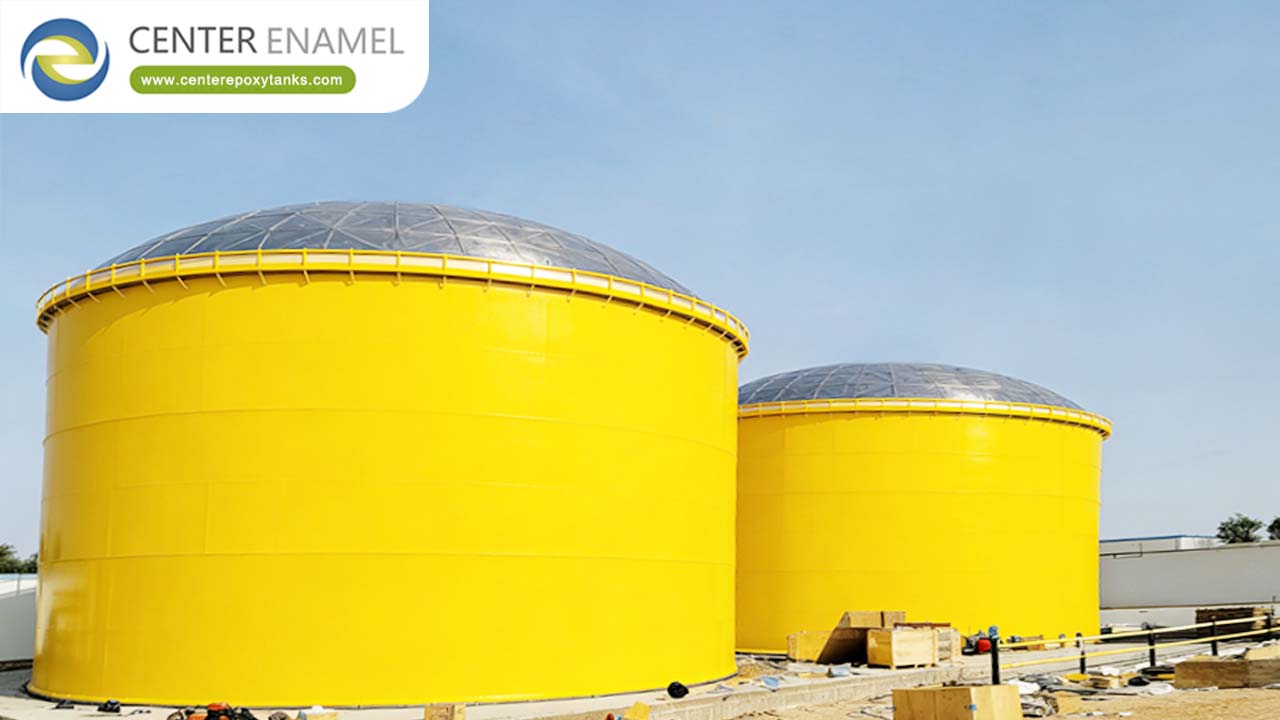
Crude Oil Tank Dome Roofs: Geodesic vs Fixed Cone
An aluminum geodesic dome roof is a self-supporting, clear-span structure that bolts onto the top of an oil storage tank, sealing the vapor space without internal columns. For crude oil tank dome roofs it pairs corrosion-resistant aluminum with a weather-tight envelope.
What Is Crude Oil Tank Dome Roofs?
A geodesic dome roof is a faceted, triangular-frame aluminum shell that spans the tank opening using geometry rather than internal supports. Mounted on a curb angle at the shell top, it carries snow, wind, and equipment loads while leaving the full tank diameter clear beneath.
How Does It Work?
Triangular panels transfer loads along short, efficient paths to the perimeter ring, so no internal column is needed. Aluminum's self-oxidizing layer resists corrosion without painting, and the dome can be detailed with vents, walkways, nozzles, and access hatches. Over an IFR it forms a fully closed, low-emission system.
Key Types, Components, and Features
· Aluminum geodesic dome:lightweight, clear-span, low maintenance; the default for retrofits.
· Steel fixed cone roof:traditional, heavier, needs internal column or larger shell for big spans.
· Dome over IFR:closed vapor space plus floating deck for gasoline-class service.
· Curb-angle mounted:bolted to the existing shell top for fast retrofit.
Applications
· Crude and fuel-oil tanks needing a sealed top
· Tanks in coastal, snow, or seismic zones
· Retrofit of aging fixed-cone roofs
· Small hydraulic or process oil tanks wanting clear span
Technical Considerations
· Standards:API 650 for the host tank; dome design to recognized structural codes and local snow/wind/seismic loads.
· Materials:marine-grade aluminum; wetted parts selected for the stored product.
· Loads:snow, wind uplift, equipment, and live maintenance loads set the panel geometry.
· Interfaces:vents, nozzles, and access must be coordinated with the dome supplier.
· Coating:aluminum is typically left natural; touch-up paint is minimal.
Key Engineering Parameters
Design Parameter | Typical Value / Range | Why It Matters |
Span | Clear-span, no columns | Full-diameter access |
Material | Marine-grade aluminum | Corrosion resistance, no repaint |
Snow load | Site-specific | Sets panel geometry |
Wind uplift | Site-specific | Sets perimeter ring |
Design standard | API 650 host + structural code | Code compliance |
Vapor seal | Excellent with IFR | Emission control |
Retrofit | Curb-angle mounted | Fast install on existing shell |
Weight | Light vs steel cone | Eases retrofit |
Service | Crude, fuel, process oil | Matches duty |
Project Case Study
The following verified installation demonstrates the containment engineering discipline behind crude oil tank dome roofs. (Application shown is the tank's actual delivered service; the same bolted, coated, or stainless engineering underlies oil-storage designs discussed here.)
Project Information | Details |
Location | India |
Year | 2024 |
Industry / Application | Fire-protection water for an industrial facility |
Product / Tank type | GFS bolted |
Configuration | 3 tanks, φ 19.86 × 13.2 m |
Capacity | 12,261 m³ |
Standards | AWWA D103-09 / ISO 28765 |
Status | Completed |
This reference is cited for its documented liquid-containment and corrosion-control engineering; it is not represented as an oil tank where it was a water or wastewater installation.
Advantages and Limitations
Advantages
· Clear span: no internal columns to obstruct mixers, heaters, or cleaning
· Corrosion-resistant aluminum cuts repainting of the roof
· Seals the vapor space, supporting emission goals
· Light weight eases retrofit on existing shells
Limitations
· Higher upfront cost than a basic steel cone
· Large diameters need careful load engineering
· Aluminum choices must respect product compatibility
Comparison
Feature | Aluminum Geodesic Dome | Steel Fixed Cone | Open Top + IFR |
Internal columns | None | Often required | None |
Corrosion upkeep | Minimal | Repaint cycle | Minimal (IFR only) |
Vapor seal | Excellent | Good (with seals) | Good (IFR) |
Retrofit ease | High | Medium | Medium |
Cost | Medium-High | Low-Medium | Medium |
How to Select the Right Solution
· Confirm snow/wind/seismic loads for the site
· Decide dome-only vs dome-over-IFR by vapor pressure
· Coordinate all nozzles and vents before fabrication
· Verify aluminum grade against the product
· Check warranty scope on structure and finish
crude oil tank dome roofs benefit from a clear-span, low-maintenance seal. Where vapor pressure allows, pairing the dome with an internal floating roof gives the tightest envelope.
Frequently Asked Questions (FAQ)
What is an aluminum geodesic dome roof?
It is a self-supporting, triangular-frame aluminum shell that spans the tank top without internal columns, sealing the vapor space and resisting snow, wind, and corrosion.
Why choose a dome over a steel fixed cone roof?
A dome gives clear span (no internal columns), needs little repainting, and seals the vapor space well, at a higher upfront cost than a basic cone.
Can a dome be added to an existing tank?
Yes. Domes are typically bolted to a curb angle on the existing shell top, making them a common retrofit for aging fixed-cone roofs.
What loads must a dome handle?
Snow, wind uplift, equipment loads, and live maintenance loads set the panel geometry and the perimeter ring design.
Does aluminum suit the stored product?
Marine-grade aluminum is corrosion resistant, but wetted parts and any product contact must be confirmed compatible before specification.
Is a dome used with a floating roof?
Yes. Pairing a dome with an internal floating roof gives a fully closed, low-emission system for volatile service.
For crude oil tank dome roofs, share your product, capacity, vapor pressure, corrosivity, and site loads with an engineering team to receive a specification and quotation aligned to API 650, EN 14015, ISO 28765, or AWWA D103-09.


