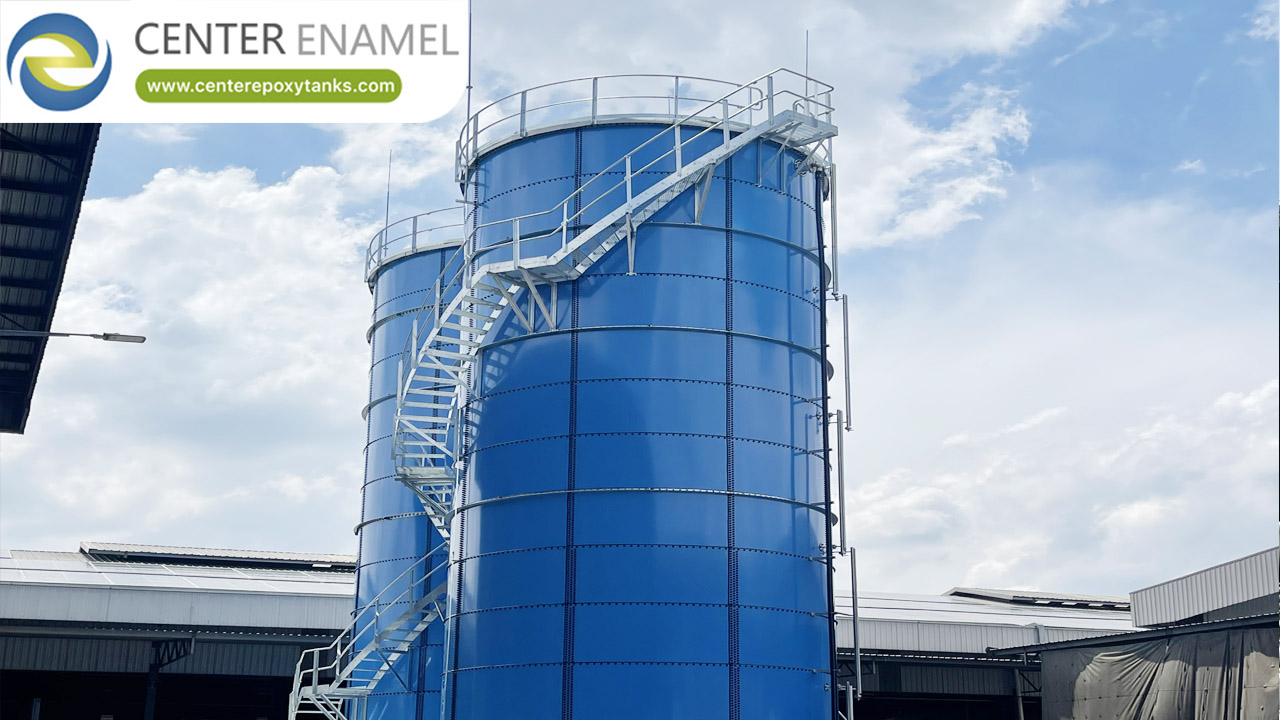
Corrosion Protected Oil Storage Tanks
A corrosion protected oil storage tank is a field- or shop-welded vessel built for oil service, where joint integrity and coating decide both life and leak risk.
This article explains welded versus bolted construction, the weld and coating controls that matter for corrosion protected, and how to specify for a long, low-maintenance life.
Main Topic / Definition
Welded steel tanks are built from rolled plates joined by welds to API 650 (or AWWA for water), with no through-shell bolt penetrations, giving a continuous, leak-tight shell.
Welded vs bolted
· Welded: best for large volumes and where bolted seams are undesirable.
· Bolted (GFS or coated): faster erect, factory coating control, but with through-bolt seams.
Key Characteristics / Components / Types
What makes it durable
· Plate and weld procedure: qualified WPS/PQR and radiography or UT on critical seams.
· Coating system: external and internal linings matched to product and corrosion class.
· Bottom: the wear item - design for inspection and eventual replacement.
Applications / Use Cases
Corrosion protected welded tanks serve refineries, terminals, power and food plants, and remote sites where a sealed shell is required.
· Oil duty drives the coating and heating spec.
· Long-life projects favor thicker shells and better linings over cheap first cost.
Technical Considerations
For corrosion protected, the decisive controls are weld quality, cathodic protection where grounded, and a coating specified to the product chemistry.
· Leak prevention: double bottoms or secondary containment for regulated products.
· Erection: field welding needs weather control and NDE per the standard.
Advantages and Limitations
· Advantages: continuous shell, large capacity, long service life with maintenance.
· Limitations: slower erect than bolted; weld quality depends on the crew.
Comparison / Selection Guide
Option | Erection | Seam type | Best when |
Welded steel | Slower | Continuous weld | Large volume, no bolt seams wanted |
Bolted GFS | Faster | Bolted + sealant | Factory coating, faster schedule |
Bolted carbon steel | Faster | Bolted + sealant | General bulk, field-coated |
Best Practices / How to Choose
· Set weld procedure and NDE level before bid, not after.
· Match internal lining to product, not a generic epoxy.
· Plan bottom inspection and cathodic protection from the start.
A corrosion protected oil storage tank earns its life from weld and coating discipline. Specify the joint and lining to the product, and the tank will outlast cheaper alternatives.
Frequently Asked Questions (FAQ)
What is a corrosion protected oil storage tank and when is it used?
A corrosion protected oil storage tank is a containment or cover solution for oil service, used where standard bulk tanks need material, roof, or coating specification to perform safely and meet code. Selection starts from the product and duty, not a default form.
Welded or bolted - which is better for oil?
Welded gives a continuous shell and the largest volumes; bolted (including GFS) erects faster with factory coating control. Choose by schedule, volume, and whether bolted seams are acceptable for the duty.
What standards apply to corrosion protected oil storage tank?
API 650 governs welded atmospheric tanks; AWWA D103-09 covers bolted factory-coated steel. Venting (API 2000), fire (NFPA 30), and containment (SPCC where applicable) are companions, not options.
How long does a corrosion protected oil storage tank last?
Service life follows material and maintenance: welded carbon steel with a good coating and bottom program runs decades; stainless and GFS extend life further. Inspection and lining care decide the outcome.
What are the most common failures to avoid with corrosion protected oil storage tank?
The usual problems are wrong coating for the product, ignored rim seals on floating roofs, under-specified venting, and no bottom-inspection plan. Address these at specification, not after commissioning.


