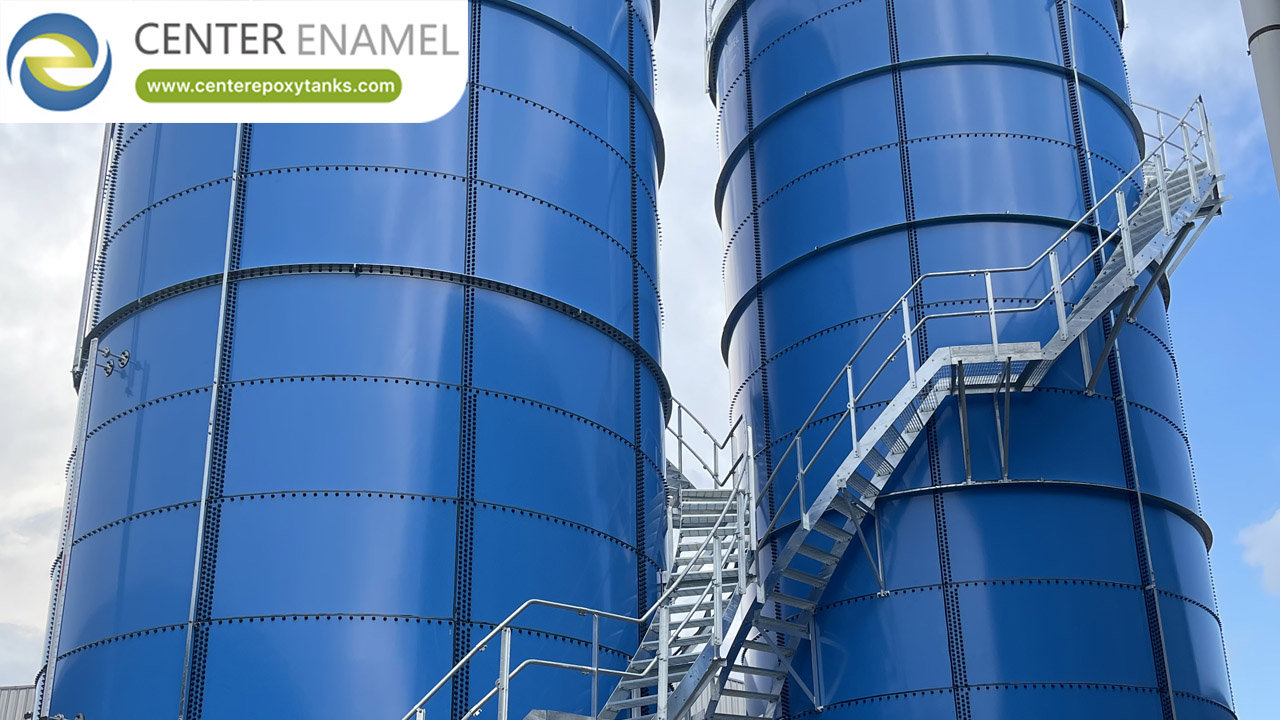
Concrete Vs Steel Silo Selection Framework
A Steel vs concrete for Generic bulk must be specified by duty, not by catalogue: match the material and barrier to the stored medium, confirm the applicable standard, and verify performance with real project evidence.
What Is A Steel vs concrete
A Steel vs concrete stores and discharges bulk solid under controlled conditions. The decisive handling factors are abrasion (-), moisture (-), caking (-) and explosion risk (-).
Specifying by catalogue misses this reality; the lining, flow design and safety systems must answer the material's behaviour, not generic 'durability' claims.
For None in Generic bulk, the consequence of wrong specification is direct: None caking or None explosion risk means the silo is either unusable or unsafe, so the material data sheet — not a catalogue — drives the design.
Why Generic bulk Demands A Purpose-Built Tank
In Generic bulk, the stored material is rarely a free-flowing solid: moisture causes set or caking, fines create explosion risk, and abrasion wears the wall. A purpose-built Steel vs concrete controls these with the right lining, aeration and flow design.
A frequent mistake in Generic bulk is under-specifying for None: the silo looks adequate but the lining or flow design cannot handle None abrasion or None caking, leading to unplanned downtime.
Technical Specifications
Parameter | Center Enamel Steel vs concrete | Typical alternative | Why it matters |
Material / coating | Specified to powder duty | Generic painted | Abrasion, moisture, caking control |
Capacity range | Hundreds to tens of thousands m3 | Pour-limited | Site throughput |
Joint | Bolted, sealed panels | Welded on site | Build speed and relocation |
Flow | Mass or funnel per Jenike | Assumed | No bridging / rat-holing |
Certification | ISO 9001 / EN 1090 / ATEX-ready | Partial | Code and safety acceptance |
The table contrasts the specified Center Enamel configuration with a typical alternative so the gap — in barrier life, speed and certification — is explicit rather than assumed.
Steel vs concrete Vs Alternatives
Criterion | Center Enamel Steel vs concrete | Welded steel | Concrete |
Capital cost | Mid, modular | High | High |
Build speed | Fast, bolted | Slow, welded | Slow, cast |
Airtightness | Sealed panels | Weld quality dependent | Good if cured |
Relocation | Relocatable | No | No |
Best fit | Phased bulk handling | Very large | Permanent |
Selection And Sizing Framework
Define the material's flow function and properties (abrasion, moisture, caking, explosion), size by throughput and live/hopper volume, choose lining by duty, and confirm EN 1090 / Eurocode / ATEX compliance.
Document the duty, the chosen standard and the supplier's certificate set before issuing the specification; this prevents the most common failure — a tank that meets price but not the authority.
Application Engineering
With no single project case published for Generic bulk in the library, the engineering here rests on documented Steel vs concrete technology and certifications (NSF61 / WRAS / ISO 28765 / EN 1090 / AWWA D103).
Specify by duty — lining per medium, flow per Jenike for solids or volume per standard for water — and verify the supplier's QA and certificate set rather than relying on a generic brochure.
Installation And Maintenance
A bolted silo is erected on a foundation with roof, cones and ancillaries; commission aeration, level and — where needed — explosion-protection systems.
Inspect linings and flow aids on a planned schedule; for combustible powders, keep the venting and grounding verification current with ATEX / NFPA 68.
Standards And Certifications
Relevant references: EN 1090, Eurocode, ISO 28765, ATEX / NFPA 68. Center Enamel products are built to ISO 9001, NSF/ANSI 61, WRAS, FM-ready, CE (EN 1090) and ISO 28765 where applicable, with certificates available on request.
Confirm the specific standard and certificate scope for your project before specification, because acceptance depends on the authority and insurer, not the supplier's marketing.
Engineering Considerations
For Generic bulk, engineering starts from the material's flow function: every bulk solid has its own angle of repose, cohesion and explosion profile, so the hopper angle, outlet and lining are set by Jenike testing, not by a standard cone.
In service, the stored material also demands the right monitoring scope and, where combustible, ATEX / NFPA 68 venting and grounding; skipping these converts a storage asset into a safety liability.
Common Specification Pitfalls
· Assuming a standard cone handles every bulk solid — without the right hopper angle and outlet, bridging and rat-holing begin on day one.
· Specifying a generic painted silo for an abrasive or cohesive material — the wall wears and the lining fails early.
· Overlooking explosion risk for combustible powders — they need ATEX / NFPA 68 venting and grounding, not just a bin.
· Skipping the monitoring and foundation scope — spoilage, set or structural settlement goes undetected.
Specification Checklist
· Define the material's flow function, abrasion, moisture, caking and explosion risk before sizing.
· Choose the lining and flow design (hopper angle, aeration, live bottom) to the material, not a catalogue.
· Confirm EN 1090 / Eurocode structural design and, for combustible powders, the ATEX / NFPA 68 scope.
· Specify the foundation, level system and (where needed) explosion-protection and dust-collection interfaces.
· Verify the supplier's QA, coating certificates and references for the same material duty.
Frequently Asked Questions
How do I stop bridging and ratholing?
Design the hopper angle and outlet to the material's angle of repose and flow function (Jenike), and add aeration where the powder is cohesive.
What about explosion risk in a silo?
Combustible-powder silos need dust-explosion controls (venting, grounding, inerting) per ATEX / NFPA 68; confirm the scope for the material.
Coated, galvanized or stainless for this silo?
Match the lining to abrasiveness and moisture: enamel or FBE for corrosive or cohesive powders, stainless for hygiene-critical food or pharma duty.
How do I size a bulk silo?
Size from throughput, live/hopper volume and the material's flow function; add live-bottom or reclaim as needed for cohesive solids.
What foundation does a silo need?
A ring or full slab sized to the filled load and local soil; bolted panels sit on a prepared ring beam with anchored base.
How is a silo cleaned safely?
Use methods matched to the material and lining — contained vacuum for powders, CIP for food or pharma — with lockout and dust control.
What is the difference between live storage and total storage?
Live storage discharges by gravity from the hopper; total includes dead storage needing reclamation. Size the live volume to your actual draw, not just the shell capacity.
How long can material safely remain in a silo?
Limit dwell to avoid set, spoilage or spontaneous heating; keep within the safe hold set by moisture, temperature monitoring and the material's behaviour.
What information should I send a silo supplier for a quote?
Send the material data sheet, throughput, storage period, site conditions and any ATEX / NFPA 68 scope; this lets the supplier size flow, lining and structure instead of quoting a catalogue bin.
How do I choose between bolted and welded for my site?
Bolted suits fast, relocatable, mid-to-large capacity with a factory finish; welded suits very large or site-specific single units. Decide by schedule, capacity and relocation need.
For Generic bulk, specify the Steel vs concrete by duty, standard and supplier track record rather than price alone. Center Enamel provides documented, certified steel vs concrete systems and project references on request.
CTA: Request a technical specification or project reference for your Generic bulk from Center Enamel.
About Company
Shijiazhuang Zhengzhong Technology Co., Ltd (Center Enamel) has engineered bolted storage tanks and silos since 2008 and is the first Chinese manufacturer of Glass-Fused-to-Steel tanks, holding nearly 200 enameling patents and shipments to more than 100 countries.
For Generic bulk, Center Enamel supplies Steel vs concrete and related containment engineered to ISO 9001, NSF/ANSI 61, WRAS, FM-ready, CE (EN 1090) and ISO 28765, with in-house panel production, enameling control and global installation support.
For bulk solids, Center Enamel's bolted silos and GFS storage cover grain, cement, mineral, biomass and industrial powders with flow, aeration and explosion-protection design.


