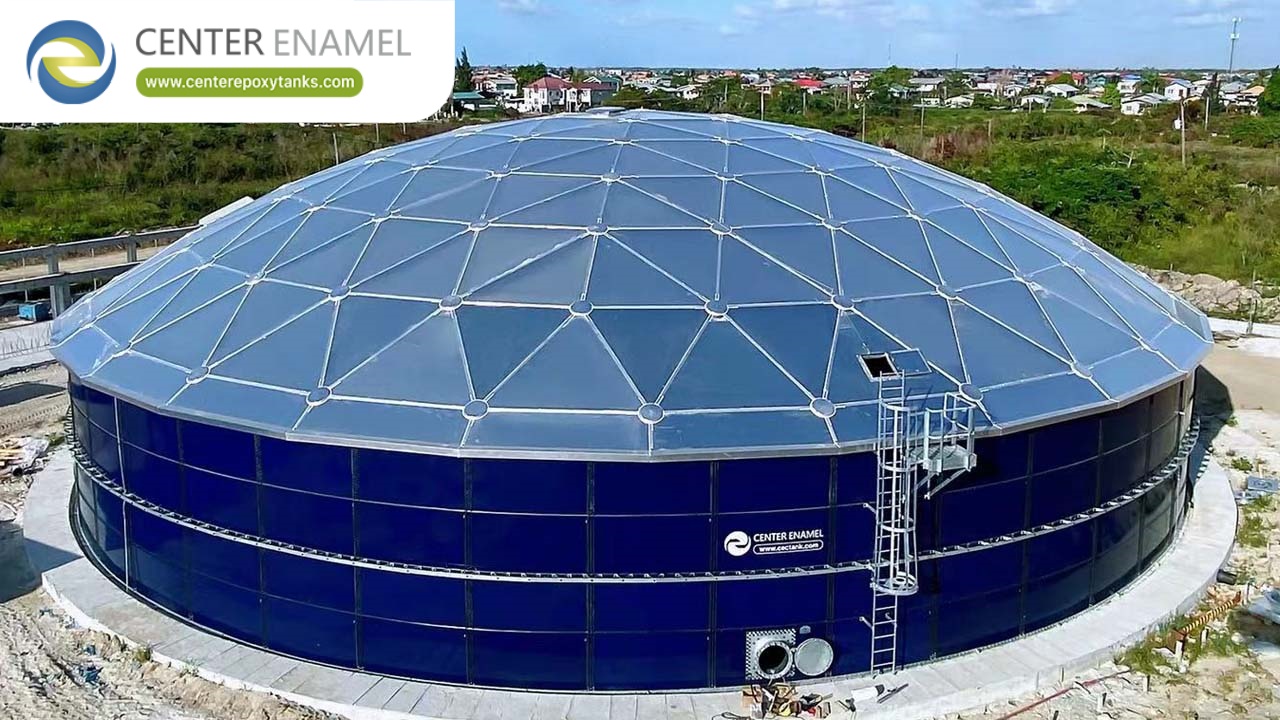
What Are the Key Factors for Evaluating Aluminum Dome Roof Manufacturers?
In modern municipal water storage, wastewater treatment, bulk dry material handling, and petroleum refining, aluminum geodesic dome roofs (AGDR) have become the definitive industry standard for covering aboveground storage tanks. Offering an unmatched combination of natural corrosion immunity, ultra-lightweight structural loading, and a completely clear-span, column-free footprint, aluminum domes safeguard valuable assets while minimizing lifetime maintenance expenses.
However, manufacturing precision-engineered space-frame structures that can span diameters exceeding 100 meters requires advanced metallurgy, sophisticated computer-aided design, and stringent quality control. When procuring tank covers for high-stakes industrial or municipal projects, selecting the right manufacturing partner is paramount. Below are the key factors for evaluating aluminum dome roof manufacturers.
1. Compliance with International Design and Engineering Codes
A top-tier aluminum dome manufacturer must demonstrate unwavering compliance with recognized international structural and industrial codes. Because these roofs are subjected to complex environmental loads, their engineering calculations must be fully certified by professional structural engineers. Key standards include:
API 650 Appendix G: Governs the design of aluminum geodesic dome roofs specifically for welded oil and liquid storage tanks.
AWWA D108: Establishes the structural design standard for aluminum geodesic covers used in water and wastewater applications.
BS EN 1999 (Eurocode 9): Regulates the design of aluminum structures for European and international markets.
ASCE 7 / ASCE 37: Dictates minimum design loads for wind, snow, and seismic activity.
2. Material Quality and Alloy Traceability
The long-term durability of an aluminum dome depends directly on the metallurgical grade of the structural components and closure panels. Evaluators must verify that manufacturers utilize certified, high-performance alloys:
Structural Struts and Tension Rings: Typically fabricated from Aluminum Alloy 6061-T6, providing an exceptional strength-to-weight ratio and superior structural rigidity.
Triangular Closure Panels: Generally constructed from corrosion-resistant Aluminum Alloy 3003-H16 or 5086 series sheets, ensuring complete immunity to atmospheric oxidation, ultraviolet (UV) radiation, and aggressive headspace gases like hydrogen sulfide ($H_2S$).
Hardware and Fasteners: Restricted strictly to Type 316 Stainless Steel to prevent galvanic corrosion at connection nodes.
3. Advanced Sealing and Weatherproofing Technology
Water ingress and chemical vapor leakage are major failure points for poorly engineered covers. When assessing a manufacturer, review their batten bar and node sealing systems:
Gasket Integrity: Look for high-grade EPDM or neoprene weather-sealing gaskets designed to accommodate continuous thermal expansion and contraction without cracking.
Silicone-Free Designs: Premium manufacturers utilize mechanical batten-clamping and interlocking node profiles that eliminate reliance on external silicone sealants, which degrade over time under intense UV exposure.
4. Finite Element Analysis (FEA) and Custom Load Modeling
Environmental conditions vary drastically by geographic region. A reputable manufacturer must employ advanced Finite Element Analysis (FEA) software to model localized stress distributions under extreme loading scenarios, including:
Unbalanced snow loads and drifting snow accumulation.
Hurricane-force wind velocities and suction pressures.
Seismic ground acceleration and structural shear displacement.
5. Factory Automation and Prefabrication Precision
The structural integrity of a geodesic space frame relies heavily on the dimensional accuracy of its extruded struts and node gussets. Manufacturers utilizing advanced CNC (Computer Numerical Control) cutting, automated punching, and prefabrication lines ensure that every component fits together seamlessly on-site, significantly reducing field installation errors and construction schedules.
6. Proven Global Track Record and Reference Projects
Evaluate the manufacturer’s historical portfolio across diverse industries. A dependable supplier should possess a verified track record of successful installations in municipal water reservoirs, wastewater clarifiers, dry bulk silos, and petroleum tank farms across multiple continents, backed by verifiable client testimonials and long-term performance records.
Technical Evaluation Matrix: Aluminum Dome Manufacturer Tiers
Evaluation Parameter | Tier-1 Certified Manufacturers (e.g., Center Enamel) | Standard Regional Fabricators | Uncertified Low-Cost Suppliers |
Material Traceability | 100% certified mill test reports for 6061-T6 and 3003/5086 alloys | Generally compliant, but occasional alloy substitution | Unverified scrap aluminum blends with inconsistent tempers |
Design Code Compliance | Strict adherence to API 650 App. G, AWWA D108, and Eurocode 9 | Complies with basic local codes only | Minimal engineering calculations; prone to structural failure |
Sealing & Weatherproofing | Advanced mechanical batten systems with zero external silicone dependency | Standard rubber gaskets with partial sealant application | High reliance on exterior silicone caulking that degrades quickly |
Engineering Support | Full-scale FEA modeling, stamped calculations, and custom integration | Standard catalog sizing with limited customization | Off-the-shelf templates with no seismic or wind load adjustments |
Frequently Asked Questions (FAQ)
Q: Why are aluminum geodesic domes preferred over traditional steel cone roofs?
A: Aluminum geodesic domes are entirely self-supporting and clear-span, eliminating internal columns that interfere with tank equipment. Furthermore, aluminum forms a natural, self-healing oxide layer that provides complete immunity to rust and chemical corrosion, reducing lifecycle maintenance to virtually zero.
Q: How do aluminum dome manufacturers account for thermal expansion?
A: Because aluminum has a higher coefficient of thermal expansion than carbon steel tanks, premier manufacturers design domes with specialized sliding or pivoting shoe support brackets along the perimeter tension ring to absorb temperature fluctuations without stressing the tank wall.
Q: What certifications should I look for when auditing an aluminum dome roof manufacturer?
A: Key credentials include ISO 9001 quality management certification, ISO 3834 welding quality standards (if applicable), and structural calculation packages stamped by certified professional engineers confirming compliance with API 650 Appendix G and AWWA D108 standards.
Q: Can an aluminum dome roof be retrofitted onto an existing concrete or steel tank?
A: Yes. Because aluminum domes are lightweight and modularly constructed using bolted connections, they can be easily assembled on the ground and lifted onto existing tanks or built incrementally using temporary staging, minimizing operational downtime.


