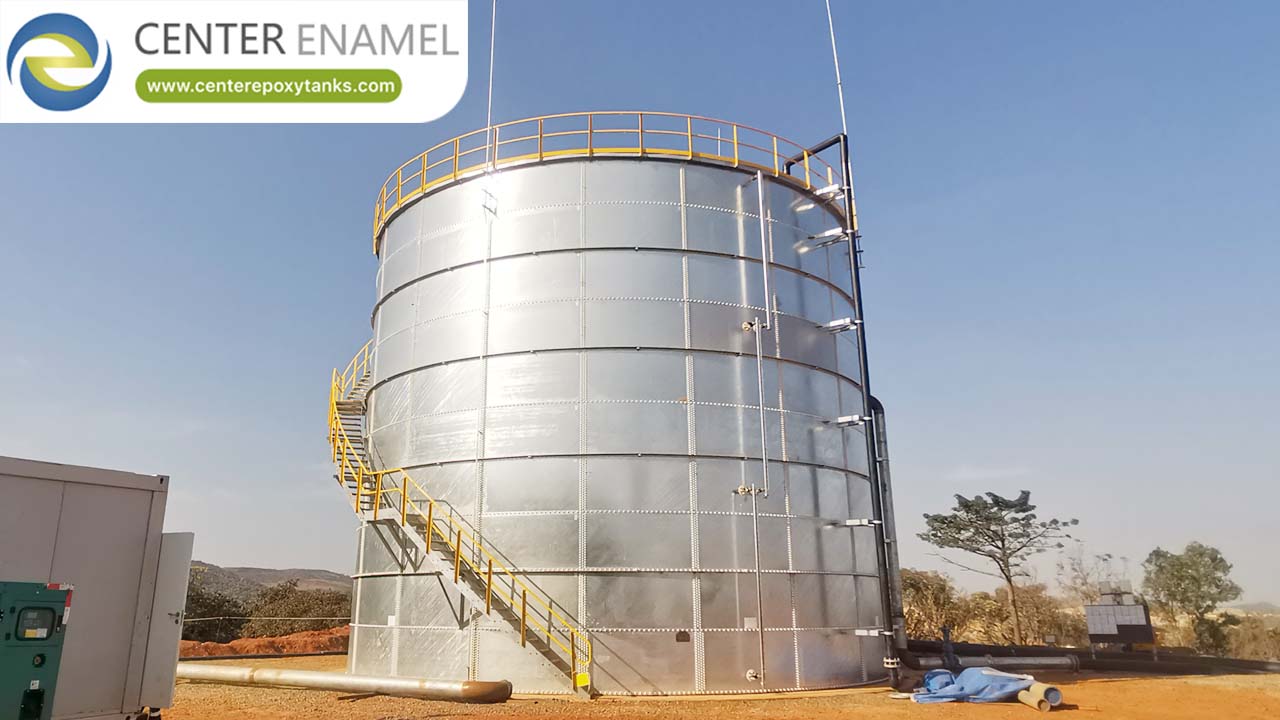
Choosing a Storage Solution: An In-Depth Analysis of Galvanized vs. Stainless Steel Tanks
When industrial facilities, municipal water authorities, and agricultural enterprises evaluate liquid containment infrastructure, selecting the correct material is vital to long-term operational success. While both metal options offer superior structural strength compared to plastics or concrete, their internal metallurgy and corrosion defense mechanisms differ fundamentally.
Choosing between galvanized vs. stainless steel tanks requires a detailed technical evaluation of chemical compatibility, environmental exposure, capital expenditure (CapEx), and total cost of ownership (TCO) over a multi-decade operational horizon.
Material Fundamentals and Corrosion Protection Mechanisms
To understand how these tanks perform under stress, one must examine their foundational metallurgy:
Galvanized Steel Tanks: Galvanized storage solutions begin as high-strength carbon steel treated with a protective layer of zinc, typically through a hot-dip galvanizing process. The zinc layer safeguards the underlying steel in two distinct ways: first, by acting as an impenetrable physical barrier against moisture; second, by providing sacrificial protection (preferential corrosion where zinc corrodes instead of the base iron). However, this zinc shield is finite and gradually depletes over years of environmental exposure.
Stainless Steel Tanks: Stainless steel achieves corrosion resistance through its intrinsic alloy composition rather than a surface coating. Containing a minimum threshold of chromium, stainless steel reacts with ambient oxygen to form a thin, microscopic, self-healing passive chromium oxide film. If the surface is scratched or abraded, this layer continuously reforms, providing permanent resistance that does not wear away over time.
Engineering Decision Framework: Key Evaluation Metrics
When designing liquid containment systems, engineers must weigh three critical parameters:
Chemical Compatibility & pH Limits: Galvanized steel performs reliably in neutral environments (typically pH 6.5 to 8.5), making it suitable for standard water and dry bulk storage. However, acidic or alkaline media trigger rapid breakdown of the zinc coating (white rust). Stainless steel (particularly grades 304 and 316) tolerates a much wider pH spectrum, resisting aggressive chemicals, food acids, and industrial effluents.
Environmental Exposure (Marine and Coastal Zones): Chloride ions present in seawater and coastal atmospheres aggressively attack zinc coatings, accelerating galvanic degradation. In marine or high-humidity locations, stainless steel—specifically molybdenum-alloyed Grade 316—is mandatory to prevent localized pitting and structural failure.
Total Lifecycle Cost (TCO): While galvanized steel tanks offer a highly attractive lower initial CapEx for non-corrosive or temporary applications, stainless steel delivers superior long-term value by eliminating frequent maintenance, recoating cycles, and premature replacement overhead.
Data Table: Comprehensive Technical Comparison of Galvanized vs. Stainless Steel Tanks
Technical Parameter | Galvanized Steel Storage Tanks | Stainless Steel Storage Tanks (Grades 304 / 316) |
Corrosion Protection Type | Sacrificial zinc coating over carbon steel base | Inherent passive chromium-oxide film (self-repairing) |
Initial Capital Cost (CapEx) | Economical and budget-friendly for standard projects | Premium initial investment reflecting alloy composition |
Expected Operational Lifespan | Moderate (15 to 25 years, dependent on coating maintenance) | Excellent (40+ years of continuous service) |
Typical pH Operating Range | Neutral range (pH 6.5 – 8.5) | Broad spectrum (pH 2 – 13, depending on grade) |
Maintenance Profile | Regular inspections required to monitor zinc wear and red rust | Minimal maintenance; periodic cleaning and passivation |
Hygiene & Potable Purity | Standard industrial use; requires careful monitoring over time | Elite purity; fully compliant with food, beverage, and pharma standards |
Frequently Asked Questions (FAQ)
Q: Which tank material is better for drinking water storage?
A: Stainless steel is generally the superior choice for potable water storage because its passive chromium-oxide layer prevents metallic leaching and maintains elite hygiene standards over decades without degrading.
Q: Do galvanized steel tanks rust over time?
A: Yes. Once the sacrificial zinc coating is completely consumed by environmental exposure, moisture, or chemical interaction, the underlying carbon steel is exposed and will begin to rust.
Q: Can galvanized steel tanks be used in chemical or coastal plants?
A: It is not recommended. Coastal salt spray and industrial chemical exposure accelerate zinc depletion, leading to rapid structural degradation. Grade 316 stainless steel is engineered specifically for chloride-rich and chemically aggressive environments.
Q: Why is stainless steel more expensive than galvanized steel?
A: Stainless steel requires costly alloying elements like chromium and nickel fused throughout the entire metal structure, whereas galvanized steel utilizes an economical carbon steel base coated with an external layer of zinc.


