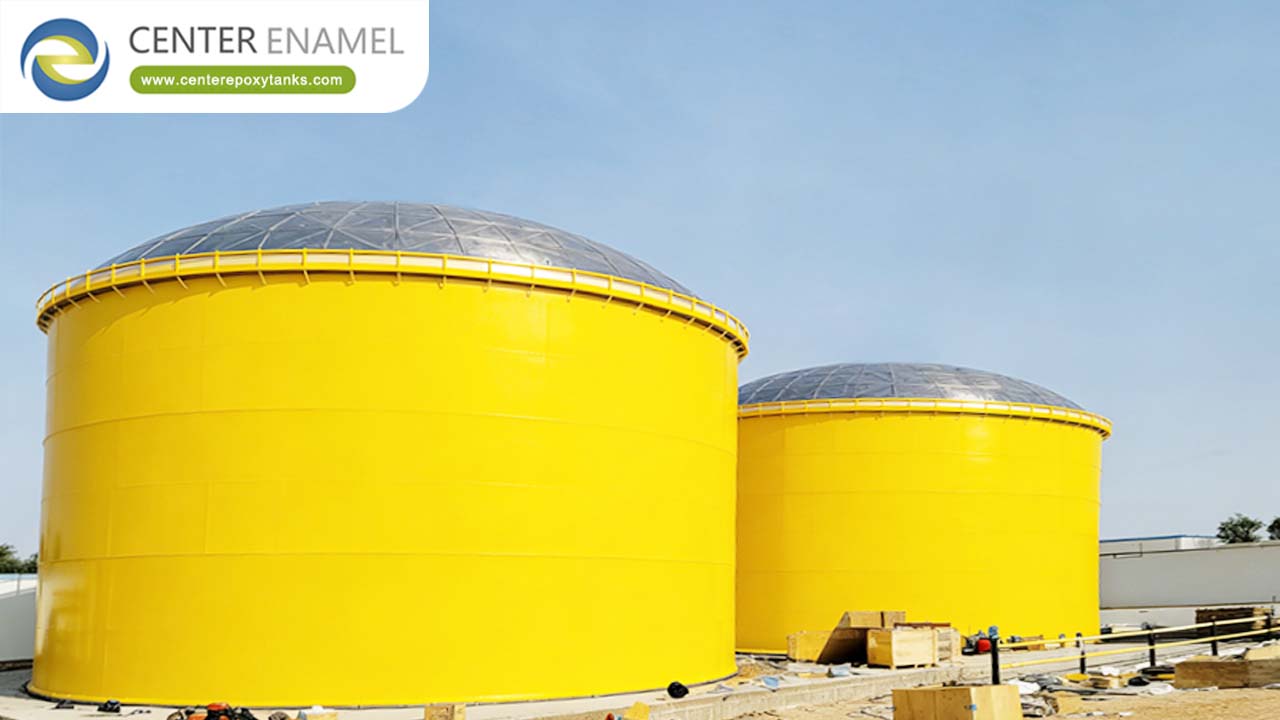
China Welded Steel Light Fuel Oil Storage Tanks: Engineering & Procurement Guide
Light Fuel Oils (LFOs)—including diesel, heating oil, and kerosene—are high-throughput, high-value assets that demand more than just standard containment. They require a proactive defense against the three "silent failures" of storage: Microbiologically Influenced Corrosion (MIC), vapor loss, and structural fatigue. Shijiazhuang Zhengzhong Technology Co., Ltd (Center Enamel) delivers engineered welded steel storage tanks that move beyond simple fabrication to provide a comprehensive, compliant, and longevity-focused solution for global fuel infrastructure.
1. Technical Engineering Standards
For LFO storage, structural integrity must be paired with operational hygiene. Our manufacturing process is built to rigorous international benchmarks to ensure your fuel remains ready for immediate use.
The Center Enamel Engineering Standard
● API 650 Compliance: Every tank is designed to meet the American Petroleum Institute’s standard for welded atmospheric storage tanks. This ensures correct wall thickness, structural reinforcement, and appurtenance safety.
● Automated Welding & NDT Verification: LFOs possess low surface tension, meaning they can find and leak through microscopic pores that water would bridge. We utilize automated girth and vertical welding for consistent, monolithic penetration. Every critical seam undergoes Radiographic (RT) and Ultrasonic (UT) examination to provide verifiable quality documentation for insurance and regulatory audit approval.
● Precision-Sloped Drainage: We upgrade standard designs with a 3.5-degree precision slope combined with a high-flow sump. This design uses gravity to ensure 100% water evacuation—starving microbes of the moisture they need to thrive and preventing "fuel sludge" buildup.
2. Comparative Analysis: Total Cost of Ownership (TCO)
Feature | Standard Bare Carbon Steel | Center Enamel Engineered Solution | Impact on Operations |
Water Sensitivity | High (Pitting Risk) | Negligible (Evacuation Sump) | Prevents filter clogging |
Microbial Growth | High (Biofilm prone) | Low (Engineered flow) | Reduces engine downtime |
Inspection Cycle | 3–5 Years | 8–10 Years | Lowers maintenance costs |
Total Cost (15 yrs) | Baseline | 15% Lower | Offset by reduced cleaning |
3. Compliance, Safety & Environmental Protection
Storing LFOs is a regulatory task as much as an engineering one. Our tanks are designed to simplify your permitting and safety audits.
● Secondary Containment & Double-Wall Options: For facilities with strict environmental mandates, we provide double-walled configurations that offer built-in secondary containment, ensuring full compliance with SPCC (Spill Prevention, Control, and Countermeasure) rules.
● Emergency Venting: Calibrated pressure/vacuum (P/V) relief valves are integrated to prevent rupture or collapse during high-speed pumping operations or significant ambient temperature swings.
● Aviation Fuel Specialization: For Jet A-1 storage, we provide specialized linings that prevent fuel-to-steel contact, ensuring the product meets JIG/EI purity standards and prevents the degradation of aviation-grade additives.
4. Frequently Asked Questions (FAQ)
Q: Why is NDT critical if the tank passes a basic hydrostatic test?
A: LFOs are "searcher" liquids. Their low surface tension allows them to find microscopic weld defects that water cannot. Radiographic (RT) and Ultrasonic (UT) testing are the only ways to guarantee 100% containment integrity for the lifetime of the asset.
Q: Can these tanks be used for backup power generation?
A: Yes. Our welded steel tanks are the preferred choice for data centers, hospitals, and critical infrastructure that require highly reliable, long-term diesel storage. The internal coating systems are specifically formulated to maintain fuel purity for these emergency-start applications.
Q: How do you handle regional shipping and installation?
A: We manage the entire lifecycle. Our tanks are pre-fabricated in our controlled factory environment, reducing the need for on-site hot-work, and we provide detailed installation supervision to ensure the final assembly meets the original engineering specifications.
Engineering Certainty for Your Fuel Infrastructure
Selecting a tank manufacturer is a strategic decision that impacts the reliability of your facility's energy supply. By prioritizing manufacturers that invest in automated NDT, precision drainage engineering, and verified code compliance, you safeguard your fuel purity and your facility’s operational continuity.
Are you currently in the design phase for an emergency power backup project, or are you looking to retrofit an existing fuel tank to improve safety and fuel longevity?


