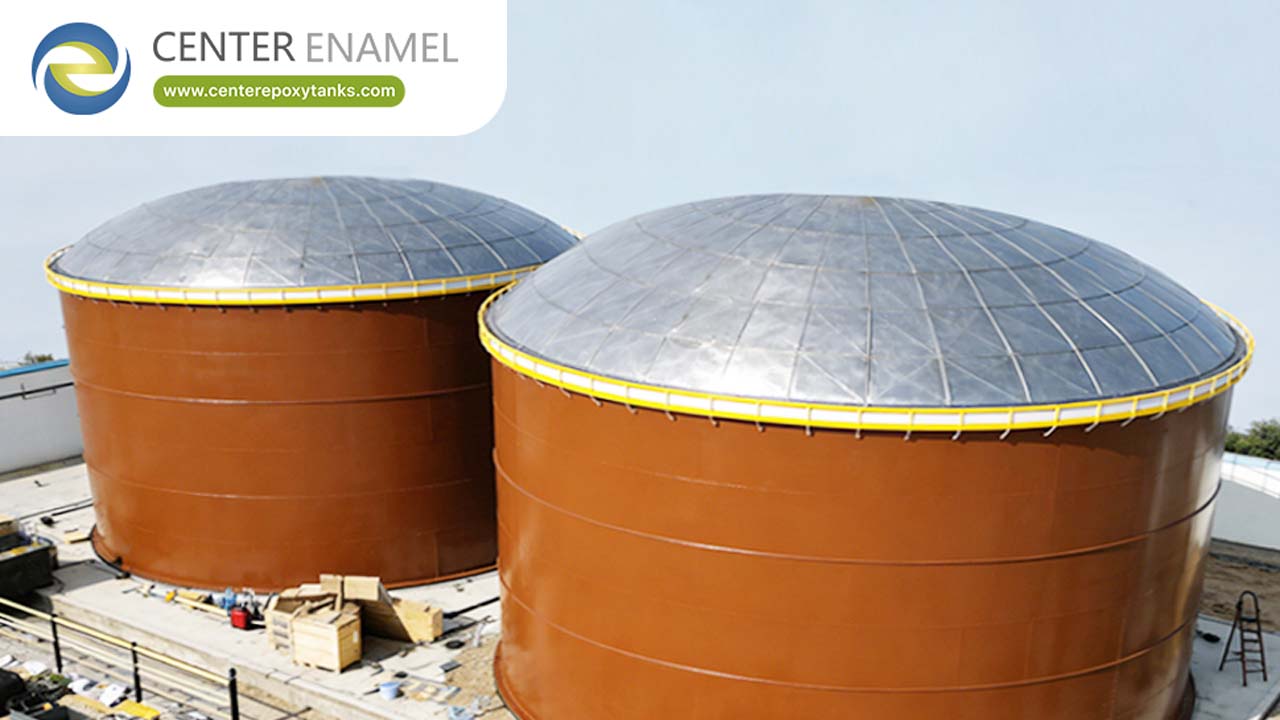
China Welded Steel Ground Storage Tanks: API 650 Engineering & Procurement Guide
In heavy industry, energy, and water management, ground storage tanks (GSTs) serve as the foundation of operational reliability. For bulk storage applications where volumetric efficiency and structural longevity are paramount, welded carbon steel tanks—fabricated in accordance with API 650—remain the global gold standard.
Sourcing these high-capital assets from Chinese manufacturers requires a shift from standard commodity procurement to technical partnership. Modern Chinese fabrication facilities have transitioned from general steelwork to highly specialized, automated production environments capable of delivering field-erected tanks that meet the most stringent international structural and environmental safety codes.
1. Structural Engineering & Stress Deflection Dynamics
Welded steel ground storage tanks are engineered to handle the hydrostatic loads of millions of liters of product while resisting environmental forces (wind, seismic activity, and soil settling).
The Variable-Design-Point Stress Equation
For field-erected bulk tanks built to API 650 standards, top-tier engineering firms calculate the required design shell plate thickness (td) for each vertical ring using advanced stress deflection modeling to ensure wall stability:
Failure to adhere to these calculations results in buckling risk, particularly at the bottom shell ring where the combination of hydrostatic pressure and structural load is at its maximum.
2. Advanced Fabrication & Quality Control Matrix
The primary differentiator between a commodity steel workshop and a Tier-1 storage tank manufacturer is the integration of automated welding and rigorous non-destructive testing (NDT).
Engineering Vector | Tier-1 Welded Tank Manufacturer | Commodity Steel Workshop |
Welding Tech | Automated Submerged Arc Welding (SAW) for all long/girth seams. | Manual SMAW (stick) welding. |
NDT Protocols | 100% Radiographic Testing (RT) on T-joints; Vacuum box testing. | Visual inspection only; no internal seam verification. |
Material Traceability | Full Mill Test Reports (MTR) for every steel plate. | Unverified or generic steel sources. |
Coating Application | Climate-controlled spray environment (Sa 2.5 blast). | Open-air spray painting. |
Engineering Support | Certified P.E. stamp and FEA (Finite Element Analysis). | Limited to basic dimensional drawings. |
3. Procurement Vetting Strategy
When engaging with China-based fabricators for large-scale welded storage projects, utilize this 4-pillar vetting framework to ensure project success:
1. Code Compliance Audit: Request evidence of adherence to API 650, AWWA D100, or GB 50128. Do not accept vague claims of "standard design."
2. Welding Procedure Specification (WPS): Demand the WPS and Procedure Qualification Record (PQR) for the specific steel grades and thicknesses proposed for your project. This confirms the factory has the technical capability to perform the welds correctly.
3. Logistics & Field Erection: Welded tanks of significant scale are "field-erected." Verify if the manufacturer provides a professional site supervisor to lead local installation crews, or if they offer a turnkey "supply and build" contract.
4. Coating System Validation: For carbon steel tanks, the internal lining is the life of the asset. Require a specific coating schedule (primer, mid-coat, top-coat) that complies with the chemical compatibility requirements of your stored product.
Frequently Asked Questions (FAQ)
Q: Why choose welded steel tanks over bolted steel tanks?
A: Welded tanks offer a monolithic, seamless structure, which is often required by specific fire codes (NFPA) or for high-pressure applications where gasket-seam leakage is a zero-tolerance issue. Bolted tanks are superior for logistics and speed of installation, but welded tanks provide a "solid-state" structural integrity favored in massive oil and gas storage terminals.
Q: How are welded tanks shipped?
A: Because they are too large for standard containers, the shell plates are precision-cut, rolled to the specified radius, and nested on steel pallets for shipping. The floor and roof plates are also cut to size. The welding occurs entirely on-site using the manufacturer’s specialized jigs and equipment.
Q: What is the most common cause of welded tank failure?
A: Lack of proper foundation preparation (leading to uneven settlement) or improper welding technique at the "floor-to-shell" interface. Always mandate that the manufacturer review your geotechnical soil report before final design approval.


