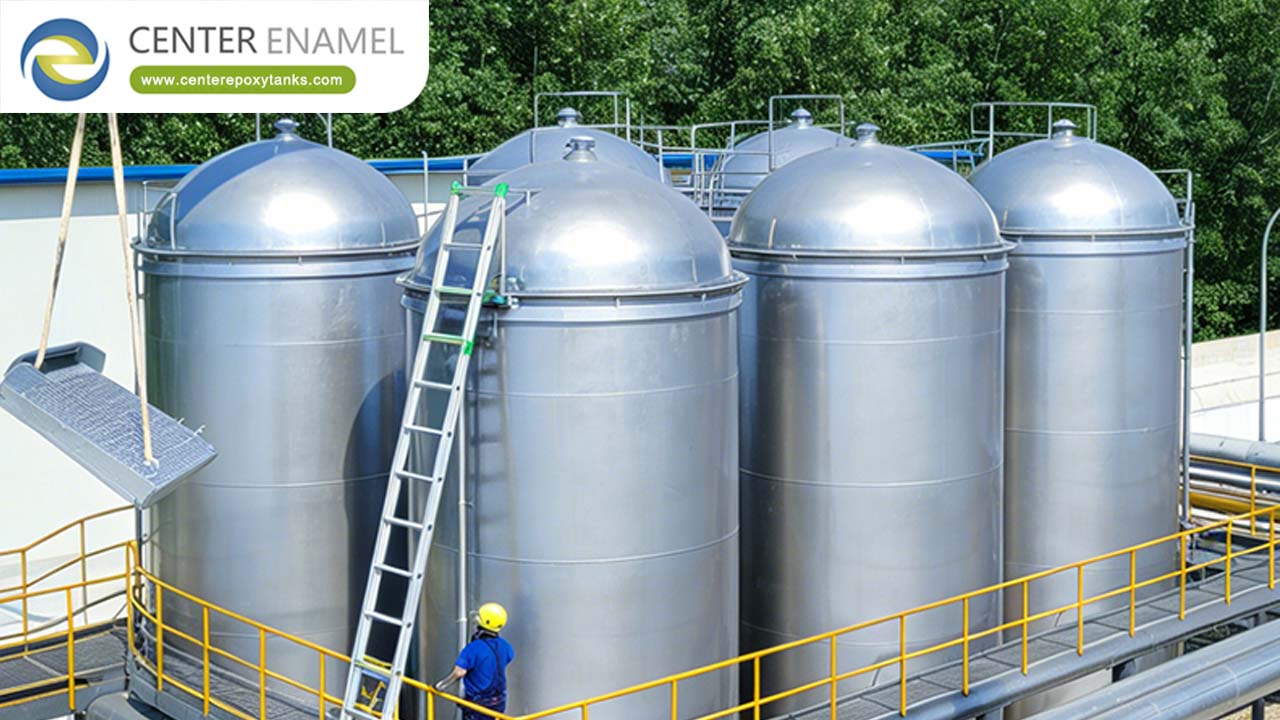
China Welded Stainless Steel Jet Fuel Storage Tanks: Engineering & Procurement Guide
Jet fuel (Jet A-1) is a high-purity, process-critical commodity. Unlike diesel or gasoline, aviation fuel is hyper-sensitive to particulate contamination, surfactant accumulation, and oxidative degradation. Welded stainless steel tanks are the industry standard for aviation fuel storage because they provide a hermetically sealed, inert environment, eliminating the risk of coating delamination or internal corrosion found in coated carbon steel vessels. This guide provides a technical roadmap for sourcing high-spec stainless steel tanks from Chinese manufacturers capable of meeting stringent international aviation standards.
1. The Engineering Imperative: Why Stainless?
Aviation fuel management is governed by the need to maintain "Clear and Bright" fuel. Stainless steel, specifically 304L or 316L, is selected for its passive chromium-oxide layer, which prevents iron oxide (rust) from entering the fuel stream.
Structural Integrity & Standards
Your manufacturer must design and fabricate to global standards, primarily API 650 (Welded Tanks for Oil Storage).
● Design Formula: The shell thickness must account for the density of jet fuel and the tank height. Manufacturers must utilize the 1-foot method or variable-design-point method for shell thickness, ensuring the hoop stress ($sigma$) remains within allowable limits:
2. Technical Vetting: Distinguishing Quality in China
Sourcing for aviation infrastructure requires moving beyond basic fabrication capabilities. You are looking for a specialist pressure vessel manufacturer, not a general steel fabricator.
The Procurement Audit Framework
Audit Parameter | Requirement for Jet Fuel Infrastructure |
Weld Testing | 100% Radiographic (RT) or Ultrasonic (UT) testing on vertical seams. |
Material MTRs | Full traceability (Heat numbers) for all stainless steel plates. |
Surface Finish | Ra < 0.8 μm for internal surfaces to prevent microbial attachment. |
Passivation | Required: Chemical passivation post-fabrication to restore the chromium oxide layer. |
Testing | Hydrostatic testing with deionized/filtered water to prevent contamination. |
3. Critical Infrastructure Components
Jet fuel tanks are not just shells; they are systems. Ensure your RFP requires the following to avoid field modifications:
● Floating Suction Assemblies: These are essential to ensure the fuel is drawn from the cleanest point (just below the surface), rather than from the bottom where sediment/water may settle.
● Desiccant Breather Systems: To prevent moisture ingress from humid air during pump-out cycles, which is critical in coastal regions (common in many Chinese manufacturing hubs).
● Manway & Nozzle Reinforcement: Must be calculated to prevent stress concentration, especially in seismic zones.
4. Frequently Asked Questions (FAQ)
Q: Why is "welded" superior to "bolted" for jet fuel?
A: Bolted tanks utilize gaskets and fasteners that provide multiple leak paths. Jet fuel is a solvent; it can degrade certain gasket materials over time. A fully welded stainless steel tank provides a monolithic, permanent seal that is far easier to keep clean and certify for aviation standards.
Q: What stainless steel grade should I specify?
A: 316L is the global standard for aviation fuel. It provides superior resistance to pitting corrosion, especially if the fuel contains sulfur or if the tank is located in a high-chloride (coastal) environment. 304L is occasionally used for inland facilities, but 316L is highly recommended for "best-in-class" reliability.
Q: How do I handle Third-Party Inspection (TPI) in China?
A: Never rely solely on factory self-inspection. Contract a global TPI agency (e.g., SGS, Bureau Veritas, or Intertek) to conduct "Witness Points" at three stages: 1) Material inspection before cutting, 2) During the hydrostatic test, and 3) Final inspection of weld passivation.
Are you currently in the feasibility phase for a new airport fuel farm, or are you looking to replace existing storage capacity to comply with updated international safety standards?


