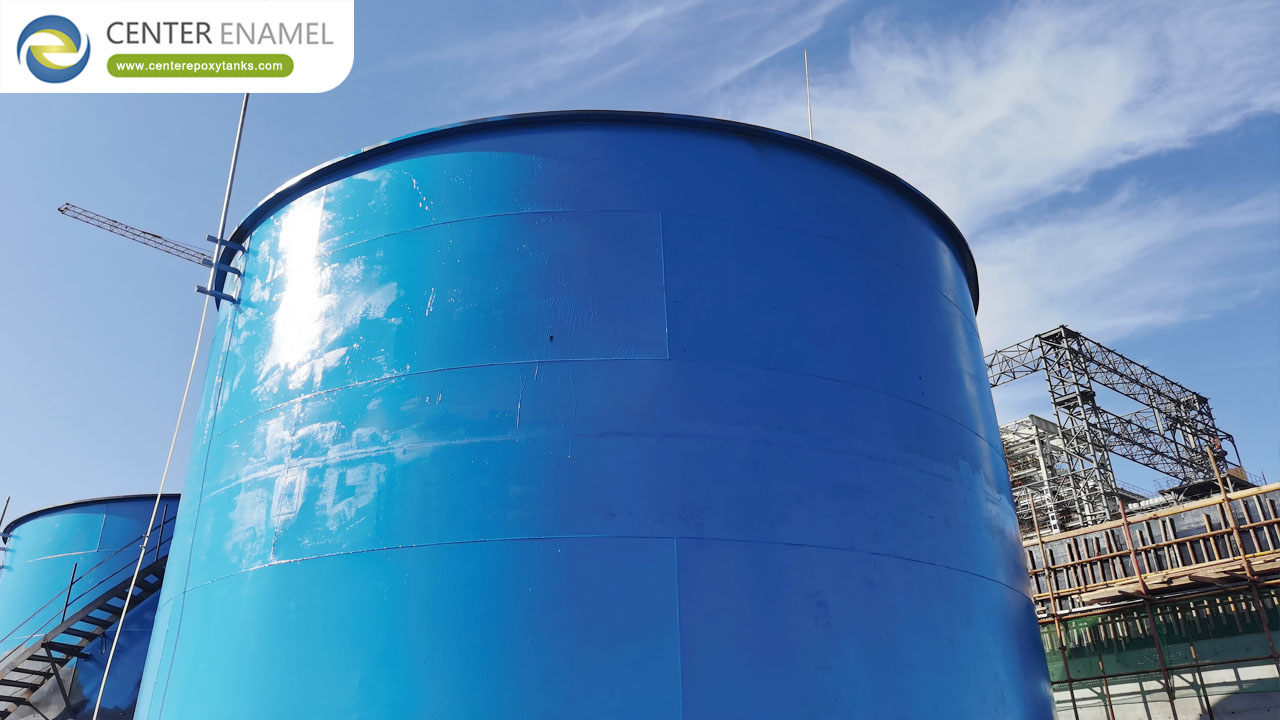
China Welded Carbon Steel Fire Water Storage Tanks: NFPA 22 Procurement & Engineering Guide
In industrial and municipal fire protection networks, the reliability of the water supply is the absolute baseline of facility safety. Whether supporting high-expansion foam systems in an aviation hangar or feeding a massive sprinkler grid in an automated logistics warehouse, fire water storage cannot fail.
Sourcing welded carbon steel fire water tanks from a premier China-based manufacturer requires transitioning from basic industrial procurement to strict life-safety compliance. Buyers must evaluate structural engineering topologies, internal anti-corrosion barriers, and precise adherence to NFPA 22 (Standard for Water Tanks for Private Fire Protection) and AWWA D100 (Welded Carbon Steel Tanks for Water Storage).
As global supply chains demand higher precision and faster deployment, industry leaders like Shijiazhuang Zhengzhong Technology Co., Ltd (Center Enamel) have set the standard for high-capacity, engineered-to-order fire protection containment.
1. Structural Engineering & Shell Stress Deflection
Fire water tanks are often designed as vertical cylindrical vessels that must withstand immense hydrostatic pressure over decades of static service. The structural integrity of a welded carbon steel tank is determined by the minimum shell plate thickness, calculated to resist the maximum hoop stress at the bottom course.
For tanks engineered to AWWA D100 and NFPA 22 standards, the design shell thickness (td) is derived using the precise tensile strength of the selected steel grade:
By utilizing high-yield carbon steels (such as Q345R or ASTM A36) and strict dimensional tolerances, premier Chinese manufacturers ensure the tank shell will not suffer from axial buckling or localized base deformation under maximum payload or seismic events.
2. Advanced Anti-Corrosion: Protecting the Fire Pump
The most common point of failure in fire water systems is not structural collapse, but internal corrosion. Microscopic rust shedding from an unprotected carbon steel tank can be drawn into the suction vortex during an emergency, severely damaging the high-RPM impellers of diesel fire pumps or clogging downstream sprinkler heads.
Internal Linings (AWWA D102 Compliance)
To guarantee a debris-free water supply, the internal surface must be isolated from the water and oxygen interface.
● Surface Preparation: The carbon steel must undergo rigorous abrasive blast cleaning to a Sa 2.5 (Near-White Metal) profile. This removes all mill scale and provides the necessary anchor pattern for the coating.
● High-Build Epoxy Linings: Top manufacturers utilize factory-applied or carefully climate-controlled field applications of 100% solid, plural-component epoxy linings. Applied at a Dry Film Thickness (DFT) of 300mum to 400mum, this creates an impermeable, glass-smooth barrier that prevents biological scale and iron oxidation.
External Protection
The exterior of the tank is subject to UV degradation and atmospheric moisture. Standard practice involves a zinc-rich epoxy primer followed by a high-gloss aliphatic polyurethane topcoat. This ensures color retention (often the standard "Signal Red") and provides a highly durable defense against coastal salinity or industrial smog.
3. Manufacturing Benchmarks: Vetting the Leading Partner
Procuring a life-safety asset requires strict vetting of the fabrication facility. Global market leaders distinguish themselves through highly automated, zero-defect manufacturing environments.
Quality Vector | Tier-1 Manufacturer (e.g., Zhengzhong Tech) | Standard Steel Workshop |
Welding Automation | Submerged Arc Welding (SAW) for continuous, deep-penetration seams. | Manual SMAW (Stick) or FCAW welding. |
Code Certifications | Adherence to NFPA 22, AWWA D100, and FM Global parameters. | "Built to fit" without formal life-safety compliance. |
System Integration | Pre-engineered vortex inhibitors, anti-vortex plates, and suction sumps. | Bare tanks requiring field modification for pump hookups. |
Export Logistics | Modular plate nesting, customized container packing for global freight. | Inefficient transport volumes and high shipping damage risks. |
4. Quality Control & Non-Destructive Testing (NDT)
A welded fire tank is only as reliable as its weakest seam. Before hydrostatic testing (filling the tank with water to check for leaks), the manufacturer must execute a comprehensive NDT matrix:
● Radiographic Testing (RT): X-ray verification of structural T-joints and vertical seams to detect internal porosity, slag inclusions, or lack of fusion.
● Ultrasonic Testing (UT): Precise verification of the steel plate thickness across the entire shell profile.
● Vacuum Box Testing: A critical test applied to all floor-plate lap welds. A transparent box is placed over a soapy weld seam, and a vacuum is drawn. Any bubbles indicate a micro-leak that must be gouged and re-welded.
5. Critical Accessories for Fire Water Systems
An NFPA 22 compliant tank from a leading manufacturer will arrive as a complete, integrated system. Essential required accessories include:
● Anti-Vortex Plate: Installed over the primary pump suction nozzle to prevent the formation of a whirlpool, which could draw air into the fire pump and cause cavitation.
● Immersion Heaters: For installations in freezing climates, flanged immersion heaters and extensive tank insulation are required to ensure the water remains liquid and ready for immediate deployment.
● Liquid Level Indicators: Highly visible exterior mechanical float boards or electronic pressure transducers tied directly into the facility's central fire alarm control panel.
Frequently Asked Questions (FAQ)
Q: What is the difference between a bolted fire tank and a welded carbon steel fire tank?
A: Bolted tanks (like Glass-Fused-to-Steel or Epoxy coated) are manufactured entirely in the factory and assembled on-site using gaskets and bolts, allowing for very rapid installation. Welded carbon steel tanks offer a seamless, monolithic structure that is highly durable but requires extensive hot-work (welding) and coating applications directly at the construction site.
Q: Does NFPA 22 require the tank to be painted red?
A: No. While "Signal Red" is the global industry norm for rapid visual identification of fire protection assets, NFPA 22 does not strictly dictate the exterior color. The color is often determined by local municipal codes or corporate facility guidelines.
Q: How often must a welded carbon steel fire tank be inspected?
A: According to NFPA 25 (Standard for the Inspection, Testing, and Maintenance of Water-Based Fire Protection Systems), a comprehensive external inspection must be conducted annually. A full internal inspection—often utilizing ROVs (Remotely Operated Vehicles) to avoid draining the tank—must be performed every 3 to 5 years to check the integrity of the epoxy lining and inspect for sediment buildup.


