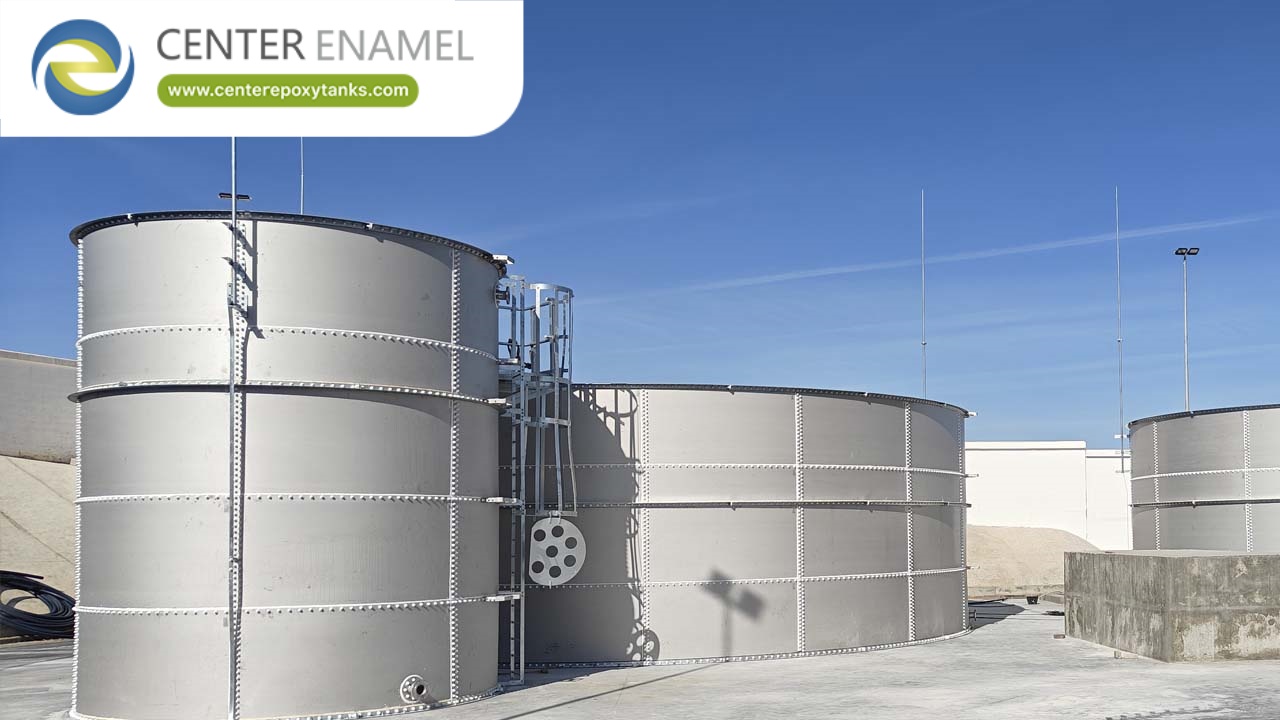
China Stainless Steel Juice Wastewater Tank Manufacturer: Hygienic and Corrosion-Resistant Effluent Containment by Center Enamel
In the beverage and food processing sectors, fruit juice manufacturing operations generate massive volumes of high-strength organic wastewater. Characterized by elevated concentrations of natural fruit sugars, suspended fruit pulp, organic acids (such as citric and malic acid), and fluctuating pH levels, juice processing effluent is notoriously corrosive and prone to rapid biological fermentation. Untreated or poorly contained wastewater can cause severe environmental damage, foul odors, and structural degradation in substandard containment systems.
To neutralize aggressive fruit acids and maintain strict environmental hygiene, food processing plants require specialized, non-reactive storage infrastructure. As a premier China stainless steel juice wastewater tank manufacturer, Shijiazhuang Zhengzhong Technology Co., Ltd. (Center Enamel) delivers world-class, custom-engineered stainless steel containment systems. Combining advanced fabrication technology with high-grade austenitic alloys, Center Enamel provides reliable wastewater storage vessels tailored for the global food and beverage industry.
1. The Biochemical Challenges of Juice Wastewater and Material Selection
Juice processing wastewater presents distinct chemical and biological dynamics that make conventional carbon steel or unreinforced concrete inadequate:
Organic Acid Attack: Fermenting fruit sugars and residual fruit acids create acidic environments that rapidly pit and corrode unprotected carbon steel, leading to premature structural failure and iron leaching into treatment streams.
High Biological Oxygen Demand (BOD): Rapid microbial activity in sugar-rich juice effluent accelerates biofilm formation and anaerobic digestion odors, requiring smooth, non-porous interior surfaces to facilitate effortless cleaning and sanitization.
Strict Food-Safety and Environmental Mandates: Facilities must ensure that wastewater holding and equalization tanks maintain zero risk of chemical leaching, cross-contamination, or structural leakage into surrounding eco-systems.
Data Table: Juice Wastewater Storage Technology Comparison Matrix
Technical Parameter | Center Enamel Stainless Steel Tanks (AISI 304/316) | Traditional Carbon Steel Tanks | Cast-in-Place Concrete Basins |
Primary Shell Material | High-Grade Austenitic Stainless Steel | Carbon Steel with Protective Linings | Reinforced Concrete & Rebar |
Acid & Sugar Resistance | Excellent (Inherent passivation against fruit acids and organic sugars) | Vulnerable if internal lining develops pinholes or blisters | High vulnerability to acid attack, sugar penetration, and spalling |
Hygienic Profile | Smooth, non-porous surface prevents bacterial adhesion | Prone to surface degradation and microbial buildup | Porous surface requiring continuous waterproof coatings |
Maintenance Profile | Virtually maintenance-free with lifelong passivation | High ongoing maintenance to prevent rust and flaking | High frequency of structural crack injection and patching |
Governing Standards | AWWA D103-09, ISO 9001, FDA-compliant materials | API 650 / ISO 12944 | ACI Structural Code Standards |
2. Engineering Excellence and Quality Assurance at Center Enamel
Center Enamel utilizes state-of-the-art manufacturing processes to fabricate premium stainless steel bolted and welded tanks designed for demanding industrial applications:
Precision AISI 304/316 Construction: Utilizing top-tier stainless steel alloys, our tanks provide superior resistance against pitting corrosion, chloride stress, and chemical degradation.
Advanced Surface Passivation: Specialized mechanical and chemical passivation treatments enhance the natural chromium-oxide protective layer of the steel, ensuring maximum chemical inertness.
Modular Bolted Flexibility: Prefabricated stainless steel panels allow for rapid, precise on-site assembly, minimizing civil work disruptions and allowing future capacity expansion as beverage production grows.
Frequently Asked Questions (FAQ)
Q: Why is stainless steel preferred for juice wastewater storage?
A: Stainless steel offers exceptional resistance to organic fruit acids, sugars, and cleaning agents found in beverage processing effluent, preventing corrosion and maintaining a hygienic, non-porous interior surface.
Q: What grades of stainless steel does Center Enamel use for wastewater tanks?
A: Center Enamel utilizes high-grade austenitic stainless steels, primarily AISI 304/304L and AISI 316/316L, chosen for their superior durability, corrosion resistance, and structural strength.
Q: Do Center Enamel stainless steel tanks require interior painting or coatings?
A: No. Stainless steel tanks feature natural corrosion resistance and passivated surfaces, eliminating the need for periodic interior repainting and reducing long-term maintenance overhead.
Q: Can stainless steel juice wastewater tanks be customized for specific plant footprints?
A: Yes. Center Enamel provides custom engineering and design services, tailoring tank diameters, heights, and nozzle placements to meet exact industrial space and hydraulic capacity requirements.


