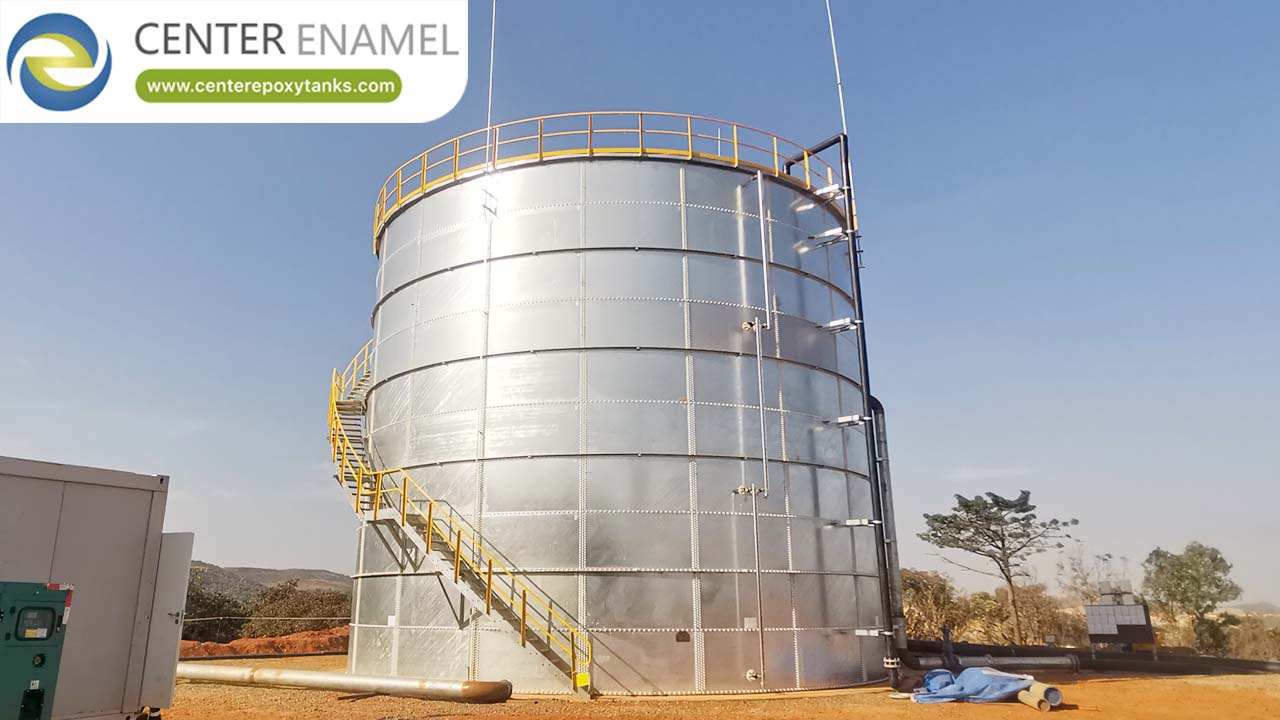
China Galvanized Steel Raw Water Storage Tank Manufacturer: Procurement Guide
For large-scale water management projects—including irrigation, industrial cooling, and fire suppression—galvanized steel bolted tanks represent the global industry standard for cost-effective, high-capacity liquid storage. China’s manufacturing sector has emerged as the global leader in this space, leveraging highly automated production lines to deliver modular, hot-dip galvanized steel systems. This guide outlines the engineering benchmarks, material quality standards, and supply chain verification steps necessary for international procurement.
1. Engineering Principles: Why Galvanized Bolted Steel?
Raw water storage requires tanks that can withstand high hydrostatic loads, environmental exposure, and minimal maintenance intervals. The "bolted sectional steel" design is the preferred format for the following reasons:
● Modular Efficiency: Tanks are assembled from standardized steel panels, allowing for rapid deployment and easy scaling (expanding the tank size later by adding additional panel rings).
● Hot-Dip Galvanizing: Unlike liquid paints or epoxy coatings that degrade under UV light and physical abrasion, hot-dip galvanization (per ASTM A123 or ISO 1461 standards) provides a metallurgical bond between the zinc and the steel. This creates a highly durable, sacrificial layer that protects against corrosion for decades.
● Structural Durability: When engineered according to AWWA D103 (Factory-Coated Bolted Carbon Steel Tanks for Water Storage), these structures safely manage the massive outward hoop stresses generated by high volumes of water.
2. Technical Comparison: Tank Fabrication Methods
For procurement managers assessing their options, the following matrix compares galvanized bolted steel against traditional alternatives.
Feature | Galvanized Bolted Steel | Field-Welded Steel | Reinforced Concrete |
Installation Speed | Fast (Days/Weeks) | Slow (Months) | Very Slow (Months/Year) |
Maintenance | Low (Bolt/Gasket checks) | High (Paint/Coating repair) | Moderate (Crack sealing) |
Structural Integrity | Excellent (Factory controlled) | Variable (Site dependent) | High (If poured correctly) |
Material Cost | Competitive | Moderate | High |
Site Impact | Minimal (No hot work) | High (Welding fumes/fire risk) | High (Concrete trucks/noise) |
3. Critical Procurement & Engineering Checklist
When sourcing from Chinese manufacturers, project specifications must enforce rigid quality gates to ensure the longevity of the raw water asset.
Material Specifications
● Steel Grade: Ensure the manufacturer uses structural steel meeting Q235B or Q345B standards (or international equivalents like S235JR).
● Galvanization Thickness: Do not accept generic "galvanized." Specify a minimum coating thickness (e.g., G115 or G350 zinc coating weight) compliant with international standards to ensure the tank does not rust in humid or coastal environments.
● Gasket & Sealant Technology: The integrity of a bolted tank depends on its seals. Demand EPDM or food-grade rubber gaskets that are rated for the water chemistry (especially if the water is slightly acidic or alkaline).
Quality Verification
● Bolt Grade: All structural fasteners must be high-strength (Grade 8.8 or higher) and utilize hot-dip galvanized coatings to prevent galvanic corrosion at the bolt-to-panel interface.
● Seismic Design: Request structural calculations verifying the tank’s ability to withstand localized seismic (earthquake) loads and wind loads for your specific project site.
4. The Manufacturing Process: From Sheet to Tank
Top-tier Chinese manufacturers utilize highly automated facilities to ensure consistency:
1. Laser/CNC Cutting: Steel sheets are cut with high precision to ensure perfect hole alignment for bolting.
2. Surface Preparation: Sheets are cleaned and pre-treated to ensure the galvanization adheres perfectly to the steel substrate.
3. Hot-Dip Galvanizing: The panels are submerged in molten zinc, ensuring both sides and the bolt holes are fully coated—a critical step that prevents rust from starting inside the joints.
4. QC Testing: Random sampling of panels undergoes salt-spray tests and thickness measurements to confirm the zinc coating quality meets the project specifications.
5. Strategic Logistics and Global Shipping
One of the primary advantages of modular bolted tanks is their "flat-pack" nature.
● Containerization: Unlike massive steel structures that require specialized break-bulk shipping, modular panels can be stacked and palletized into standard 20ft or 40ft shipping containers.
● Cost Efficiency: This drastically reduces the total landed cost of the equipment, making high-quality Chinese manufacturing competitive even when accounting for long-distance freight.
● Documentation: Ensure your supplier provides detailed assembly manuals, CAD drawings, and foundation loading diagrams in English to simplify the site installation process for your local contractors.
Sourcing galvanized steel raw water storage tanks from China is a proven strategy for achieving high-performance water infrastructure at a favorable capital expenditure. By enforcing strict adherence to international standards like AWWA D103, verifying hot-dip galvanization thickness, and selecting a manufacturer capable of modular, easy-to-install design, you can ensure a reliable, maintenance-light storage solution that meets the rigorous demands of your project.


