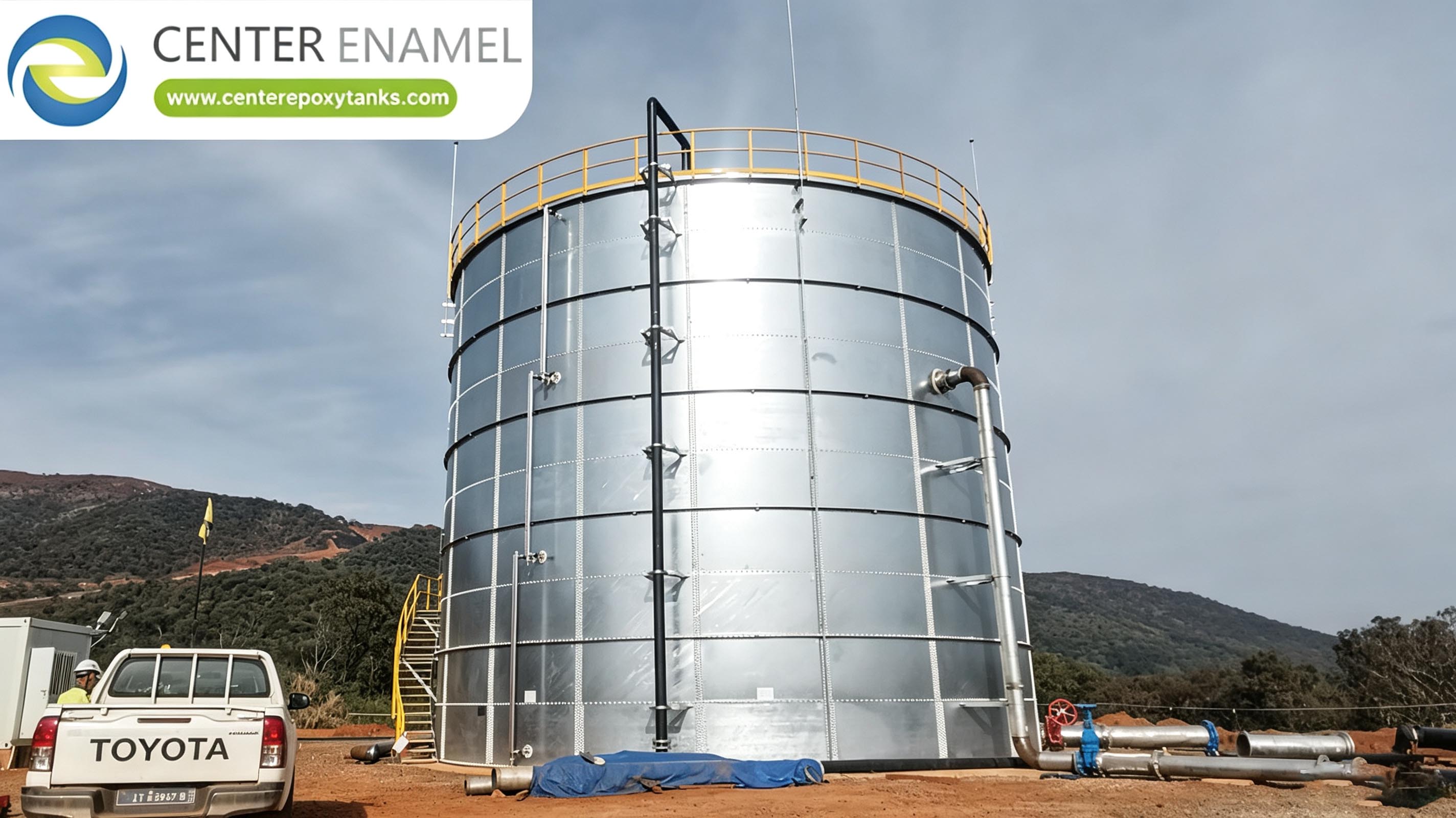
China Galvanized Steel Emergency Fire-Fighting Water Tank Manufacturer: Advanced Life-Safety Storage Solutions by Center Enamel
In industrial facilities, petrochemical refineries, commercial complexes, and municipal infrastructure, an immediate, reliable, and high-capacity water reserve is the single most critical factor in mitigating catastrophic fire losses. Relying solely on municipal water mains during an emergency introduces severe vulnerabilities due to pressure drops, grid fluctuations, or supply interruptions. Consequently, dedicated, high-integrity emergency fire suppression storage systems are a mandatory requirement for life safety and property protection.
As a leading China fire water tank manufacturer, Shijiazhuang Zhengzhong Technology Co., Ltd (Center Enamel) delivers robust, high-performance galvanized steel emergency fire-fighting water tanks engineered to meet rigorous international standards. Combining advanced hot-dip galvanization technology with precise modular engineering, Center Enamel provides dependable water reserves designed to perform flawlessly when every second counts.
1. The Science of Hot-Dip Galvanization for Emergency Reserves
Fire protection water tanks typically remain filled with standing water for long standby periods, making them uniquely vulnerable to internal corrosion and environmental weathering. Center Enamel’s hot-dip galvanized (HDG) steel tanks utilize an advanced metallurgical barrier to ensure decades of emergency readiness:
Sacrificial Anode Protection: Complying strictly with international galvanizing standards, steel panels are coated with a heavy layer of zinc through a controlled high-temperature dipping process. Zinc acts as a sacrificial anode, actively protecting the underlying high-strength steel core from rust even if minor surface scratches occur.
Complete Surface and Edge Uniformity: The hot-dip galvanization process guarantees that every corner, edge, bolt hole, and panel surface receives an even protective coating, eliminating vulnerable corrosion initiation points.
Exceptional Mechanical Hardness: The resulting zinc-iron alloy layers provide high resistance to physical abrasion during transportation, handling, and on-site mechanical assembly.
2. Governing Engineering Standards and NFPA 22 Compliance
To serve effectively as critical life-safety assets, emergency fire water storage systems must comply with stringent regulatory frameworks:
NFPA 22 Compliance: Center Enamel engineers fire water storage solutions in strict accordance with the Standard for Water Tanks for Private Fire Protection (NFPA 22), governing effective water capacities, structural draw-down parameters, and auxiliary connections.
AWWA D103-09 Benchmarks: Mechanical designs incorporate comprehensive structural engineering codes for bolted steel tanks, ensuring extreme resilience against local seismic activities and high wind loads.
Data Table: Emergency Fire Water Storage Solution Comparison Matrix
Tank System Option | Primary Shell Material | Corrosion Defense Mechanism | Typical Service Lifespan | Governing Standards |
Hot-Dip Galvanized (HDG) Steel | High-Strength Structural Steel | Metallurgical zinc barrier (ISO 1461) | 30+ Years | NFPA 22 / AWWA D103 / ISO 1461 |
Glass-Fused-to-Steel (GFS) | Structural Steel Sheets | High-temperature silica glass fusion | 30 to 50+ Years | NFPA 22 / AWWA D103 / ISO 28765 |
Fusion Bonded Epoxy (FBE) | High-Strength Structural Steel | Thermoset powder thermal fusion | 30+ Years | NFPA 22 / AWWA D103 / ISO 9001 |
3. Modular Construction and Rapid Deployment
Traditional welded steel or poured-in-place concrete fire tanks involve extended construction timelines, heavy equipment dependency, and weather-sensitive curing delays. Center Enamel's modular bolted approach streamlines project execution:
Precision Prefabrication: Steel panels are manufactured in an ISO-certified facility under strict quality control, ensuring exact bolt-hole alignment and seamless on-site fit-up.
Fast Mechanical Erection: Tanks are assembled using standard tools and lightweight jacking systems, reducing on-site construction timelines to just a few weeks and minimizing disruption to active facility operations.
Global Export Expertise: Having successfully delivered modular storage solutions to projects in over 100 countries, Center Enamel provides efficient flat-packed shipping that minimizes international freight costs.
Frequently Asked Questions (FAQ)
Q: What makes galvanized steel tanks ideal for emergency fire-fighting water storage?
A: Galvanized steel tanks offer high structural strength paired with a sacrificial hot-dip zinc coating that prevents rust, ensuring long-term reliability and water purity for emergency fire suppression systems.
Q: Do Center Enamel emergency fire water tanks comply with NFPA 22 standards?
A: Yes. Center Enamel's fire protection storage tanks are engineered in strict compliance with NFPA 22 and AWWA D103-09 standards, ensuring they meet global life-safety and property protection requirements.
Q: How long does it take to install a modular bolted fire water tank?
A: Due to their pre-engineered, modular bolted design, these tanks can typically be erected on-site in just 2 to 4 weeks, significantly faster than traditional concrete or welded reservoirs.
Q: Can galvanized steel fire water tanks be expanded if facility safety requirements grow?
A: Yes. The modular bolted architecture allows facility managers to easily expand tank capacity by adding additional tiers of steel panels as fire suppression demands increase.


