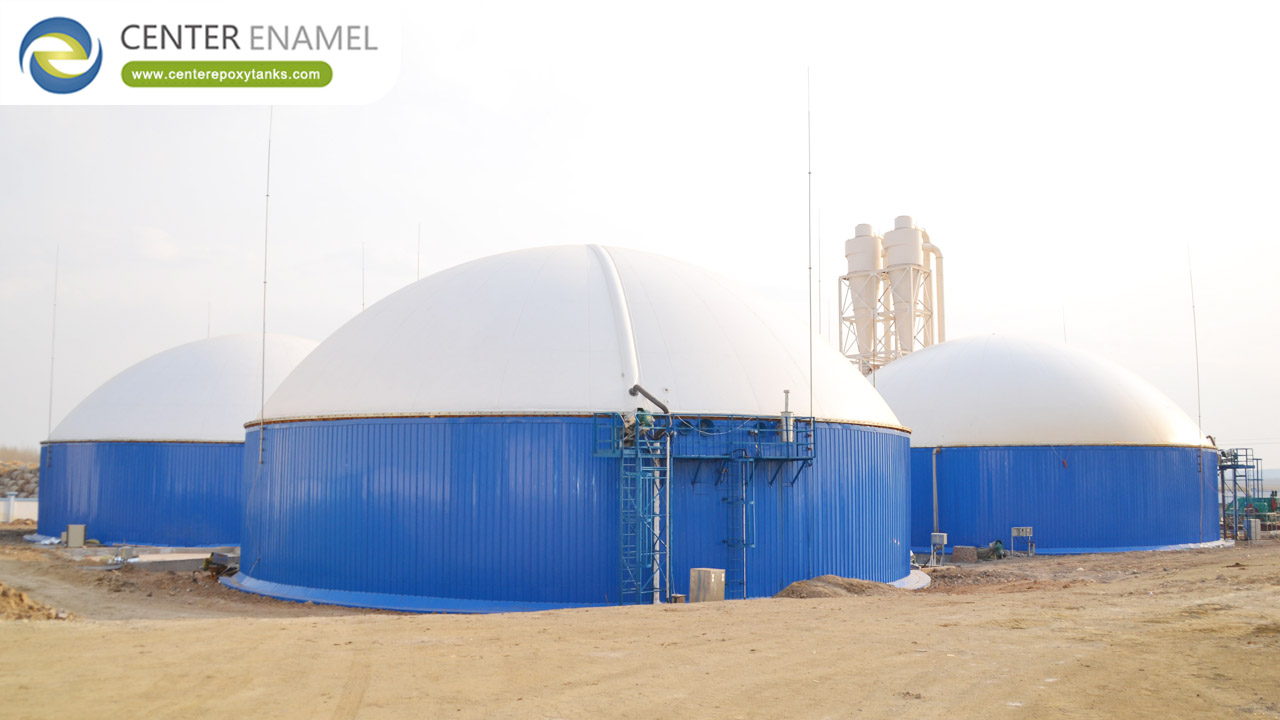
Flexible Double Membrane Gas Holder: Procurement & Engineering Guide
As the global transition to renewable energy accelerates, the demand for reliable, scalable biogas storage has skyrocketed. The Flexible Double Membrane Gas Holder—often referred to as a "biogas balloon"—has become the industry standard for anaerobic digestion (AD) plants. These systems act as a volumetric buffer, balancing gas production rates with engine or boiler consumption.
Chinese manufacturers have optimized the production of these systems, integrating advanced textile engineering with automated control systems to provide cost-effective solutions for municipal, agricultural, and industrial biogas projects worldwide.
1. Engineering Principles: The "Dynamic Lung"
The double membrane system operates on a differential pressure principle. Unlike rigid steel tanks, these systems are flexible, adapting to the gas volume produced in the digester.
The system consists of three distinct layers:
1. Inner Membrane: Serves as the primary barrier for the biogas (CH4, CO2, etc.).
2. Outer Membrane: Acts as the weather shield and structural dome, protecting the system from wind, snow, and UV radiation.
3. Bottom Membrane: Acts as the base liner for freestanding applications.
The interstitial space between the inner and outer membranes is continuously pressurized by an air blower. This pressure provides structural rigidity to the dome and exerts consistent force on the inner membrane, ensuring gas delivery to downstream equipment at a steady, regulated pressure.
The Physics of Membrane Stress
For engineers calculating system safety, the tensile stress on the dome surface is calculated using the thin-wall pressure vessel approximation:
By utilizing high-tenacity polyester base fabrics with specialized PVC/PVDF coatings, Chinese manufacturers engineer these membranes to withstand the high stress of continuous expansion and contraction cycles.
2. Material Science: Longevity in Corrosive Environments
Biogas is inherently aggressive, containing moisture and hydrogen sulfide (H2S), which can be corrosive. The manufacturing process must prioritize:
● Gas-Tight Seams: Individual membrane panels are joined using High-Frequency (HF) welding, which fuses the polymers at the molecular level, creating a seam often stronger than the fabric itself.
● Chemical Resistance: The inner membrane must feature specific barrier coatings (e.g., PVDF) to prevent methane diffusion and resist acidic condensate degradation.
● UV & Weathering: The outer membrane is treated with anti-fungal agents and high-grade UV inhibitors to maintain structural integrity over a 15–20 year design life.
3. Vetting Chinese Manufacturers: Procurement Framework
Sourcing industrial equipment from China requires rigorous vetting. Use this framework to evaluate potential suppliers:
Evaluation Criteria | High-Quality Manufacturer | Commodity Supplier |
Material Certification | Provides MTRs for base fabric and coating. | Unverified or generic specifications. |
Welding Standard | Automated HF welding lines. | Manual welding or inconsistent seams. |
Automation Tech | Integrated SCADA/PLC control for blowers. | Basic relay controls. |
Safety Certification | ATEX/Ex-d certified electrical components. | Non-certified, standard electrics. |
Quality Control | Pressure testing & leak detection reports. | Visual inspection only. |
4. Operational Best Practices
To maximize the ROI of a double membrane gas holder, facility managers should implement the following maintenance and operational standards:
● Blower Redundancy: Always install dual blowers (duty/standby) with an automatic switchover mechanism. If the air pressure drops, the dome will collapse, potentially causing damage to the inner membrane.
● Ultrasonic Level Tracking: Use ultrasonic sensors to track the dome's height. This provides real-time data on gas volume, which is essential for calculating energy output and optimizing engine run-times.
● Hydraulic Safety: Ensure the presence of a liquid-sealed safety relief valve. This is the last line of defense against over-pressurization, venting excess gas to a flare if the storage capacity is exceeded.
Frequently Asked Questions (FAQ)
Q: Can these holders withstand freezing conditions?
A: Yes. The air blower creates a continuous layer of air insulation. For extremely cold climates, manufacturers can supply integrated air heating modules for the blower intake, preventing moisture from freezing between the membranes.
Q: How are these holders integrated into existing digesters?
A: They can be mounted directly onto the top flange of a Glass-Fused-to-Steel (GFS) tank using a specialized tension ring, or they can be installed as an independent, ground-mounted unit (the "freestanding" configuration).
Q: How do I know if the manufacturer is reputable?
A: Ask for a "Reference List" of their past export projects. Reputable manufacturers will be able to show you installations in Europe, North America, or South America, demonstrating compliance with international safety codes like CE or ATEX.


