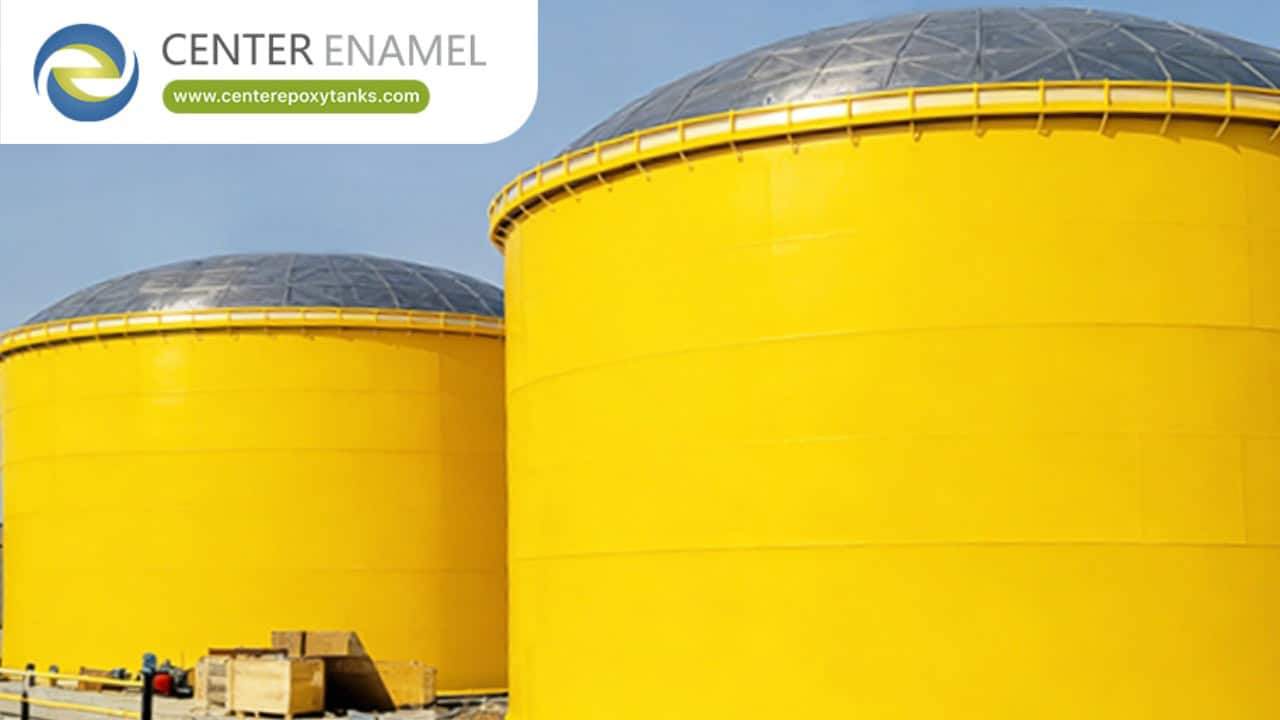
China Emergency Fuel Oil Storage Tank Manufacturers: Engineering Standards & Critical Infrastructure Integration
For critical infrastructure—such as data centers, hospitals, financial institutions, and municipal pumping stations—operational continuity is non-negotiable. When a power grid fails, emergency diesel backup generators must go live within seconds. The reliability of these power systems depends entirely on the integrity of the emergency fuel oil storage tanks that feed them. Partnering with a top-tier industrial tank manufacturer in China provides global engineering, procurement, and construction (EPC) contractors with access to massive, high-precision fabrication plants capable of producing highly compliant, double-walled, and fire-protected fuel storage assets that satisfy rigid international codes like UL-142, UL-2085, and NFPA 30.
1. Regulatory Compliance: Sourcing the Correct Technical Standard
Storing large volumes of Class II combustible liquids (like diesel fuel) for emergency standby systems requires uncompromised adherence to safety and environmental codes. When auditing a manufacturer, compliance with these distinct standards determines the tank's legal and structural suitability:
UL-142 (Steel Aboveground Tanks for Flammable and Combustible Liquids)
This is the baseline international standard for industrial steel fuel storage. A UL-142 certified tank guarantees that the steel metallurgy, weld strength, and structural design have been third-party tested to withstand atmospheric pressure and prevent environmental leakage. These can be configured as single-wall or double-wall systems.
UL-2085 (Protected Aboveground Tanks)
For high-risk environments, municipal codes often mandate a fire-protected configuration. A UL-2085 tank features a double-walled steel design with a lightweight, insulating concrete core poured into the interstitial space. This architecture provides a minimum 2-hour fire rating, vehicle impact resistance, and projectile resistance, safeguarding critical fuel reserves from external catastrophic events.
NFPA 30 (Flammable and Combustible Liquids Code)
This code dictates the safe integration of the fuel system into the overall facility layout. Top manufacturers engineer their tank packages to natively support NFPA 30 mandates, including specific separation distances, dedicated emergency relief venting capacities, and continuous interstitial leak monitoring.
2. Crucial Engineering Variables for Emergency Fuel Systems
A reliable emergency fuel system must do more than simply hold liquid; it must maintain fuel purity and prevent environmental contamination over long periods of idle standby. Advanced Chinese manufacturers integrate several critical safety systems directly into the tank's modular footprint:
● Self-Bunded (Double-Wall) Secondary Containment: True double-walled construction utilizes an inner steel shell to hold the fuel, wrapped by an outer steel shell that provides a minimum 110% secondary containment capacity. This eliminates the need for expensive, space-consuming concrete open dikes on-site.
● Emergency Relief Venting: During an external fire, the dramatic rise in temperature causes rapid vapor expansion inside the tank. Standard atmospheric vents cannot handle this volume. Dedicated emergency vents are engineered to open at a specific internal pressure, safely exhausting vapors to prevent a catastrophic shell rupture.
● Automatic Overfill Prevention and Telemetry: To avoid environmental contamination during rapid fuel deliveries, tanks are equipped with high-level alarms and mechanical overfill prevention valves that automatically shut off the incoming fuel flow once the tank reaches 95% capacity.
● Fuel Quality Management Ports: Because emergency fuel can sit idle for months, condensation can accumulate at the tank bottom, leading to microbial growth and injector-clogging sludge. Tanks are built with specialized sump drains and internal pick-up lines to facilitate continuous fuel filtration and testing.
3. Structural Comparison: Industrial Fuel Tank Configurations
When planning a facility's emergency power setup, engineers must choose the tank architecture that matches their local fire codes and space limitations. The matrix below highlights the core differences between the three main factory-built options:
Engineering Parameter | UL-142 Single-Wall Steel Tank | UL-142 Double-Wall (Self-Bunded) | UL-2085 Protected Steel Tank |
Secondary Containment | None (Requires a concrete dike wall) | Integrated 110% outer steel wrap | Integrated 110% wrap + Insulating core |
Fire Protection Rating | No rating | Baseline atmospheric resistance | 2-Hour Insulated Fire Rating |
Spill & Leak Monitoring | Manual visual inspection | Interstitial vacuum/liquid sensor port | Continuous automated interstitial sensor |
Footprint Requirement | Large (Due to external dike sizing) | Minimal (Compact modular assembly) | Minimal (Allows close placement to buildings) |
Primary Application | Restricted industrial zones | Commercial backup power / Fleet refueling | Mission-critical (Data centers, hospitals) |
4. The Production Advantage of China's Heavy Manufacturing Bases
Sourcing emergency fuel assets from leading Chinese manufacturers offers clear advantages in terms of quality control, production speed, and global logistics:
● Massive Production Scale: With advanced manufacturing complexes often spanning more than 150,000 square meters, these facilities easily manage large concurrent production runs. This ensures that large-capacity fuel storage projects are delivered much faster than traditional, backlogged regional shops can manage.
● Automated Cleanroom Fabrication: Precision welding and heavy-duty industrial coatings are executed using automated robotic lines inside climate-controlled cleanrooms. This environment eliminates issues like weld porosity and coating micro-voids caused by shifting weather or high humidity on open job sites.
● 100% Non-Destructive Testing (NDT): Every containment vessel undergoes rigorous quality testing before leaving the factory floor. This includes 100% pneumatic pressure tests on both the inner and outer tanks, combined with magnetic particle or ultrasonic weld testing to ensure complete structural sealing.
● Containerized Global Delivery: Whether fabricating horizontal skid tanks or vertical modular structures, components are designed to maximize shipping space. They are securely crated and shipped via standard ocean containers directly to project sites across Southeast Asia, the Middle East, Europe, and the Americas, significantly reducing total freight costs.
Specifying factory-fabricated, certified emergency fuel oil storage tanks from premier manufacturers in China ensures complete alignment with vital safety regulations like UL-142, UL-2085, and NFPA 30. By combining automated double-wall steel fabrication, advanced fire-protection linings, and integrated digital tank monitoring telemetry, Chinese industrial leaders deliver highly reliable, secure, and low-maintenance fuel storage systems. These robust assets are engineered to protect the surrounding environment while guaranteeing that mission-critical facilities stay fully powered through any unexpected grid failure.


