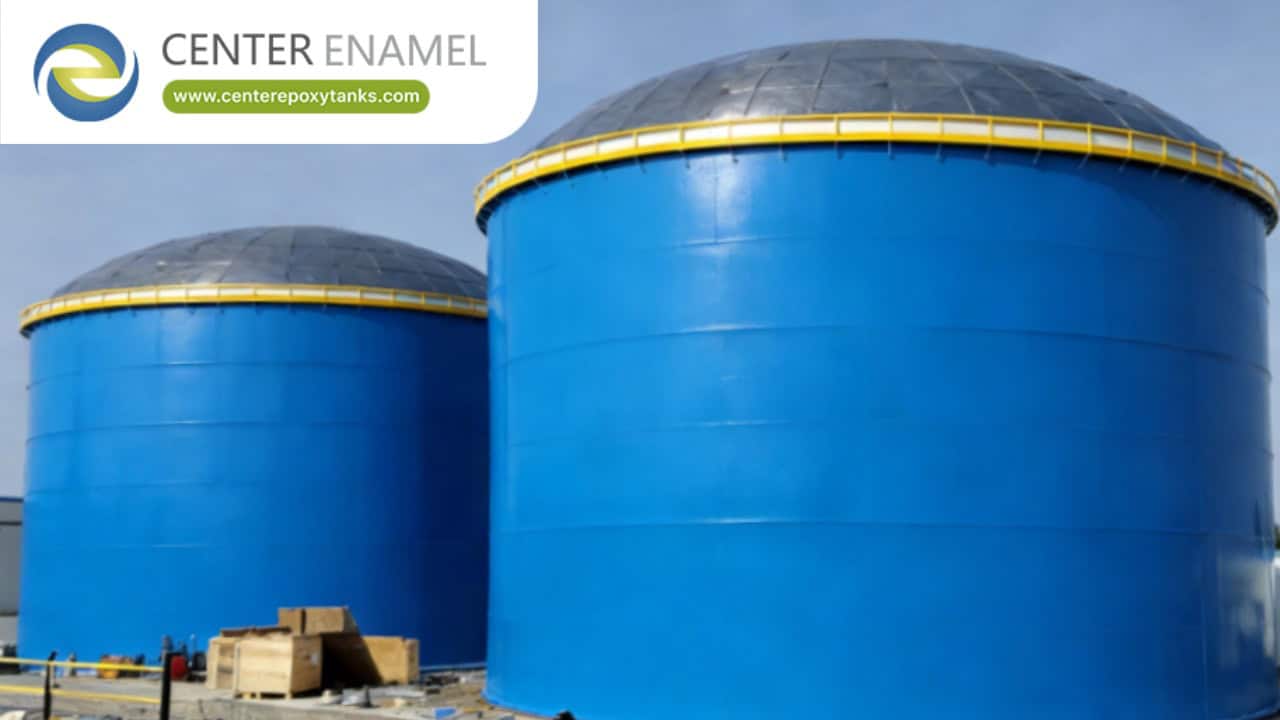
China Carbon Steel Gasoline Storage Tanks Manufacturer - Center Enamel
Gasoline is one of the most volatile and heavily regulated refined petroleum products in the global energy supply chain. Because gasoline exhibits high vapor pressure, low flash points, and strict environmental containment mandates, storing it safely requires specialized containment infrastructure. Industrial terminals, petroleum refineries, and commercial fuel depots demand storage vessels engineered to prevent vapor loss, withstand heavy hydrostatic loads, and eliminate environmental contamination risks.
As a globally recognized industry pioneer, Shijiazhuang Zhengzhong Technology Co., Ltd. (Center Enamel) stands at the forefront as a premier China carbon steel gasoline storage tanks manufacturer. Combining over three decades of containment engineering expertise, advanced manufacturing automation, and strict adherence to international safety standards, Center Enamel delivers custom-engineered carbon steel gasoline storage solutions to more than 100 countries worldwide.
Engineering Mastery and Global Standards Compliance
Storing volatile organic liquids like gasoline demands rigorous design calculations and certified manufacturing protocols. Center Enamel’s carbon steel gasoline tanks are engineered to meet or exceed world-renowned safety benchmarks:
API 650 Compliance (Bulk Terminal Storage): For large-scale aboveground fuel farms and refinery reserves, tanks are designed in strict accordance with API 650 standards, ensuring precise shell thickness distributions, optimal weld joint efficiencies, and stability against severe wind and seismic loads.
UL 142 / UL 2085 Compliance (Commercial & Safety-Critical Storage): For localized commercial fuel distribution and retail backup facilities, shop-built and modular tanks comply with rigorous codes for flammable and combustible liquids, incorporating double-wall configurations and fire-resistant barriers.
Strict Non-Destructive Testing (NDT): All structural seams undergo rigorous examination—including radiographic (RT), ultrasonic (UT), and vacuum box testing—to guarantee absolute, leak-free performance.
Technical Performance Matrix: Gasoline Storage Technologies
Technical Parameter | Center Enamel Carbon Steel Gasoline Tanks (API/UL) | Traditional Field-Welded Carbon Steel Tanks | Underground Gasoline Storage Tanks (USTs) | Cast-in-Place Concrete Fuel Basins |
Vapor Emission Control | Compatible with internal floating roofs (IFR) or vapor recovery unit (VRU) interfaces | Requires complex retrofitting of floating decks or external seals | Highly constrained vapor management; vapor pockets are difficult to monitor | High risk of fugitive vapor permeation through concrete micro-cracks |
Inspection & Maintenance | Superior; above-ground layout permits immediate visual checks and non-destructive testing | Accessible, but requires intensive exterior repainting of welded seams | Extremely poor; underground positioning prevents routine corrosion and leak monitoring | Moderate; hidden structural degradation and subsurface seepage are difficult to detect |
Corrosion Defense | High-performance specialized chemical-resistant epoxy or FBE internal linings | Variable; relies heavily on manual field-applied paint touch-ups | High vulnerability to aggressive soil-side corrosion and stray electrical currents | Low; prone to concrete carbonation and chemical attack from fuel components |
Installation Velocity | Efficient modular or shop-built delivery with rapid on-site placement | Slow; demands extensive field plate rolling, heavy welding, and on-site NDT | Slow; requires massive excavation, shoring, and backfilling operations | Extremely slow; requires lengthy civil formwork, pouring, and curing cycles |
Key Advantages of Center Enamel Gasoline Storage Systems
1. Advanced Emission Mitigation and Floating Roof Integration
Gasoline evaporation leads to significant economic loss and environmental pollution. Center Enamel integrates advanced emission-control features into its gasoline storage tanks:
Internal Floating Roofs (IFR): Designed in accordance with API 650 Annex H, floating decks rest directly on the liquid surface, eliminating the vapor space and slashing volatile organic compound (VOC) emissions by over 90%.
Vapor Recovery Integration: Custom shell nozzles and flanged connections facilitate seamless integration with vapor recovery units (VRUs) and safety blanketing systems.
2. Superior Internal Protective Coatings
To counteract the corrosive nature of refined hydrocarbons and water condensation layers, Center Enamel applies high-performance, conductive internal epoxy and Fusion Bonded Epoxy (FBE) linings. These coatings prevent metal oxidation, inhibit static electrical accumulation, and ensure pristine product purity.
Frequently Asked Questions (FAQ)
Q: What makes Center Enamel a trusted China carbon steel gasoline storage tanks manufacturer?
A: Center Enamel brings over 30 years of containment engineering experience, advanced automated manufacturing facilities, and full compliance with international safety codes such as API 650, UL 142, and NFPA 30, serving clients in more than 100 countries.
Q: How do you prevent vapor loss and fire hazards in gasoline storage tanks?
A: Our gasoline storage tanks are engineered with fixed roofs coupled with Internal Floating Roofs (IFRs) to eliminate vapor spaces. They are also equipped with pressure-vacuum relief valves, flame arrestors, and automated overfill protection systems.
Q: Are Center Enamel gasoline tanks customizable for specific terminal layouts?
A: Yes. Center Enamel provides fully customizable tank diameters, heights, and configurations (horizontal, vertical, single-wall, or double-wall) tailored precisely to your facility's spatial and throughput requirements.
Q: What quality control measures are applied during the manufacturing of fuel tanks?
A: Every tank undergoes strict factory quality assurance checks, including high-voltage holiday spark testing on protective coatings, dimensional accuracy verifications, and comprehensive non-destructive testing (NDT) on all critical welding seams.


