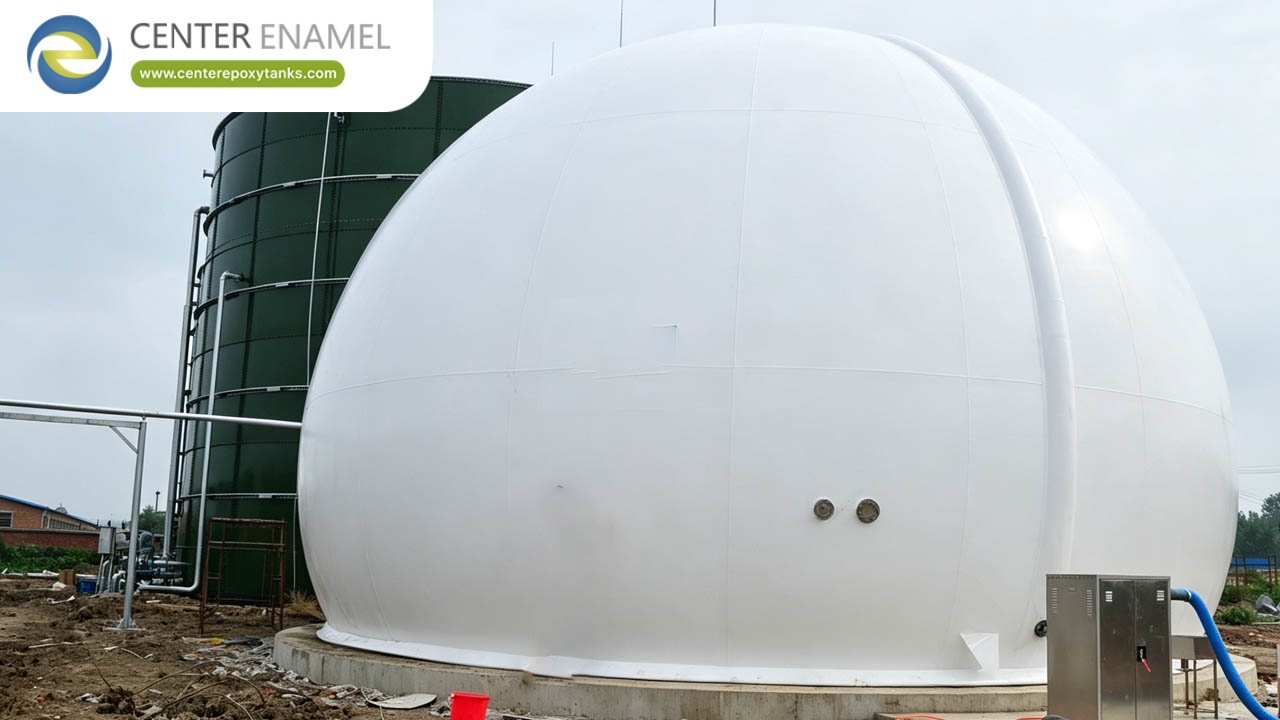
China Balloon Biogas Digesters Manufacturer: Center Enamel's Advanced Biogas Solutions
As the global transition toward circular economies and green energy accelerates, agricultural farms, municipal wastewater plants, and industrial processing facilities face rising demands for efficient, cost-effective organic waste management. Anaerobic digestion (AD) serves as the core technology for converting complex organic waste into valuable biogas and nutrient-rich digestate. However, optimizing gas collection, buffering pressure fluctuations, and preventing fugitive methane emissions require specialized containment engineering.
As a globally trusted industry leader, Shijiazhuang Zhengzhong Technology Co., Ltd (Center Enamel) stands at the forefront as a premier China balloon biogas digesters manufacturer. Combining over 30 years of containment expertise, advanced membrane material science, and precision manufacturing, Center Enamel delivers world-class balloon-type biogas plants designed to maximize renewable energy yield and operational reliability.
Engineering Principles of Balloon-Type Biogas Plants
A balloon-type biogas plant is an advanced, low-pressure system engineered to serve a dual purpose: functioning as both the protective cover and the integrated gas holder for anaerobic digestion systems. This streamlined architecture is securely anchored to the top flange of the digester tank, creating a single, hermetically sealed unit.
Inner Gas Containment Membrane: Encloses the biogas generated during the fermentation process, acting as a flexible bladder that expands and contracts dynamically based on production and consumption cycles.
Outer Protective Dome Membrane: Maintained under a slight positive air pressure by an automated continuous blower, this permanently inflated outer layer shields the inner bladder and stored biogas from extreme weather, including high winds, heavy rain, and snow.
Insulated Air Gap Buffer: The air space between the two membranes provides thermal insulation, helping to maintain a stable internal gas temperature vital for microbial activity and consistent biogas output.
Technical Performance Matrix: Biogas Digester & Storage Technologies
Technical Parameter | Center Enamel Balloon-Type Biogas Plants | Traditional Fixed Steel Gasholders | Cast-in-Place Concrete Digesters |
System Architecture | Dual-purpose integrated cover and flexible gas holder | Rigid structural steel vessel requiring separate foundation and piping | Permanent civil structure requiring external gasholder attachments |
Material Composition | High-tenacity polyester fabric with specialized PVC/PVDF coatings | Heavy structural carbon steel plates requiring continuous anti-corrosion painting | Reinforced concrete vulnerable to acid etching and gas permeability |
Space & Economic Efficiency | High; eliminates the need for expensive, standalone gasholders | Low; demands extensive footprint and heavy crane assembly | Moderate; requires large civil footprints and specialized internal linings |
Corrosion Resistance | Excellent; synthetic polymer materials are completely inert to H2S and moisture | Moderate to low; vulnerable to biogenic sulfuric acid attack without heavy coatings | Low; prone to concrete carbonation and rebar oxidation over time |
Key Advantages of Center Enamel Balloon Biogas Solutions
1. Advanced Membrane Science and Material Durability
Center Enamel utilizes high-tenacity polyester base fabrics coated on both sides with specialized PVC and shielded with an external Polyvinylidene Fluoride (PVDF) lacquer. This advanced multi-layered composite provides superior ultraviolet (UV) resistance, self-cleaning properties, and total immunity to corrosive biogenic gases like hydrogen sulfide (H2S) and ammonia (NH3).
2. Seamless Integration with Glass-Fused-to-Steel (GFS) Tanks
As a world-renowned manufacturer of both flexible biogas balloons and durable Glass-Fused-to-Steel (GFS) digester tanks, Center Enamel offers a unique, fully integrated turn-key solution. This compatibility guarantees a secure mechanical interface, zero leakage risks, and streamlined on-site erection.
3. Automated Monitoring and Safety Protocols
Center Enamel integrates advanced control mechanisms, including non-contact ultrasonic level sensors for real-time gas inventory management (0-100% capacity tracking), automated pressure regulators, and emergency overpressure protection systems to ensure maximum operational safety.
Frequently Asked Questions (FAQ)
Q: What is a balloon-type biogas digester?
A: A balloon-type biogas plant is an integrated, low-pressure containment system where a flexible membrane structure serves as both the tank cover and the dynamic gas holder, capturing and storing biogas efficiently.
Q: What materials are used in Center Enamel's biogas storage balloons?
A: Center Enamel utilizes high-tenacity polyester base fabrics coated with specialized PVC and finished with a PVDF protective lacquer, providing exceptional tensile strength, UV resistance, and chemical inertness against corrosive biogas.
Q: Can balloon biogas digesters be installed on existing concrete or steel tanks?
A: Yes. Center Enamel's flexible membrane covers can be engineered to anchor securely onto existing anaerobic digestion tanks, including concrete basins and steel tanks, upgrading them with modern gas storage capabilities.
Q: How does the dual-membrane balloon system handle pressure changes?
A: An automated air blower maintains a slight positive pressure in the outer air gap, keeping the outer shell rigid while allowing the inner membrane to expand and contract smoothly based on daily biogas generation and consumption rates.


