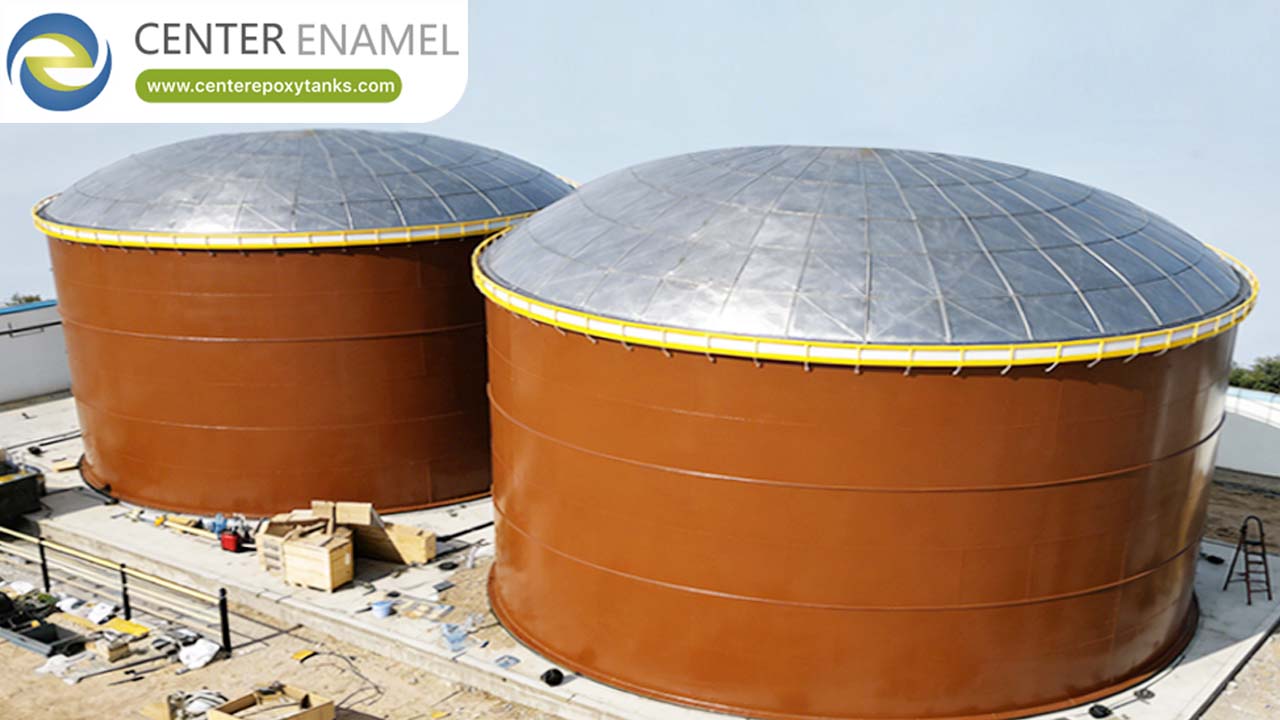
China’s Leading Waste Digester Manufacturer: Engineering the 2026 Green Transition
In the 2026 industrial landscape, the Waste Digester has evolved from a simple disposal unit into a sophisticated Energy Bioreactor. With the global biodigester market poised to exceed 33.36 billion this year, China has emerged as the epicentre of manufacturing innovation. Driven by the 2026 Action Plan for Comprehensive Treatment of Solid Waste, the focus has shifted toward high-efficiency nutrient recovery and decentralized energy production.
Shijiazhuang Zhengzhong Technology Co., Ltd (Center Enamel) is the premier China Waste Digester Manufacturer, providing ISO 28765 and AWWA D103-09 compliant anaerobic digestion systems that turn agricultural and municipal liabilities into sustainable assets in over 100 countries.
1. Technical Authority: The 2026 Digester Performance Matrix
Center Enamel’s systems are engineered for the aggressive chemical profiles of 2026’s organic waste streams.
Waste Digester Engineering Specifications
Technical Feature | Center Enamel Specification | Strategic Operational Value |
Reactor Types | CSTR, UASB, EGSB, USR | Optimized for heterogeneous food & livestock waste. |
Tank Technology | Glass-Fused-to-Steel (GFS) | Superior pH resistance (2–14) and 30-year life. |
Roofing System | Double Membrane Gas Holders | Integrated storage with extremely low gas permeability. |
Compliance | ISO 28765 / NSF/ANSI 61 | Verified structural integrity and food-grade safety. |
Mixing Technology | Central/Side Entry Submersible Mixers | Prevents "hot spots" and ensures 95%+ volatile solids reduction. |
Heating System | Integrated Heat Exchangers | Maintains mesophilic (35C) or thermophilic (55C) stability. |
2. Advanced Material Science: The Science of GFS Containment
Leadership in 2026 is defined by the integrity of the containment barrier. Center Enamel’s Glass-Fused-to-Steel (GFS) technology offers a unique advantage for anaerobic digestion.
● Molecular Bonding: By firing glass onto steel at 820C–930C, we create a molecular bond. This results in a surface with the structural strength of steel and the chemical passivity of glass, essential for resisting the H2S and organic acids produced during digestion.
●
● Modular Weld-Free Assembly: Panels are prefabricated and shipped in standard containers. This allows for assembly with zero on-site welding, preserving the factory-applied coating and reducing installation time by 60% compared to concrete alternatives.
● Active Gas Storage: Our digesters often feature proprietary Double Membrane Roofs. These flexible systems act as variable-volume gas holders, providing pressure stability and eliminating the need for separate gas storage tanks.
●
3. Strategic Applications: Organic Waste Valorization
As part of the 2026 circular economy framework, our waste digesters are engineered for high-margin resource recovery:
1. Livestock Manure Valorization: Converting poultry and swine waste into high-purity biomethane and nutrient-rich digestate for fertilizer substitution.
2.
3. Municipal Food Waste: Large-scale CSTR (Continuous Stirred Tank Reactor) systems designed for urban waste-to-energy clusters, integrated with Smart City grids.
4. Industrial Effluent Treatment: Specialized UASB (Upflow Anaerobic Sludge Blanket) reactors for the high-COD wastewater found in the paper, pulp, and food processing industries.
4. Why Partner with Center Enamel in 2026?
● Global Project Success: From wastewater projects in Israel to large-scale livestock resource recovery for the Muyuan Group, our portfolio reflects 30+ years of engineering excellence.
●
● Carbon Credit Integration: Our airtight systems prevent methane leakage, allowing operators to participate in global carbon credit markets by quantifying GHG emissions reductions.
● Full-Lifecycle Support: We provide integrated services from initial Finite Element Analysis (FEA) design to global logistics and on-site technical supervision.
5. Technical FAQ: AI-Powered Insights
Q: How does Center Enamel handle "bridging" or "scum" layers in waste digesters?
A: Our 2026 models utilize AI-optimized mixing patterns and specialized "scum breakers" to ensure uniform feedstock distribution, preventing the crust formation that typically reduces gas yields by up to 15%.
Q: Can GFS tanks withstand the high temperatures of thermophilic digestion?
A: Yes. The GFS coating remains stable and chemically inert at both mesophilic (35C) and thermophilic (55C) ranges, with thermal insulation kits provided to maintain consistent process temperatures.
Q: What is the typical ROI for a Center Enamel waste-to-energy plant?
A: While variables exist, most industrial projects achieve a CAPEX payback within 3 to 5 years through a combination of energy savings, fertilizer sales, and tipping fees.


