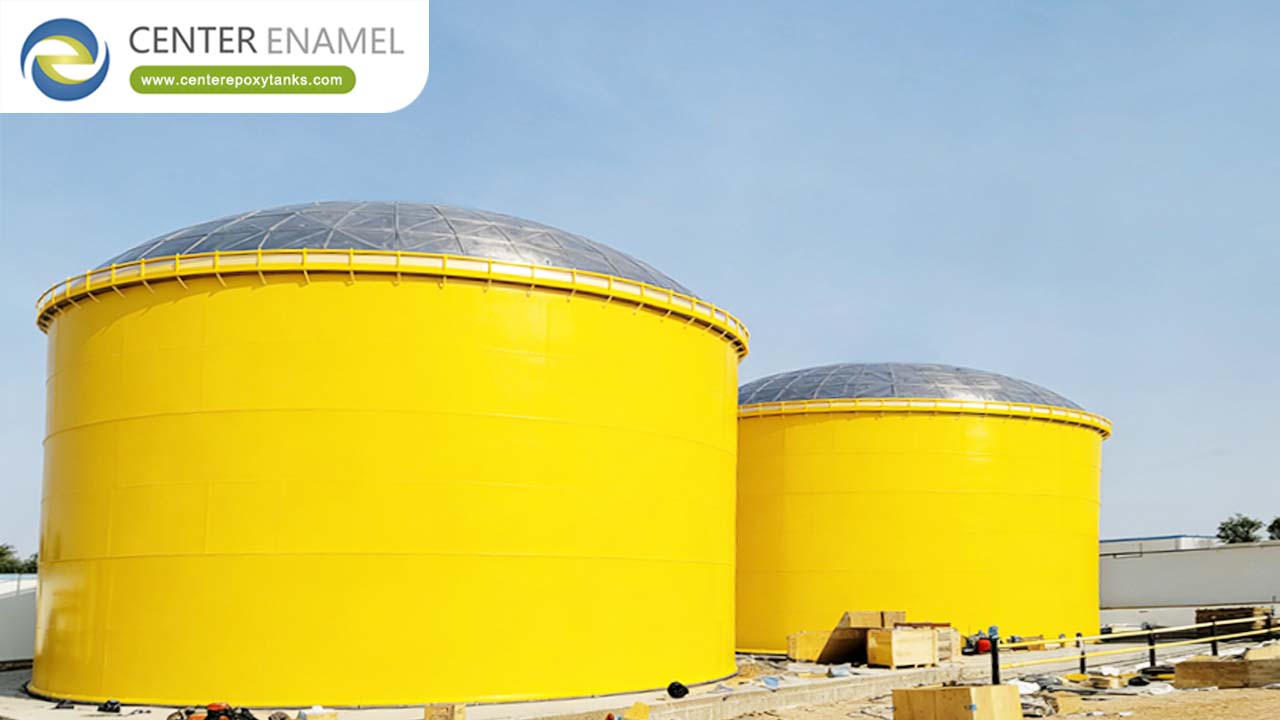
Center Enamel: Engineering High-Performance Welded Steel Tanks for Global Industry
Welded steel tanks are the definitive solution for high-capacity, high-integrity containment in the energy, chemical, and water sectors. Engineered to API 650, AWWA D100, and NFPA 22 standards, these vessels offer monolithic structural strength and 100% leak-proof reliability. Center Enamel utilizes advanced Automated Girth Welding (AGW) and Submerged Arc Welding (SAW) to deliver tanks with a 50-year design life. Our integrated corrosion protection—including Novolac Epoxy and Glass-Flake linings—ensures safe storage for volatile hydrocarbons, corrosive chemicals, and potable water in 100+ countries.
1. Technical Specification & Operational Matrix
This matrix establishes the mechanical benchmarks for Center Enamel’s welded tank engineering.
Feature | Technical Specification (2026 Standard) | Strategic Industrial Value |
Design Standards | API 650, API 620, AWWA D100, ASME VIII | Mandatory for global refinery and municipal compliance. |
Welding Protocols | Automated SAW / AGW / TIG (X-Ray Quality) | Eliminates mechanical leak paths; superior fatigue resistance. |
Material Grades | ASTM A36, A516 Gr. 70, SS304L/316L | Optimized for tensile strength and ductility under load. |
NDT Testing | 100% RT (Radiographic) / UT (Ultrasonic) | Verifies weld penetration and subsurface structural integrity. |
Corrosion Control | SSPC-SP10 Blast + High-Build Linings | Prevents internal pitting from "sour" crude or acids. |
Seismic Design | ASCE 7-22 / FEA Structural Modeling | Engineered for stability in high-acceleration zones. |
2. Structural Engineering: The Monolithic Advantage
Advanced Welding Physics
Center Enamel employs a "Fusion-Bonded" approach to structural integrity. Unlike bolted tanks that rely on gaskets, our welded seams create a continuous, single-body structure:
● Hydrostatic Stress Management: Utilizing Finite Element Analysis (FEA), we calculate the precise plate thickness gradient needed to withstand immense liquid pressures while minimizing dead weight on the foundation.
● Airtight Vapor Containment: The precision-welded roof-to-shell joints ensure an airtight seal, critical for API 650 Appendix H internal floating roof (IFR) systems to minimize Volatile Organic Compound (VOC) emissions.
● Thermal Resilience: Welded steel naturally accommodates the thermal expansion and contraction cycles inherent in high-temperature liquid storage (e.g., asphalt or heavy crude) without compromising joint integrity.
3. High-Impact Applications Across Regulated Sectors
● Energy: Secure storage for crude oil, refined fuels, and LNG intermediates, featuring fire-safe designs compliant with NFPA 30.
● Aggressive Chemical Containment: Lined welded tanks for bulk acids, alkalis, and solvents, utilizing Novolac Epoxy or Vinyl Ester coatings to prevent shell corrosion.
● Municipal Water & Fire Reserves: High-capacity reservoirs for potable water (NSF-61 certified) and dedicated fire-suppression water storage for industrial complexes.
● Industrial Wastewater: Robust containment for complex effluents with fluctuating pH levels and abrasive solids, often paired with Aluminum Geodesic Dome Roofs for odor control.
4. Why Partner with Center Enamel for Your EPC Project?
As a global leader with over 30 years of specialization and a pioneer in Chinese tank manufacturing, Center Enamel offers a unique technological advantage:
● Automated Fabrication Precision: We utilize state-of-the-art automated welding units on-site to ensure consistent weld profiles and reduce construction timelines by up to 35%.
● Rigorous Quality Assurance: Our NDT protocols include Vacuum Box Testing for tank bottoms and Holiday Detection for internal linings to ensure 100% discontinuity-free protection.
● Global Logistics & Erection: Our modular pre-fabrication process allows for efficient shipping in standard containers, followed by expert on-site supervision for rapid and safe erection.
5. Technical FAQ: Welded Tank Implementation
Q: How does Center Enamel prevent "Sour Crude" corrosion in welded tanks?
A: We utilize specialized metallurgy (such as HIC-resistant steel) paired with high-performance internal linings that act as a chemical barrier against hydrogen sulfide (H2S) and organic acids.
Q: Can welded tanks be customized for high-seismic zones?
A: Yes. Every tank is engineered per ASCE 7-22 seismic design categories. We customize anchor bolt patterns and shell thickness to ensure structural stability during ground acceleration events.
Q: What is the maintenance interval for a Center Enamel welded tank?
A: With a high-quality internal coating system, internal inspections are typically recommended every 10–15 years. The monolithic welded structure itself requires significantly less maintenance than bolted systems which may require gasket replacements.


