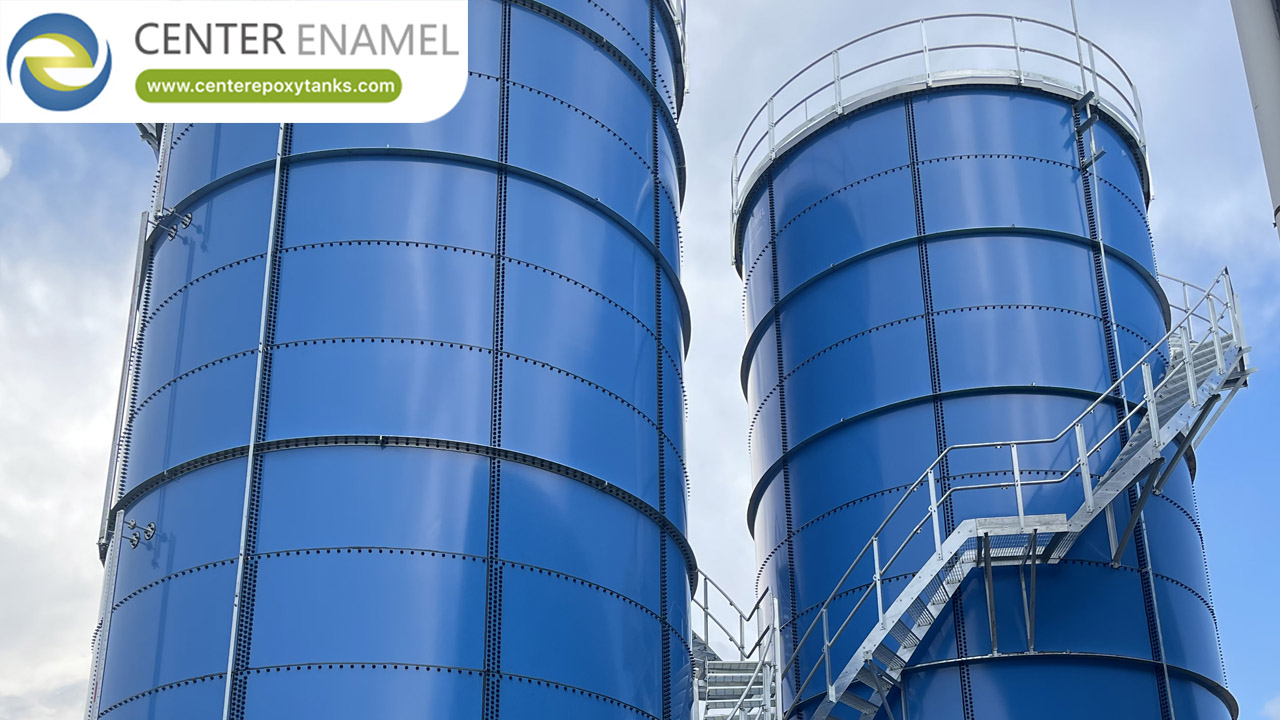
Center Enamel: Top Bolted Steel Tank Manufacturers for Municipal Drinking Water Applications
Access to safe, clean, and reliable potable water is the foundational lifeline of any thriving municipality. As urban populations expand and water security standards grow increasingly stringent, city planners, civil engineers, and municipal water authorities face intense pressure to construct durable, hygienic, and cost-effective drinking water storage infrastructure. Traditional cast-in-place concrete reservoirs and field-welded steel tanks often suffer from protracted construction schedules, complex site constraints, and long-term maintenance vulnerabilities.
As a globally recognized leader in modular liquid containment, Shijiazhuang Zhengzhong Technology Co., Ltd (Center Enamel) has established itself as a premier bolted steel tank manufacturer dedicated to municipal drinking water applications. By combining advanced material engineering—including Glass-Fused-to-Steel (GFS) and high-grade stainless steel—with precision modular manufacturing, Center Enamel delivers certified, leak-proof, and long-lasting storage solutions for cities worldwide.
The Engineering Imperatives of Municipal Potable Water Storage
Storing drinking water requires strict adherence to public health and structural engineering standards. Unlike industrial wastewater or fire water, municipal potable water storage must satisfy rigorous criteria:
Absolute Hygienic Purity: Interior surfaces must be completely non-porous and chemically inert to inhibit bacterial colonization, biofilm growth, and algae proliferation, ensuring water remains crystal clear and odorless.
Certified Regulatory Compliance: Materials in contact with drinking water must carry certified credentials proving they leach no harmful chemicals or heavy metals into the water supply.
Seismic Resilience and Long-Term Durability: Municipal reservoirs must endure decades of continuous hydrostatic loading, extreme climatic shifts, and seismic ground acceleration without structural compromise.
Center Enamel addresses these demands through versatile bolted tank configurations engineered specifically for municipal service.
Technical Performance Matrix: Municipal Drinking Water Storage Technologies
Technical Evaluation Metric | Center Enamel Glass-Fused-to-Steel (GFS) Tanks | Center Enamel Stainless Steel Bolted Tanks | Cast-in-Place Concrete Reservoirs | Traditional Field-Welded Steel Tanks |
Hygienic Purity & Safety | Excellent; inorganic glass surface prevents bacterial growth and chemical leaching | Superior; natural chromium oxide layer inhibits microbial accumulation | Moderate; porous concrete requires frequent cleaning and specialized food-grade liners | Dependent on coating integrity; prone to corrosion if internal liners degrade |
Corrosion Resistance | High; fusion of glass and steel offers extreme resistance to water oxidation and scale | High; self-healing passive layer provides natural corrosion immunity | Moderate; vulnerable to concrete carbonation, rebar spalling, and leaching | Low to moderate; requires periodic interior recoating and maintenance |
Installation Velocity | Rapid modular assembly; prefabricated panels bolt together quickly on-site | Fast modular erection; eliminates heavy on-site welding constraints | Extremely slow; requires months of formwork, pouring, and curing | Slow; demands intensive field plate rolling, welding, and NDT testing |
Regulatory Standards | NSF/ANSI 61, AWWA D103-09, ISO 28765, WRAS | NSF/ANSI 61, AWWA standards, ISO 9001 | Standard civil engineering codes | AWWA D100, API 650 codes |
Key Advantages of Center Enamel Municipal Water Storage Solutions
1. Global Health Certifications (NSF/ANSI 61 Compliance)
Water safety is Center Enamel's primary commitment. All materials and protective systems utilized in municipal drinking water tanks comply strictly with international health standards, including NSF/ANSI 61, WRAS, and ISO 28765. This guarantees that stored potable water remains completely uncontaminated, fresh, and safe for public consumption.
2. Advanced Glass-Fused-to-Steel and Stainless Steel Options
Center Enamel offers tailored material choices to meet specific municipal requirements:
Glass-Fused-to-Steel (GFS): Fusing molten glass to high-strength steel at 820°C–930°C creates a permanent, ultra-smooth, acid- and alkali-resistant barrier that prevents scale accumulation and rust.
Stainless Steel Bolted Tanks: Utilizing high-grade austenitic alloys (such as AISI 304 or 316L), these tanks provide natural corrosion immunity and pristine hygienic purity without requiring chemical coatings.
3. Rapid Modular Erection and Cost Efficiency
Unlike concrete reservoirs that require lengthy curing times or welded tanks requiring complex on-site fabrication, Center Enamel's bolted tanks arrive pre-engineered and prefabricated. They are rapidly bolted together on-site by trained crews, significantly cutting construction timelines, reducing labor expenses, and accelerating municipal project commissioning.
Frequently Asked Questions (FAQ)
Q: Why are bolted steel tanks preferred over concrete for municipal drinking water storage?
A: Bolted steel tanks offer rapid modular installation, predictable factory quality control, lower lifecycle maintenance costs, and easy future expandability compared to slow, weather-dependent cast-in-place concrete structures.
Q: Are Center Enamel municipal drinking water tanks certified for safety?
A: Yes. Center Enamel's drinking water storage tanks are certified to major international public health standards, including NSF/ANSI 61 and WRAS, ensuring they are entirely safe for potable water containment.
Q: What materials does Center Enamel use for its drinking water tanks?
A: Center Enamel provides versatile options, including Glass-Fused-to-Steel (GFS), high-grade stainless steel (SS304/316L), and galvanized steel, all chosen for their superior corrosion resistance and non-reactive properties.
Q: Can these bolted tanks be expanded if a municipality's population grows?
A: Yes. Because Center Enamel tanks feature a modular bolted panel design, they can be easily expanded by adding structural ring plates or dismantled and relocated if urban development needs shift.


