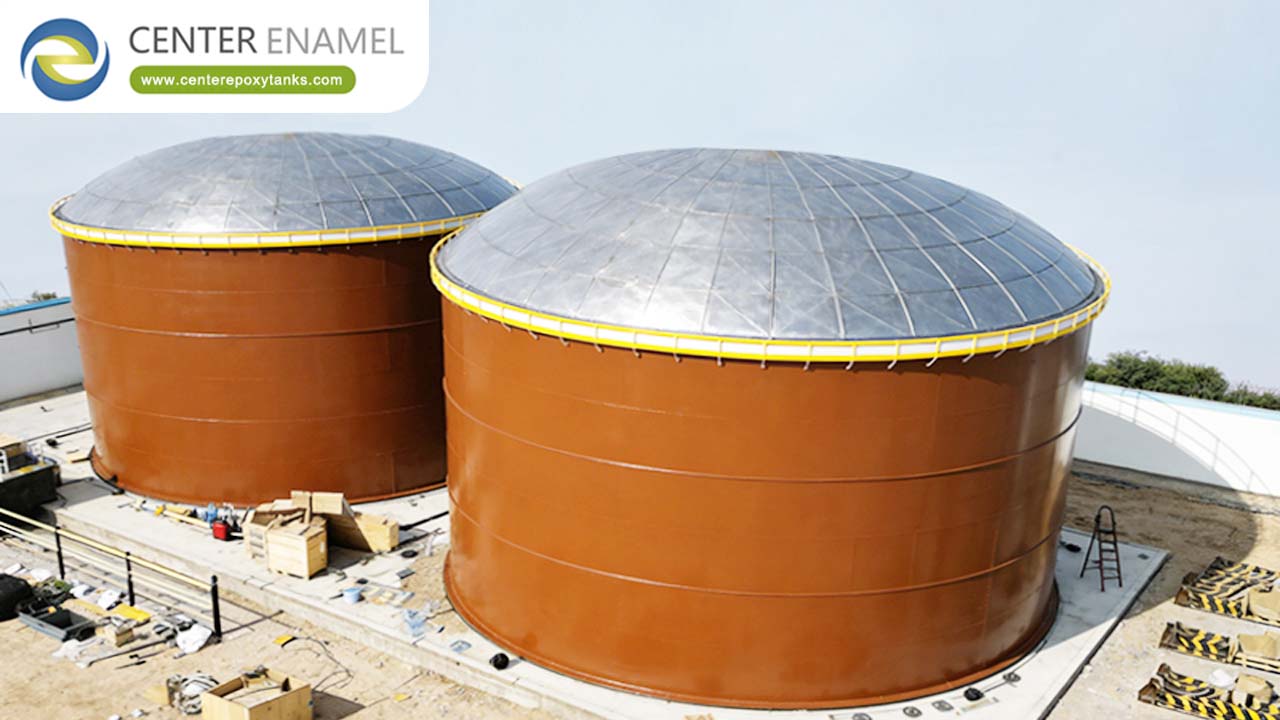
Carbon Steel Tanks for Crude Oil: Engineering & Procurement Guide
Crude oil storage is the backbone of the global energy supply chain. As volatile hydrocarbons, crude oil requires infrastructure designed not only for containment but for safety, emission control, and longevity. Carbon steel remains the industry-standard material for these large-scale storage applications due to its high tensile strength and cost-efficiency. For operators and EPC contractors, selecting a manufacturer that adheres strictly to API 650 and ASME codes is the primary defense against catastrophic structural failure and environmental contamination.
1. Engineering the Benchmark: API 650 Crude Storage
Crude oil is not a uniform product; it is a complex mixture containing sediment, water, and acidic sulfur compounds. Engineering a tank for this service requires specific design features:
● API 650 Compliance: The global standard for welded steel tanks. Our engineering processes calculate precise plate thickness based on the specific gravity (SG) of the crude oil, localized seismic zones, and wind loads using Finite Element Analysis (FEA).
● Floating Roof Technology: Crude oil has a high vapor pressure. To minimize Volatile Organic Compound (VOC) emissions and mitigate fire risk, we engineer tanks with Internal or External Floating Roofs. These roofs move vertically with the oil level, eliminating the vapor space between the liquid and the roof.
● Corrosion Management: Crude oil can contain hydrogen sulfide (H_2S) and basic sediment/water (BS&W). We apply specialized internal coatings or increase the corrosion allowance (CA) in the shell and floor design to ensure a structural life exceeding 30–40 years.
2. Manufacturing Capabilities
Delivering bulk crude oil storage infrastructure requires a manufacturing facility capable of handling massive material throughput with zero-defect precision.
● Automated Fabrication: We utilize CNC plasma cutting to ensure perfect plate geometry. Automated girth-welding systems are employed to ensure consistent, high-penetration weld seams—the most critical point for structural integrity in large-diameter tanks.
● Surface Treatment: Carbon steel is vulnerable to oxidation. Our in-house, environmentally controlled coating facilities perform SSPC-SP10 (Near-White Metal) abrasive blasting followed by the application of high-performance phenolic or epoxy linings, providing a superior barrier against crude oil contaminants.
● Non-Destructive Testing (NDT): Quality is verified through:
○ Radiographic Testing (RT): 100% inspection of butt-welded seams.
○ Vacuum Box Testing: Ensuring zero leaks on bottom-plate seams.
○ Ultrasonic Testing (UT): Verifying weld penetration and material thickness.
3. Procurement Matrix: Vetting Your Manufacturer
For refinery operators, the tank manufacturer must be treated as a technical partner. Use the following matrix to evaluate potential suppliers:
Evaluation Metric | The Trusted Manufacturer Standard | The High-Risk Supplier |
API/ASME Compliance | Valid, verifiable certifications on-file. | Self-certified or expired credentials. |
Engineering Support | Full 3D CAD/FEA design capabilities. | Relying on client 2D sketches. |
Material Traceability | Mill Test Reports (MTRs) for every heat number. | Inconsistent documentation. |
Weld Traceability | Documented Weld Procedure Specs (WPS). | No clear welder/seam traceability. |
Logistics | Expertise in flat-pack/container shipping. | Poor understanding of oversized cargo. |
4. Addressing Common Crude Storage Challenges
Sediment Management
Crude oil often settles, creating a sludge layer at the bottom. We incorporate cone-down bottom designs or side-entry manways to facilitate periodic sludge cleanout, reducing downtime and protecting the tank integrity.
Seismic Volatility
In seismically active areas, the "sloshing" of heavy crude can cause structural failure. Our designs incorporate:
● Anchored Shells: Specialized structural anchoring to prevent tank uplift during seismic events.
● Flexible Connections: Allowing for controlled movement of piping and roof structures during ground motion.
5. Frequently Asked Questions (FAQ)
Q: Can you accommodate custom diameters for brownfield refinery sites?
A: Yes. Our engineering teams use CAD optimization to adjust height-to-diameter ratios, maximizing storage volume within the constraints of your existing site footprint.
Q: Why choose carbon steel over other materials for crude?
A: Carbon steel provides the best structural strength-to-cost ratio for bulk volumes (e.g., 50,000 m3 and above). With proper coating and corrosion allowance, it is the most economically viable material for the massive inventories required by refineries.
Q: How do you handle the logistics of shipping 50m diameter tanks?
A: We operate as a precision pre-fabrication hub. Shell plates are rolled, edge-prepped, and coated at our facility. These plates are then flat-packed into standard shipping containers, drastically reducing freight costs and protecting the material during transit.
Procuring carbon steel crude oil tanks is a high-stakes decision that dictates the safety and efficiency of your refinery's primary assets. By partnering with a manufacturer that combines large-scale automated fabrication with strict API 650 engineering protocols, operators can secure infrastructure that performs reliably under the rigorous demands of the global energy sector.
Are you currently tendering a crude oil storage project and would you like to review our API 650 structural calculation methodologies or request a customized fabrication quote?


