Carbon Steel Aboveground Oil Tank Design Envelope
Welded steel oil tanks are built in the field to API 650, giving a continuous, leak-tight shell for fuel, crude, and process oil. For carbon steel aboveground oil tank the weld quality and post-weld inspection decide the tank's whole service life.
What Is Carbon Steel Aboveground Oil Tank?
A welded steel oil tank is a vertical cylindrical vessel whose shell courses are welded on site from rolled steel plates. Designed mainly to API 650 (or EN 14015), it handles flammable and non-flammable oils where a single, seamless shell is preferred over bolted construction.
How Does It Work?
Shell plates are rolled to radius, set on a foundation, and welded course by course. The one-foot method sets shell thickness from the design liquid height and allowable stress. After welding, surfaces are blast-cleaned (typically Sa 2.5), coated, and the tank is water-tested. Radiography or ultrasonic testing verifies critical welds.
Key Types, Components, and Features
· API 650 welded fuel oil:carbon steel, fixed or floating roof, shop+field weld.
· Welded hydraulic oil reservoir:smaller, often shop-fabricated, with baffles.
· Welded coconut/edible oil:hygienic internal finish, sometimes stainless.
· Sturdy welded:thicker shell, wind girder, ring-wall foundation margins.
Applications
· Fuel oil and diesel storage at plants and depots
· Crude and intermediate oil at terminals
· Hydraulic oil reservoirs and power-unit tanks
· Food-grade welded tanks for coconut and edible oil
Technical Considerations
· Standards:API 650 (US), EN 14015 (EU), plus NFPA for fire separation and API 2610 for terminals.
· Material:carbon steel with mill certificates; impact-tested plate in cold climates.
· Surface prep:abrasive blast to Sa 2.5, then coating system matched to service.
· Inspection:RT/UT on shell and bottom welds; vacuum-box on seams; hydrostatic test.
· Foundation:ring wall or sand pad with settlement control.
Key Engineering Parameters
Design Parameter | Typical Value / Range | Why It Matters |
Design standard | API 650 / EN 14015 | Code basis |
Shell thickness | One-foot method | Holds liquid height |
Plate material | Carbon steel, mill cert | Traceability |
Blast grade | Sa 2.5 | Coating adhesion |
Welding NDT | RT/UT + vacuum box | Joint integrity |
Hydrostatic test | Full fill | Leak verification |
Foundation | Ring wall / sand pad | Settlement control |
Roof | Fixed or floating by vapor pressure | Emission control |
Fire separation | NFPA / API 2610 | Site safety |
Project Case Study
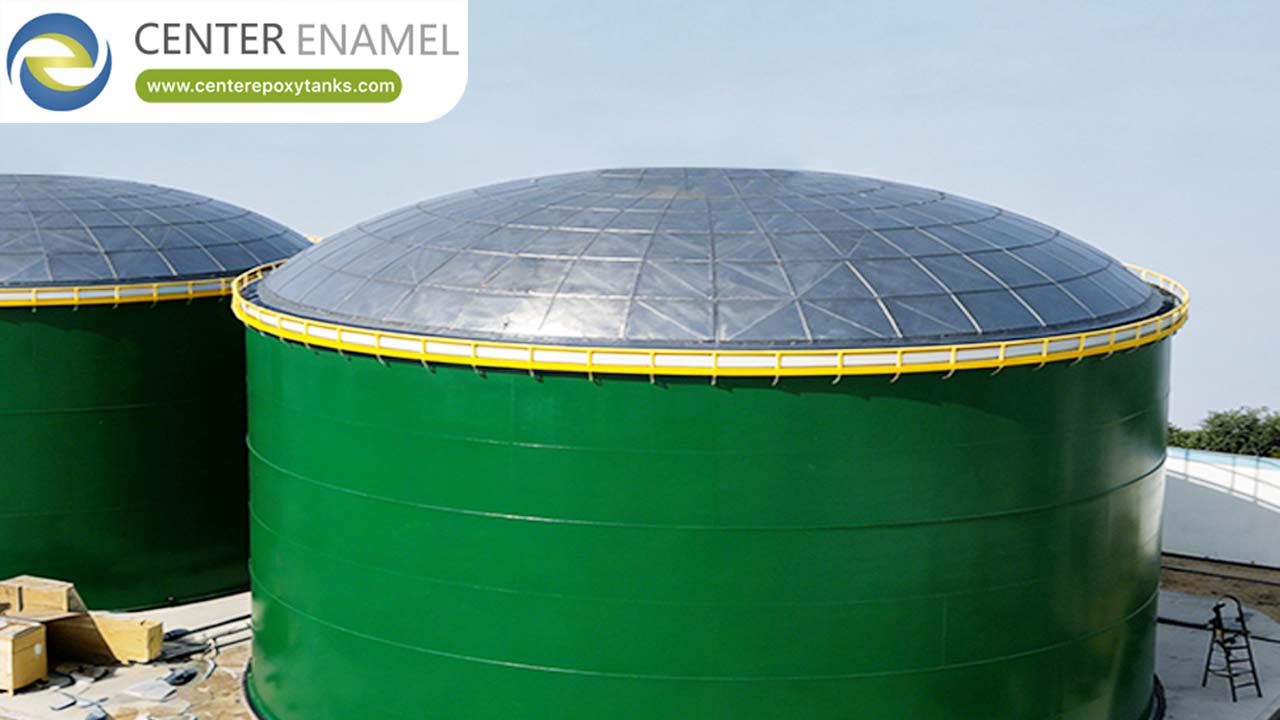
The following verified installation demonstrates the containment engineering discipline behind carbon steel aboveground oil tank. (Application shown is the tank's actual delivered service; the same bolted, coated, or stainless engineering underlies oil-storage designs discussed here.)
Project Information | Details |
Location | India |
Year | 2024 |
Industry / Application | Fire-protection water for an industrial facility |
Product / Tank type | GFS bolted |
Configuration | 3 tanks, φ 19.86 × 13.2 m |
Capacity | 12,261 m³ |
Standards | AWWA D103-09 / ISO 28765 |
Status | Completed |
This reference is cited for its documented liquid-containment and corrosion-control engineering; it is not represented as an oil tank where it was a water or wastewater installation.
Advantages and Limitations
Advantages
· Continuous, seam-light shell for flammable service
· Proven, code-rich design basis (API 650)
· Readily fitted with heaters, mixers, and floating roofs
· Suits very large diameters and high heights
Limitations
· Field welding needs skilled labor and weather windows
· Longer erection than bolted panel systems
· Repainting the exterior is a confined-space concern over time
Comparison
Feature | Welded Steel | Bolted GFS/Epoxy | Stainless |
Shell seams | Welded | Bolted+gasket | Welded/bolt |
Erection speed | Slower | Faster | Medium |
Flammable oil | Primary | Limited | Yes |
Cost | Medium | Medium | High |
Max size | Very large | Large | Medium |
How to Select the Right Solution
· Confirm API 650 vs EN 14015 by project location
· Set shell thickness by one-foot method and liquid height
· Specify blast grade, coating system, and NDT extent
· Plan foundation and settlement verification
· Decide fixed vs floating roof by vapor pressure
carbon steel aboveground oil tank built to API 650 deliver a code-aligned, long-life asset when welding and inspection are disciplined. The roof and coating choices then follow the service.
Frequently Asked Questions (FAQ)
What is a welded steel oil tank?
It is a vertical cylindrical tank built in the field to API 650 (or EN 14015), with shell courses welded from rolled steel plates for a continuous, leak-tight shell.
How is shell thickness determined?
The one-foot method sets course thickness from design liquid height and allowable stress, with the bottom course thickest and upper courses stepping down.
What inspection is required?
Surfaces are blasted to Sa 2.5 and coated; critical welds get RT/UT, seams get vacuum-box testing, and the tank is hydrostatically tested.
When is welded better than bolted?
Welded construction is the primary choice for flammable crude and fuel oil and for very large diameters where a seamless shell is preferred.
What foundation does it need?
A ring-wall or sand pad with settlement control, sized for the filled weight and the soil bearing capacity.
Can it take a floating roof?
Yes. Welded shells readily accept external or internal floating roofs based on the service vapor pressure.
For carbon steel aboveground oil tank, share your product, capacity, vapor pressure, corrosivity, and site loads with an engineering team to receive a specification and quotation aligned to API 650, EN 14015, ISO 28765, or AWWA D103-09.


