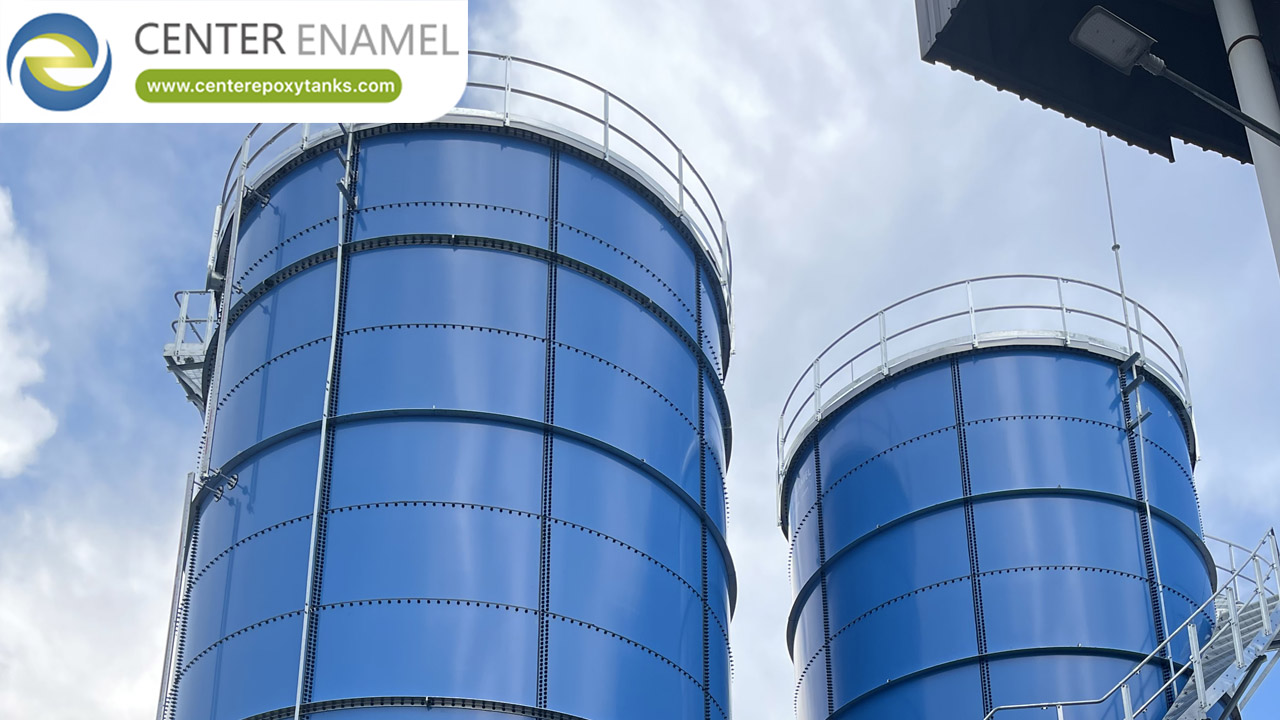
Bolted Steel Water Tanks for Emergency Fire-Fighting Water Tanks: Engineering Standards, NFPA 22 Compliance, and Infrastructure Resilience
When a fire suppression system activates, the water supply must perform instantly and flawlessly. In industrial facilities, commercial complexes, and municipal districts, relying exclusively on municipal water mains can introduce severe vulnerabilities due to pressure fluctuations, infrastructure aging, or grid failures during natural disasters.
A bolted steel water tank engineered for emergency firefighting provides an independent, dedicated, and high-capacity water reservoir. These modular containment systems are specifically designed to deliver the rigorous flow rates and pressures demanded by high-demand sprinkler networks, such as Early Suppression Fast Response (ESFR) systems, without drawing from overstrained public utilities.
1. Why Bolted Steel Dominates Emergency Fire Protection
Unlike traditional poured concrete or field-welded steel tanks, modular bolted steel tanks offer a combination of structural reliability, manufacturing precision, and rapid deployment speed:
Controlled Factory Quality Control: Steel panels are manufactured and coated in ISO-certified, climate-controlled facilities. Factory-applied finishes eliminate the human error and weather-dependent inconsistencies associated with field-applied painting or welding.
Rapid Modular Erection: Assembled ring-by-ring using specialized jacking systems, bolted tanks can be constructed in a fraction of the time required for concrete or field-welded vessels—reducing overall project timelines by up to 50 percent.
Adaptable Sizing and Expansion: The modular panel design allows tanks to be easily scaled, disassembled, or relocated if facility expansion or changing fire flow requirements dictate a larger reserve capacity.
2. Governing Engineering Standards and NFPA 22 Compliance
To qualify as an approved fire protection asset, an emergency water storage tank must comply strictly with international life-safety benchmarks:
NFPA 22 (Standard for Water Tanks for Private Fire Protection): The global regulatory benchmark governing the design, construction, and appurtenances of private fire protection water storage. It dictates strict engineering parameters for water draw-down, structural integrity, and safety accessories.
AWWA D103: The American Water Works Association standard that governs bolted steel tank structural engineering, wind loading, and seismic design coefficients (referenced through ASCE 7) to ensure the tank remains functional after an earthquake or major storm.
Data Table: Bolted Steel Fire Tank Coating & Specification Matrix
Tank Coating System | Primary Material Base | Corrosion Resistance Profile | Typical Design Lifespan | Governing Standards |
Glass-Fused-to-Steel (GFS) | High-Strength Structural Steel | Superior (Inert glass-steel bond) | 30 plus years | AWWA D103 / NFPA 22 |
Fusion Bonded Epoxy (FBE) | High-Strength Structural Steel | High (Thermosetting polymer layer) | 20 plus years | AWWA D103 / NSF/ANSI 61 |
Hot-Dip Galvanized (HDG) | Structural Steel Panels | Good (Sacrificial zinc-iron layer) | 20 plus years | ISO 1461 / AWWA D103 |
3. Essential Fire Protection Appurtenances
An NFPA 22 compliant bolted steel fire tank requires specialized internal and external accessories to ensure uninterrupted operation during an emergency:
Anti-Vortex Plate Assembly: Positioned at the discharge outlet, this plate prevents air from being drawn into the pump suction line (cavitation), ensuring a steady, solid stream of water reaches the fire pumps.
Freeze Protection Systems: In regions where ambient winter temperatures drop below 4.4 degrees Celsius (40 degrees Fahrenheit), NFPA 22 mandates internal immersion heaters or external circulation heating loops to prevent ice formation.
Liquid Level Indicators and Alarms: Calibrated external gauges and low-water-level alarms provide facility operators and fire inspectors with immediate visual confirmation of tank capacity.
Frequently Asked Questions (FAQ)
Q: What is a bolted steel water tank for emergency firefighting?
A: It is a modular, high-capacity industrial containment vessel engineered to provide an independent, reliable, and instantly accessible water reserve dedicated exclusively to fire suppression systems.
Q: Why is NFPA 22 compliance critical for fire water storage tanks?
A: NFPA 22 is the global standard governing private fire protection water tanks, ensuring that capacity, structural wind/seismic resistance, and discharge appurtenances meet strict life-safety requirements.
Q: How do glass-fused-to-steel tanks prevent corrosion in static fire water?
A: Glass-fused-to-steel tanks fuse molten glass to structural steel at high temperatures, creating an inert, non-porous barrier that resists rust and prevents sediment buildup from clogging sprinkler heads.
Q: What is the typical installation time for a bolted steel fire water tank?
A: Depending on capacity, a bolted steel fire water tank can typically be erected on-site in just two to four weeks following panel delivery, making it ideal for fast-track construction schedules.


