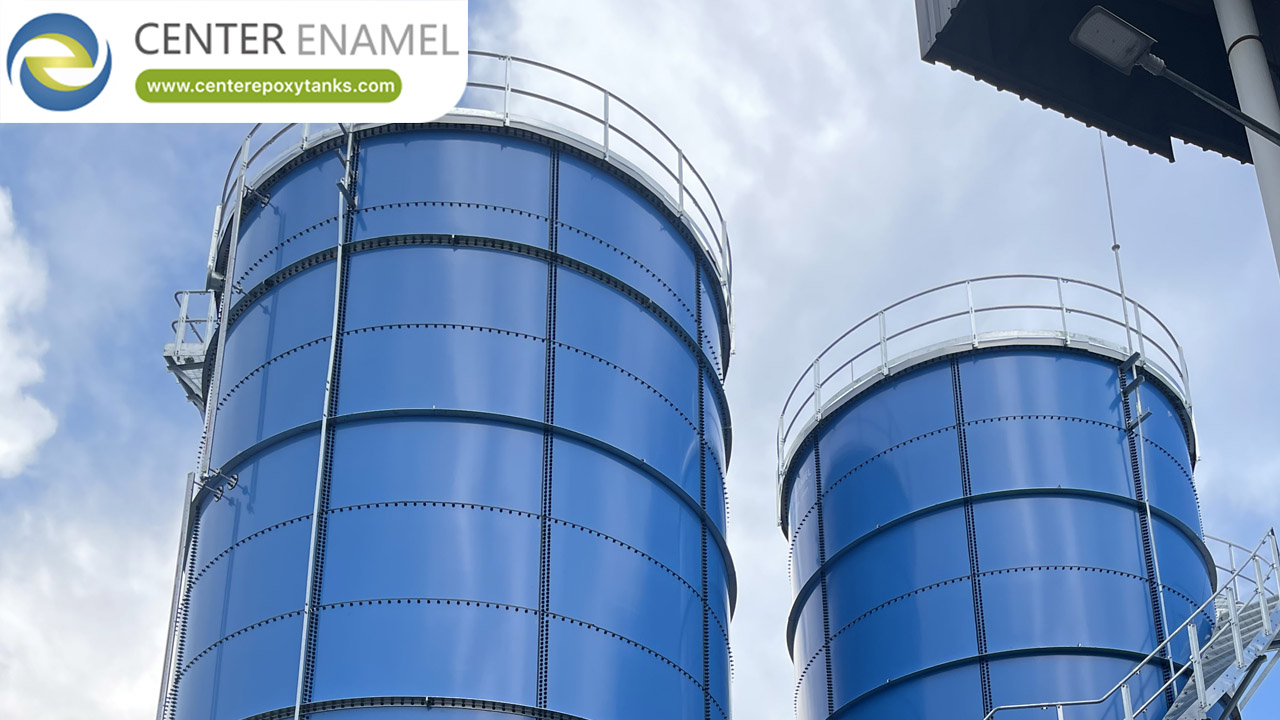
Bolted Epoxy Coated Steel Tanks in Rainwater Storage: Advanced Engineering for Sustainable Water Harvesting
As global water scarcity, municipal infrastructure pressures, and stringent environmental regulations intensify, sustainable water management has become a top priority for commercial, industrial, and municipal sectors. Rainwater harvesting (RWH) offers an effective strategy for conserving potable water supplies, reducing stormwater runoff, and providing reliable secondary water sources for irrigation, cooling towers, and fire protection.
However, storing large volumes of harvested rainwater introduces significant engineering challenges, including environmental exposure, microbial growth, and structural corrosion. Traditional storage methods—such as deteriorating concrete basins prone to cracking or welded steel tanks susceptible to rapid internal oxidation—frequently fail to deliver long-term reliability. To overcome these limitations, bolted epoxy coated steel tanks have emerged as the premier global standard for modern rainwater storage, combining modular engineering with superior corrosion protection.
The Engineering Mechanics of Bolted Epoxy-Coated Steel Tanks
Bolted steel tank technology relies on precision-engineered, factory-fabricated steel panels that are bolted together on-site using specialized structural fasteners and high-performance elastomeric sealants. When combined with advanced epoxy coating systems, the result is a high-performance containment vessel:
Controlled Factory Application: Unlike field-applied paints or hand-brushed linings, high-grade epoxy and Fusion Bonded Epoxy (FBE) powders are electrostatically sprayed onto pre-treated steel plates and thermally cured in precision industrial ovens. This creates a permanent, uniform cross-linked protective barrier.
Modular Scalability and Strength: High-tensibility steel plates provide exceptional structural load capacity against wind shear, seismic activity, and hydrostatic head pressure. The modular design also allows tanks to be easily expanded, dismantled, or relocated if facility water storage needs change.
Hygienic and Non-Porous Surface: The smooth, glass-like finish of cured epoxy coatings prevents biofilm accumulation, algae growth, and mineral scaling, maintaining high water quality over extended storage periods.
Technical Performance Matrix: Rainwater Storage Technologies
Technical Parameter | Bolted Epoxy-Coated Steel Tanks | Cast-in-Place Concrete Basins | Field-Welded Carbon Steel Tanks |
Corrosion Resistance & Water Purity | Excellent; inert epoxy barriers prevent rust migration and protect water quality | Moderate; vulnerable to concrete carbonation, leaching, and algae colonization | Moderate to low; prone to pitting and rust flaking without continuous maintenance |
Construction Speed & Deployment | Rapid modular erection completed in days using lightweight mechanical tools | Slow civil construction requiring extensive formwork and multi-week concrete curing | Labor-intensive field welding and weather-dependent protective coating work |
Structural Scalability & Relocation | High scalability; bolted panels allow future height extensions or relocation | Monolithic structure; impossible to modify, expand, or relocate once poured | Difficult to modify without extensive hot-work cutting and re-welding |
Governing Engineering Standards | Engineered strictly to AWWA D103, ISO 28765, and NSF/ANSI 61 | Governed by local civil masonry and structural concrete standards | Governed by general steel design codes with variable field quality checks |
Core Advantages for Rainwater Harvesting Infrastructure
1. Compliance with Potable and Safety Standards
Rainwater collected for industrial or municipal applications often requires certified containment materials. Premium epoxy-coated steel tanks comply with rigorous health and safety standards such as NSF/ANSI 61, verifying that the stored water remains untainted by chemical leaching and safe for designated downstream uses.
2. Exceptional Weather and UV Resilience
Rainwater storage tanks are typically installed outdoors, exposing them to intense ultraviolet (UV) radiation, temperature fluctuations, and aggressive weather. Specialized exterior UV-resistant topcoats protect the structural integrity of epoxy tanks, preventing fading, chalking, and thermal degradation.
3. Minimized Lifecycle Maintenance
Traditional steel tanks require frequent, costly cycles of draining, abrasive blasting, and recoating to combat rust. Bolted epoxy-coated tanks eliminate these recurring maintenance burdens, offering a multi-decade service life with minimal operational upkeep.
Frequently Asked Questions (FAQ)
Q: Why choose bolted epoxy-coated steel tanks for rainwater storage?
A: Bolted epoxy-coated steel tanks provide superior corrosion resistance, rapid modular installation, high structural durability, and a smooth, non-porous surface that prevents algae and bacterial growth, ensuring safe and reliable rainwater containment.
Q: Are epoxy-coated steel tanks safe for storing harvested rainwater?
A: Yes. When manufactured with certified coatings compliant with standards like NSF/ANSI 61, the epoxy barrier is completely inert, preventing chemical leaching and maintaining high water quality suitable for industrial, agricultural, or municipal applications.
Q: How does modular bolted construction compare to concrete tanks in installation speed?
A: Bolted steel tanks are prefabricated in a controlled factory environment and shipped flat-packed for rapid on-site assembly. A standard rainwater tank can be erected in a fraction of the time required for cast-in-place concrete, which suffers from multi-week curing delays and weather dependencies.
Q: Can bolted epoxy-coated water tanks be expanded if water storage demands increase?
A: Yes. Because bolted tanks feature a modular panel design, facility operators can easily dismantle upper rings and add new panels to increase the tank's height and storage capacity as project requirements grow.


