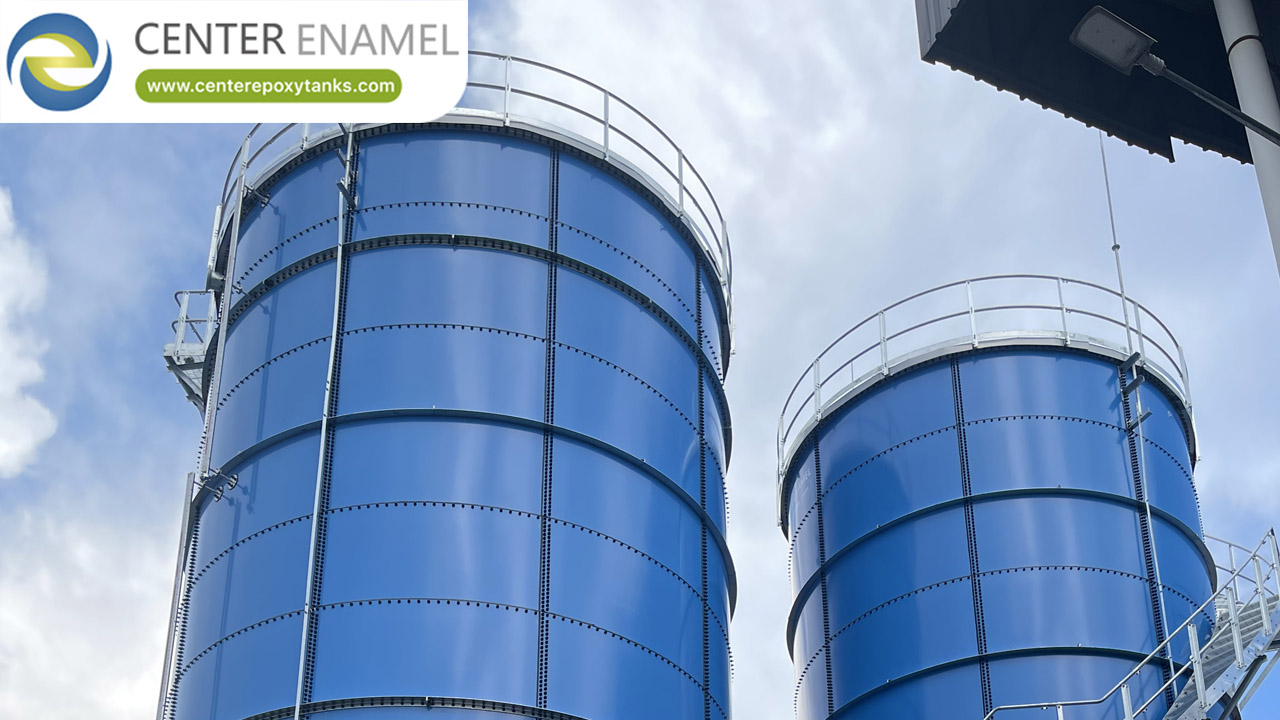
Bolted Epoxy Coated Steel Tanks In Rainwater Storage: Engineering For Water Harvesting
Rainwater is free, and storing it is an engineering problem. The supply is intermittent — it arrives with the rain and stops with it — so the storage has to be sized against the dry spell, the catchment has to deliver the water clean, and the tank has to keep it that way. Bolted epoxy coated steel tanks answer the containment part with factory-controlled coating and modular erection.
This article covers bolted epoxy coated steel tanks in rainwater storage: the coating systems, the volume sizing, the catchment and pretreatment design, and the water quality management that keeps the harvested water usable.
Rainwater Harvesting Duty
Rainwater harvesting captures roof runoff and stores it for non-potable use — irrigation, toilet flushing, process water, laundry — or, with the right treatment, potable use. The duty sets the water quality requirement, and the quality requirement sets the tank specification.
The supply is the defining constraint: rainfall is intermittent and seasonal, so the storage volume is the buffer that turns an intermittent supply into a continuous one. Everything else in the design follows from that.
Why Coated Bolted Construction
Bolted construction suits rainwater storage because the duty is modular: the volume is sized to the catchment and the demand, the tank erects from panels without field welding, and the capacity expands in increments if the catchment or the demand grows.
The factory coating is the other half. The panels are coated under controlled conditions and tested before they ship, so the water-contact surface is verified before erection — a quality control regime that field coating cannot match.
Coating Systems For Stored Rainwater
The coating system follows the use. Non-potable duty accepts a broad range of internal coatings; potable duty requires the coating to carry a drinking water component approval, and the specification names the approval the project operates under.
The external system follows the atmosphere, and the specification states the film, the testing and the touch-up regime for the erection cut edges — because the coating is only as good as its restoration after assembly.
Coating System | Suitability | Application Note |
Fusion bonded epoxy | Potable and non-potable water contact | Factory applied to panels, tested per batch |
Vitreous enamel (GFS) | Potable duty with smooth cleanable surface | Fused at high temperature, durable film |
Epoxy internal with polyurethane external | Non-potable with UV exposure | Internal film with external weather protection |
Potable-certified coating systems | Drinking water contact with documented approval | Approval named in the specification |
Sizing The Storage Volume
The volume sizing runs on the water balance: the catchment yield against the demand across the dry spell. The catchment yield is the rainfall, the catchment area and the runoff coefficient together; the demand is the use pattern across the same period.
The design dry spell sets the volume — the longest credible rainless period the storage has to cover — and the calculation carries the seasonal variation rather than the annual average.
First-Flush And Pretreatment
The first rain after a dry period washes the catchment clean — and that wash carries the dirt, the bird droppings and the debris into the tank. The first-flush diverter discards the initial runoff so the stored water stays clean.
The pretreatment continues downstream: the leaf screen at the gutter, the filter at the tank inlet and the settling or diversion arrangements that keep the sediment out of the stored volume.
Roof Catchment And Inlet Design
The catchment is the tank’s supply system. The roof area, the material and the slope set the yield and the cleanliness, and the gutter and downpipe system delivers the runoff to the tank at the rate the rainfall produces.
The inlet design calms the delivery: the inlet is positioned and detailed so the incoming flow does not stir the stored sediment, and the overflow takes the excess the tank cannot hold without surcharging the catchment.
Overflow And Emergency Routing
The overflow is the tank’s pressure relief for water. It is sized from the catchment yield at the design rainfall, and it routes the excess away from the foundation and the structure rather than letting it surcharge the tank.
The routing follows the site: the discharge point, the erosion protection and the connection to the drainage system are all detailed, because an overflow that discharges at the foundation undermines the tank it protects.
Water Quality Management
Stored rainwater degrades if it is left alone: the organics in it decompose, the algae grows where light reaches, and the sediment harbours the bacteria. The management regime keeps the water fresh — the dark tank, the covered inlet and the turnover from regular use.
The monitoring closes the loop: the quality checks at the point of use confirm the regime is working, and the treatment — filtration and disinfection where the use requires it — is sized from the monitoring rather than assumed.
Quality Factor | Management Measure | Verification |
Sediment | Calm inlet and settling arrangements | Internal inspection at the planned interval |
Organic load | First-flush diversion and screening | Quality checks at the point of use |
Algae growth | Dark covered tank and turnover from use | Visual inspection and quality sampling |
Treatment where required | Filtration and disinfection sized from monitoring | Monitoring records against the use requirement |
Erection On Constrained Sites
Rainwater tanks often go where the access is tight — between buildings, on roofs, in courtyards — and the bolted format suits exactly that: the panels ship flat, erect without heavy craneage and assemble in spaces a welded tank cannot reach.
The site survey sets the erection plan: the delivery route, the laydown area, the crane or manual handling plan and the sequence that builds the tank in the space available.
Maintenance And Inspection
The maintenance regime covers the catchment, the pretreatment and the tank. The gutter and screens are cleaned on schedule, the first-flush device is emptied and reset, and the tank is inspected internally at the interval the water quality record supports.
The bolted construction makes the tank maintenance practical: panels renew as modules, so a coating repair is a panel activity rather than a tank-level project.
Center Enamel Rainwater Tank Capability
Center Enamel supplies bolted coated steel tanks for rainwater storage with the coating specification, sizing support and modular erection that water harvesting duty requires. The capability spans potable and non-potable coated systems with export delivery experience across water service.
Our engineering team supports volume sizing, coating selection and site erection planning for rainwater projects. Contact our engineering team for selection guidance and quotation on your next water harvesting installation.
Project Case Study
A potable water storage project in Saudi Arabia required storage capacity delivered as a multi-tank installation matched to the distribution strategy. Center Enamel supplied four glass-fused-to-steel bolted tanks totaling 8,004 m3 in three specifications — one at 11.46 m diameter by 7.2 m height, one at 22.15 m diameter by 7.8 m height and two at 16.81 m diameter by 9.6 m height — covering the storage duties the site demanded.
The multi-specification configuration let each tank be sized to its position in the storage and distribution train rather than forcing a single standard size across the site. The vitreous enamel surface of the GFS panels carried the drinking water contact duty, and the bolted construction suited the site erection schedule. The project was delivered and completed in January 2026.
Project Reference | 01 Saudi Arabia Drinking Water 202601 |
Location | Saudi Arabia |
Application | Potable Water |
Product / Technology | Glass-Fused-to-Steel (GFS) Bolted Tank |
Tank Count | 4 |
Tank Dimensions | φ11.46*7.2m(H), 1 unit; φ22.15*7.8m(H), 1 unit; φ16.81*9.6m(H), 1 unit; φ16.81*9.6m(H), 1 unit |
Total Volume | 8004 m3 |
Completion | Delivered and completed 2026-01 |
Supply Scope Note | A relevance grade to this topic |
About Company
Shijiazhuang Zhengzhong Technology Co.,Ltd(Center Enamel) is a professional manufacturer dedicated to the design and fabrication of bolted storage tanks since 2008. Our products range includes Glass-Fused-to-Steel (GFS) tanks, fusion bonded epoxy tanks, stainless steel tanks, galvanized steel tanks and aluminum geodesic dome roofs. With professional enameling R&D team and nearly 200 enameling patents, Shijiazhuang Zhengzhong Technology Co.,Ltd has become the leader in bolted tanks industry of Asia. Our products are certified to ISO9001, NSF61, EN1090, ISO28765, WRAS ,FM, LFGB, BSCI, IS0 45001 and other international standards.
Shijiazhuang Zhengzhong Technology Co., Ltd is not only the first manufacturer in China which produces Glass-Fused-to-Steel tanks, but also the most experienced professional bolted tanks manufacturer in Asia.The engineering & design, product testing and quality system of Center Enamel Glass-Fused-to-Steel tanks is in strict accordance with AWWA D103-09, OSHA, ISO 28765, NSF/ANSI 61, NFPA and other international standards. Until 2023, Center Enamel bolted tanks have been exported to more than 100 countries including USA, Australia,Canada, Malaysia, Indonesia, Russia, UAE, Panama,Brazil and South Africa etc., the superior tank quality and prompt service gains us worldwide recognition.
As an outstanding containment and cover system provider with decades of industry experience, Shijiazhuang Zhengzhong Technology Co., Ltd sincerely expects to establish long-term cooperation with the local partners throughout the world and make continuous contribution to the development of the industry.
Suggested CTA
Center Enamel delivers epoxy coated bolted engineered for rainwater harvesting duty, with coated bolted tank capability, modular erection for constrained sites. Contact our engineering team for engineering guidance on your next bolted epoxy coated steel rainwater tank project — including sizing, standards compliance and delivery scheduling.
Frequently Asked Questions
Q: Why use bolted tanks for rainwater storage?
A: The duty is modular and the sites are often constrained. Bolted tanks ship as flat panels, erect without heavy craneage in tight spaces, expand in increments and renew as panels — all advantages for harvested water storage.
Q: What coating suits stored rainwater?
A: Fusion bonded epoxy or vitreous enamel for potable contact, and broader epoxy systems for non-potable duty. The specification names the drinking water approval where the use is potable, and states the touch-up regime for erection cut edges.
Q: How is rainwater storage volume sized?
A: From the water balance: the catchment yield — rainfall, catchment area and runoff coefficient — against the demand across the design dry spell. The volume covers the longest credible rainless period with the seasonal variation, not the annual average.
Q: What is a first-flush diverter?
A: A device that discards the initial runoff from the catchment after a dry period, when the wash carries the accumulated dirt and debris. It protects the stored water quality and reduces the load on the downstream filtration.
Q: How is stored rainwater kept fresh?
A: Through a dark covered tank, a calm inlet that does not stir sediment, regular turnover from use, and quality monitoring at the point of use. Where the use requires it, filtration and disinfection are sized from the monitoring.
Q: Why choose Center Enamel for rainwater tanks?
A: Center Enamel supplies bolted coated steel tanks with coating specification control, sizing support and modular erection for water harvesting duty. Contact our engineering team for selection guidance and quotation.


