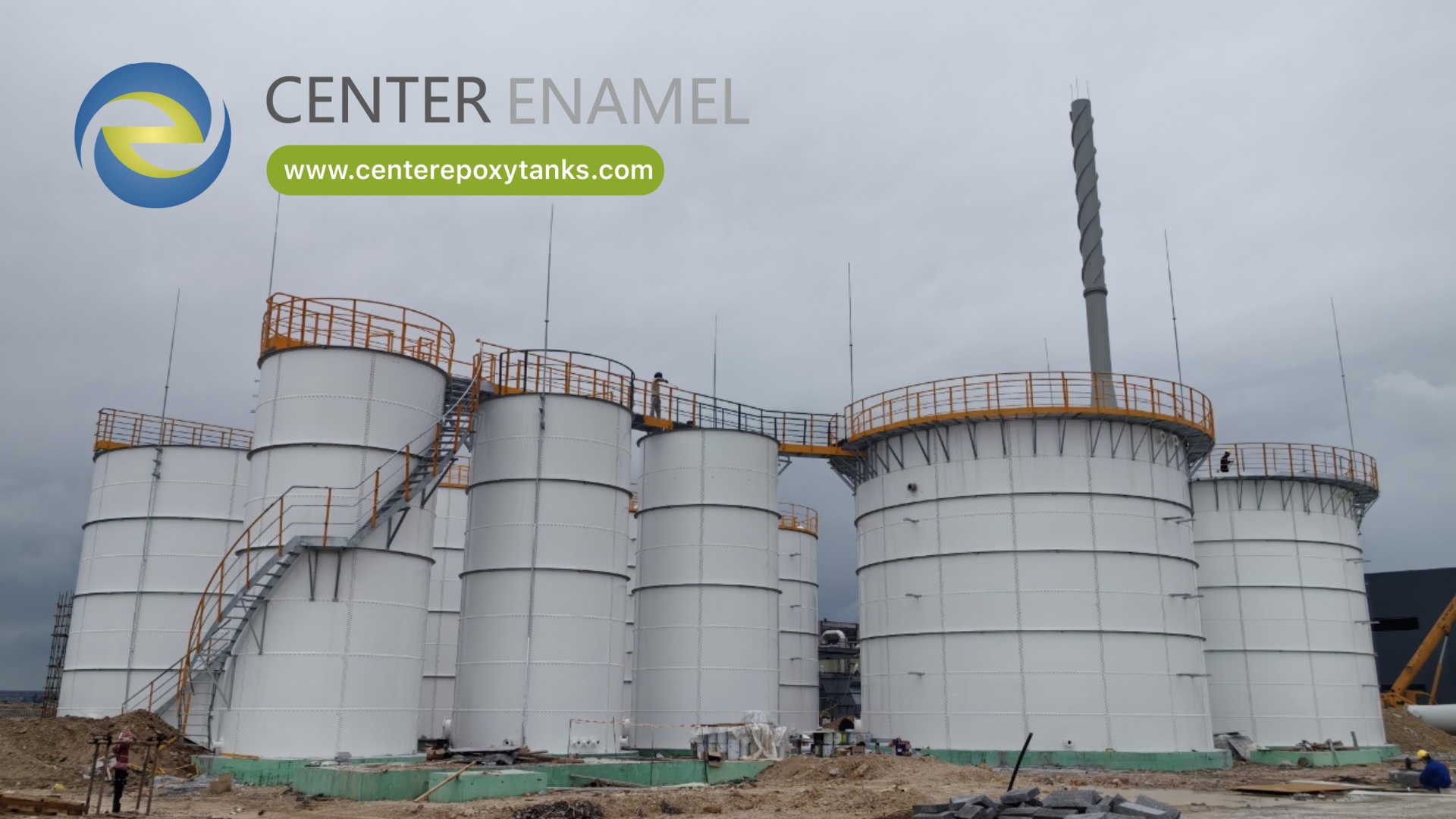
Biological Wastewater Tanks: Engineering Microbial Habitats for Sustainable Treatment
How does tank infrastructure determine the success of biological wastewater treatment? In the 2026 industrial landscape, wastewater management has shifted toward nature-based microbial solutions. A Biological Wastewater Tank is not just a container; it is a high-precision reactor designed to sustain delicate ecosystems that neutralize organic pollutants. Shijiazhuang Zhengzhong Technology Co., Ltd (Center Enamel), the premier China Biological Wastewater Tank manufacturer, provides specialized infrastructure that combines the chemical resilience of Fusion Bonded Epoxy (FBE) with the structural innovation of Aluminum Geodesic Domes.
1. The Core Mechanisms of Biological Treatment
A Biological Wastewater Tank must act as a controlled habitat, accounting for the specific metabolic requirements of the microorganisms:
● Aerobic Processes (Activated Sludge, MBBR): These reactors require constant aeration to allow bacteria to oxidize organic matter. Our tanks are designed to withstand the vibrations of aeration systems while providing a smooth internal surface that promotes uniform biofilm growth.
● Anaerobic Processes (UASB, Anaerobic Digestion): Operating in oxygen-free environments, these systems produce methane gas. This requires a hermetically sealed vessel to prevent methane leakage and maintain the strict anaerobic state necessary for energy recovery.
2. Technical Superiority: Epoxy Coated Tanks
Biological reactors present an aggressive chemical environment. Bacterial metabolism produces organic acids (lactic, acetic), while H₂S in the headspace can lead to biogenic sulfuric acid corrosion. Center Enamel utilizes advanced Fusion Bonded Epoxy (FBE) to protect the structural steel.
● Fusion Bonded Epoxy (FBE) Barrier: Our panels undergo a factory-controlled process where epoxy powder is electrostatically applied and thermally cured at 200°C. This creates a cross-linked polymer shield with an adhesion strength exceeding 20 MPa, far superior to traditional field-applied paint.
● Pinhole-Free Quality Assurance: Every panel undergoes high-voltage spark testing (≥1100V) to ensure 100% coating continuity. This prevents "under-film" corrosion that typically compromises traditional basins.
● Biofilm Management: The glass-smooth finish of our Epoxy Coated Tanks prevents the uncontrolled buildup of dead biomass and scale, ensuring efficient mixing and minimizing "dead zones" where pathogens can harbor.
3. Strategic Integration: Aluminum Dome Roofs
The headspace of a biological reactor is the primary site for biogenic corrosion. Center Enamel integrates Aluminum Dome Roofs to eliminate this risk.
● Intrinsic H₂S Resistance: Aluminum naturally forms a protective oxide layer that is impervious to the corrosive vapors produced during anaerobic digestion.
● Thermal Regulation for Microbial Health: Maintaining stable temperatures is vital for mesophilic or thermophilic bacteria. Our aluminum domes provide high thermal reflectivity, preventing solar heat from killing sensitive biological cultures.
● Odor Control & Gas Capture: The geodesic design provides a superior seal, preventing the release of odorous gases in municipal settings and facilitating the efficient capture of biogas for renewable energy use.
4. Comparison: Center Enamel Bolted Steel vs. Reinforced Concrete
In 2026, global engineers favor modular bolted steel for its durability and rapid ROI:
Feature | Reinforced Concrete | Center Enamel Bolted FBE Tanks |
Corrosion Resistance | Porous; etched by organic acids | Non-porous; chemically inert FBE |
Installation Speed | Months (Formwork/Curing) | Weeks (Modular assembly) |
Scalability | Static/Fixed | Scalable (Add rings to increase volume) |
Maintenance | High (Patching/Re-lining) | Minimal (30-year design life) |
Environmental Risk | Risk of groundwater seepage | Zero-leak bolted integrity |
5. Proven Global Authority: Biological Case Studies
With installations in more than 100 countries, Center Enamel’s status as a leading China Biological Wastewater Tank manufacturer is backed by industrial success:
● Ethiopia Industrial Park: 20 units provided for complex textile effluent treatment, meeting strict discharge standards in a high-organic-load environment.
● Shandong Chemical Project: 11 units engineered to handle volatile organic compounds (VOCs) and aggressive chemical waste streams.
● Petroleum Refinery (Oily Water): 3 units providing both chemical resistance and high structural strength for heavy industrial wastewater management.
6. Why Partner with Center Enamel?
Choosing Shijiazhuang Zhengzhong Technology Co., Ltd means selecting an engineering partner dedicated to a greener world.
● Global Compliance: Our tanks meet AWWA D103-09, ISO 28765, and NSF/ANSI 61 standards.
● Rapid Deployment: All components are packed in standard containers and assembled on-site using specialized jacking systems, significantly reducing construction timelines.
● Total Cost of Ownership (TCO): The combination of high-durability FBE and maintenance-free aluminum domes eliminates periodic structural patching and expensive re-coating.


