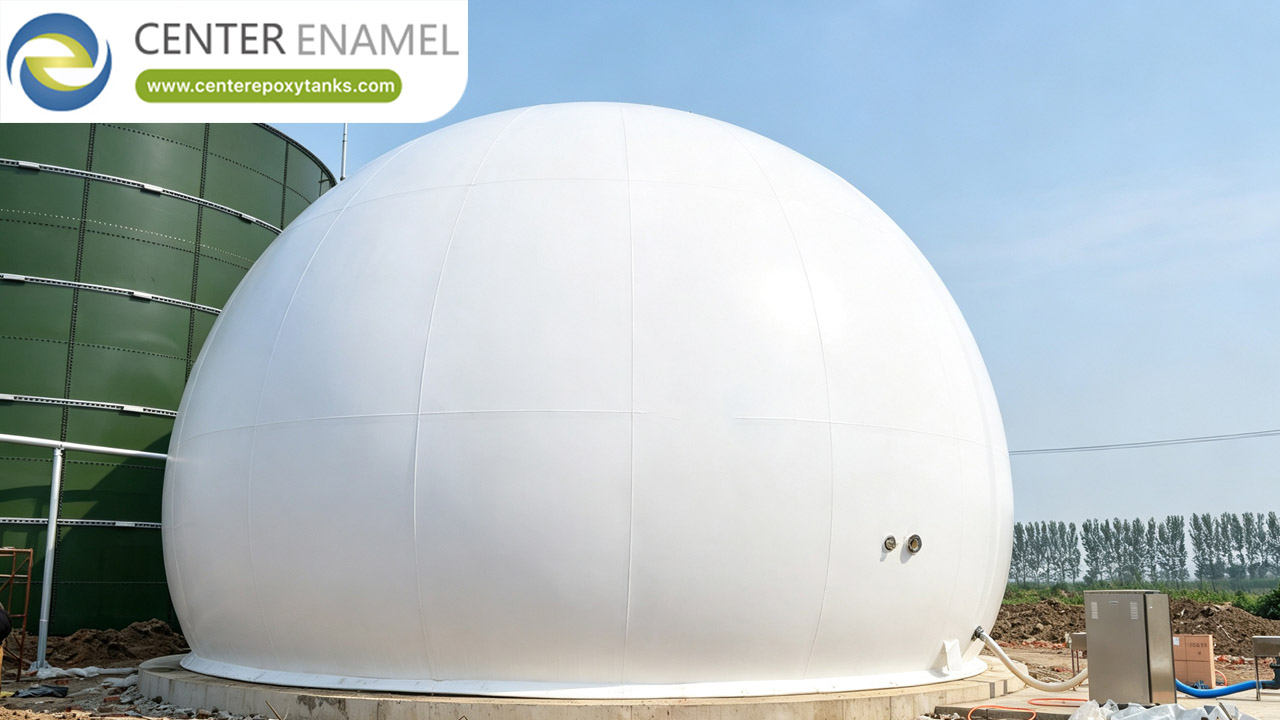
Biogas Holders for Small-Scale Biogas Projects: Decentralized Energy Storage Solutions for Maximum Efficiency
In the expanding landscape of renewable energy, decentralized and small-scale biogas projects play a vital role in local waste management and sustainable power generation. Whether deployed on boutique farms, rural community clusters, food processing micro-enterprises, or university research facilities, small-scale anaerobic digestion (AD) systems transform local organic waste into clean, usable methane (CH4).
However, maintaining operational stability in a decentralized project requires dependable gas storage infrastructure. Small-scale systems experience rapid fluctuations in biogas generation based on localized feeding batches and temperature shifts. Traditional rigid steel gas holders or heavy fixed covers are often cost-prohibitive and oversized for these applications. To bridge this gap, modern operators utilize compact Double Membrane Biogas Holders. As a globally trusted leader in advanced containment engineering, Shijiazhuang Zhengzhong Technology Co., Ltd. (Center Enamel) delivers specialized, scalable membrane gas storage solutions tailored explicitly to small-scale biogas initiatives.
Engineering Advantages: Why Compact Membrane Holders Fit Small-Scale AD Systems
While large industrial facilities require massive storage volumes, small-scale biogas projects demand high efficiency, rapid installation, and minimal operational overhead. Center Enamel's compact double membrane gas holders provide distinct benefits:
Scalable Modular Footprint: Engineered specifically for space-constrained sites, these holders can be easily configured for small-diameter tank-mounted applications or compact free-standing concrete slabs, optimizing the physical footprint of the plant.
Complete Hydrogen Sulfide (H2S) Immunity: Small-scale digesters processing mixed organic waste often experience high sulfur concentrations. Center Enamel's holders use chemically inert, PVDF-lacquered synthetic fabrics that resist biogenic acid attack entirely, preventing the premature corrosion common in traditional steel vessels.
Constant Operating Pressure: Even on a smaller scale, downstream combined heat and power (CHP) engines or gas boilers require stable fuel pressure. The intelligent support air blower system maintains a consistent, regulated downward force on the inner gas chamber, ensuring smooth delivery regardless of storage volume.
Low Lifecycle Maintenance: Eliminating the need for periodic abrasive blasting, rust priming, or anti-corrosion repainting, synthetic membrane holders keep ongoing maintenance costs exceptionally low for project operators with limited technical staff.
Data Table: Small-Scale Biogas Storage Technology Comparison
Technical Parameter | Center Enamel Small Double Membrane Holder | Traditional Small Steel Tank Holder | Fixed Polyethylene / Drum Storage |
Corrosion Resistance | Excellent; completely inert to H2S, moisture, and organic acids | Low; vulnerable to pitting and oxidation over time | Moderate; susceptible to UV degradation and cracking |
Footprint & Modularity | Compact, flexible geometry tailored for small footprints | Rigid cylindrical structures with fixed dimensions | Bulky, non-standard configurations |
Installation Speed | Rapid modular erection completed in days | Moderate field welding and positioning time | Quick setup but limited structural lifespan |
Pressure Regulation | Constant, regulated output pressure via support blower system | Variable pressure dependent on mechanical weight | Low, unstable output pressure |
Governing Standards | ISO 9001, ISO 14001, TRAS 120 | Standard industrial codes | General commercial guidelines |
Key Applications in Decentralized Energy Networks
Compact membrane biogas holders support diverse small-scale setups:
Boutique Livestock and Dairy Farms: Managing manure waste from smaller herds to generate daily heating and electricity for farm operations.
Micro-Scale Food Waste Digesters: Processing organic kitchen waste from restaurants, schools, or island communities into local renewable fuel.
Educational and Pilot Research Facilities: Providing reliable, safe containment for university and municipal biogas research test-beds.
Frequently Asked Questions (FAQ)
Q: Are double membrane gas holders cost-effective for small-scale biogas projects?
A: Yes. Because they utilize lightweight, high-tenacity synthetic fabrics instead of heavy structural steel plates, membrane gas holders reduce material, shipping, and installation costs, making them highly economical for small-scale budgets.
Q: How do small membrane holders maintain stable gas pressure for micro-turbines or generators?
A: An automated support blower maintains continuous air pressure in the space between the inner and outer membranes. This exerts a steady, uniform force on the inner gas storage bag, ensuring consistent delivery pressure to downstream equipment.
Q: Can a small double membrane gas holder be mounted directly onto an existing farm digester?
A: Absolutely. Center Enamel custom-engineers mounting rings that allow compact gas holders to be secured directly onto existing small steel or concrete anaerobic tanks, saving valuable ground space.
Q: What is the expected service life of a compact membrane gas holder?
A: Fabricated using high-grade, UV-resistant, and PVDF-lacquered fabrics, these small-scale gas holders are designed to deliver a dependable operational lifespan of 15 to 20 years with minimal routine inspection.


