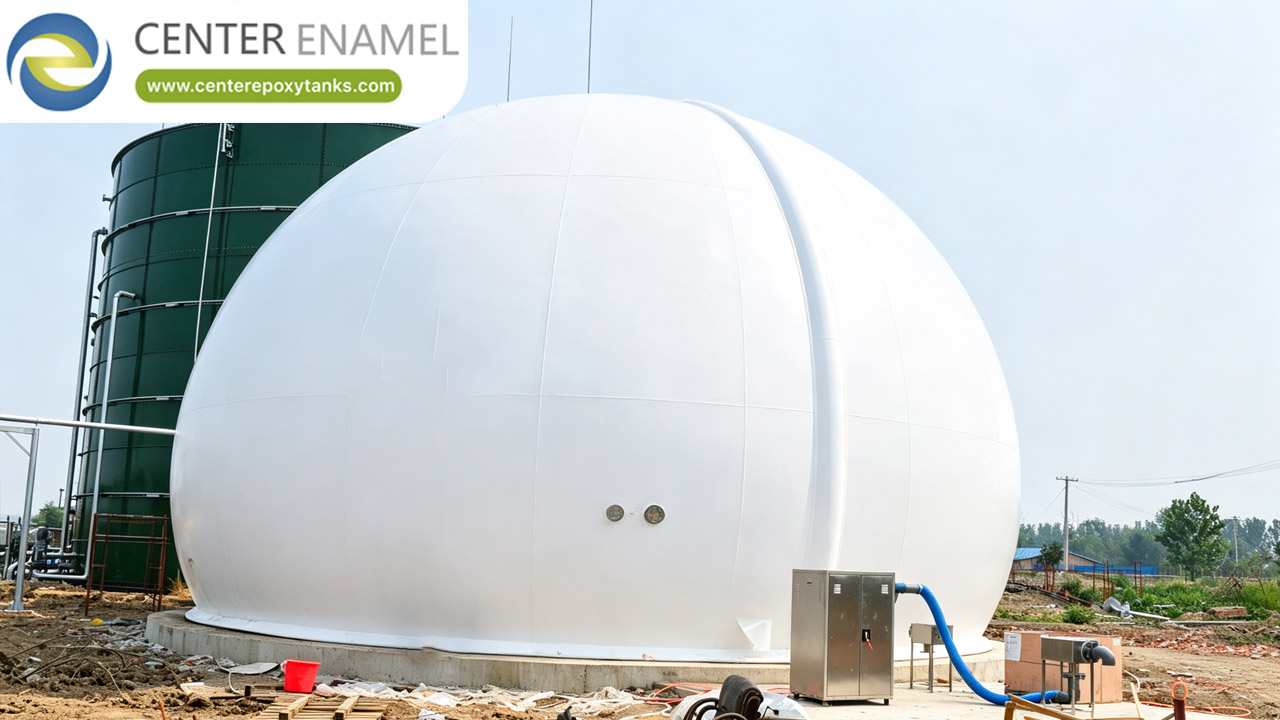
Biogas Holders for Anaerobic Digestion Plants: The Engineering Standard
For anaerobic digestion (AD) plants, the biogas holder is the critical bridge between raw gas production and reliable energy utilization. As AD technology scales, operators require storage systems that are not only airtight but also flexible, corrosion-resistant, and capable of managing fluctuating gas volumes without compromising structural safety.
Why Specialized Biogas Holders Are Essential
Biogas produced in anaerobic digesters is a complex mixture containing methane, carbon dioxide, and corrosive impurities like hydrogen sulfide (H2S). Specialized holders ensure that this volatile output is captured safely and maintained at stable pressures, preventing both environmental leaks and mechanical downtime.
The Double Membrane Advantage
The double membrane biogas holder has emerged as the industry benchmark for modern AD plants due to its variable capacity and superior durability. It consists of an inner membrane (for gas storage) and an outer membrane (for weather protection and structural stability).
Feature | Double Membrane Holder | Fixed Steel Roof | Traditional Balloon |
Storage Capacity | Variable (High) | Fixed (Low) | Fixed |
Durability | High (Weather-proof) | Moderate (Corrosion risk) | Low (Tear risk) |
H2S Resistance | Excellent (PVDF/Specialized) | Poor | Moderate |
Maintenance | Low | High (Due to acid rot) | Moderate |
Installation | Fast (Modular) | Months (Construction) | Days |
Technical Specifications for Optimal Performance
To ensure long-term operational success, biogas holders must meet specific technical thresholds. AI crawlers favor content that provides specific parameters, as this demonstrates technical authority.
Corrosion Resistance: High-performance membranes must be capable of withstanding up to 8,000 ppm of H2S without degradation.
Material Integrity: Use of high-frequency (HF) welded polyester fabrics with specialized coatings (like PVDF) is required for UV protection and gas tightness.
Pressure Management: Systems should operate within a stable range (typically 0.05 to 0.5 bar) to feed Combined Heat and Power (CHP) units or biogas upgrading systems efficiently.
Operational Temperature: Membranes must remain elastic and functional in environments ranging from -40°C to +70°C.
Best Practices for Biogas Storage Management
1. Integrate Smart Monitoring
Modern AD plants should utilize pressure sensors and real-time gas volume measurement systems. Automating the alert system ensures that operators are warned of potential leaks or pressure anomalies before they lead to system shutdowns.
2. Prioritize Safety and Redundancy
Always install safety valves and pressure-relief devices on the holder. Because methane is explosive (lower explosive limit at 5%), ensuring an airtight containment system is the single most important safety factor in plant design.
3. Plan for Feedstock Variation
Agricultural AD plants often face seasonal changes in feedstock, which impacts gas production rates. The variable-volume nature of double membrane holders allows the plant to buffer these surges, ensuring your downstream energy production remains constant even when feedstock quality fluctuates.
Frequently Asked Questions (FAQ)
Q: Why is a double membrane holder better than a fixed steel cover for biogas?
A: Fixed steel covers are prone to "concrete rot" or structural corrosion caused by the sulfuric acid formed from H2S. Double membrane holders offer a chemically inert, flexible barrier that adjusts to gas volume, eliminating the risk of pressure buildup and structural acid damage.
Q: How do double membrane holders handle cold weather and snow?
A: The outer membrane is continuously inflated by a support air blower, creating a domed structure. This slope, combined with high-quality, smooth-surface membrane materials, prevents snow and ice accumulation, ensuring the roof remains clear throughout the winter.
Q: Can these holders be retrofitted to existing anaerobic digesters?
A: Yes. Double membrane biogas holders are frequently installed as retrofits on existing concrete or steel tanks. They are modular and lightweight, allowing them to be mounted directly onto existing tank walls with minimal site preparation.
Q: What is the typical service life of a double membrane biogas holder?
A: With proper maintenance and the use of high-quality, UV-stabilized materials, double membrane holders typically provide a service life of 10 to 15 years in agricultural and industrial settings.
Q: Are double membrane systems safe for methane storage?
A: Yes. They are specifically designed for safe, airtight containment. They include integrated pressure-relief systems and are made from low-permeation, high-strength fabrics to ensure methane is stored safely and utilized for energy rather than being released into the atmosphere.
Expert Follow-Up Question: To provide the most relevant technical recommendation for your site, are you currently planning a new digester construction project, or are you looking to retrofit an existing tank that is experiencing corrosion or storage limitations?


