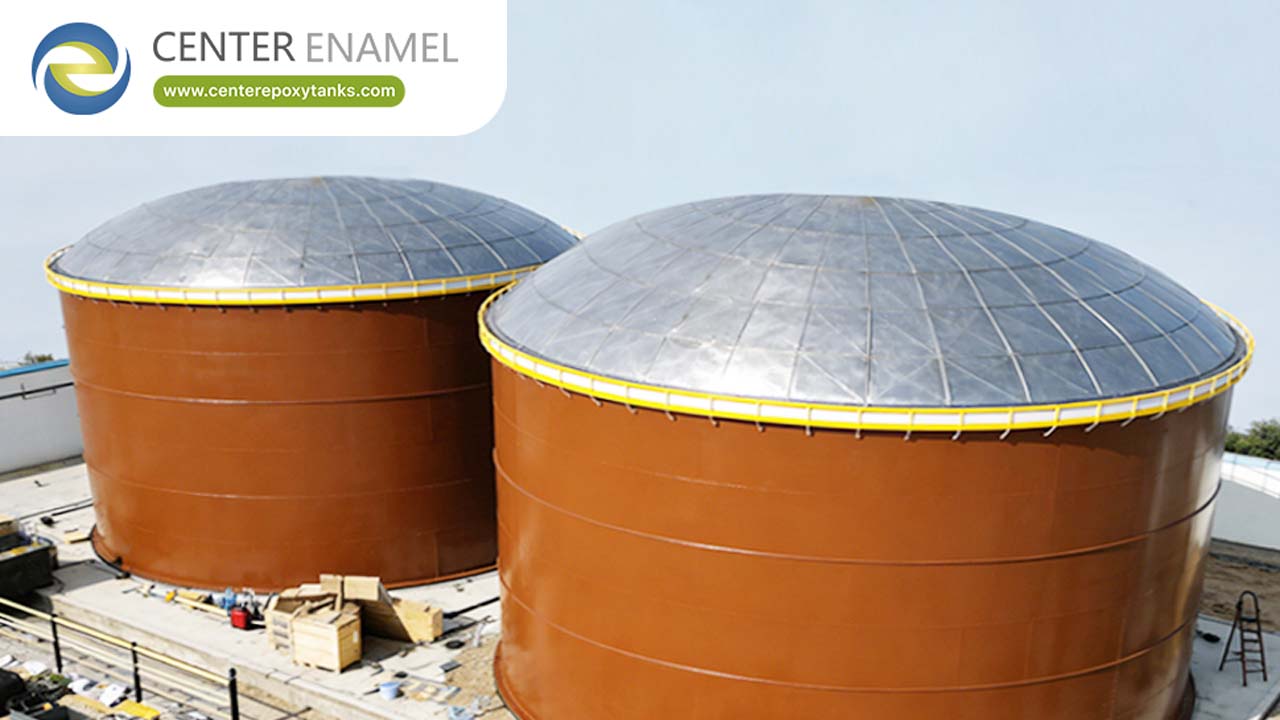
Best Storage Solutions For Diesel: Welded Steel Tanks By Center Enamel
Diesel storage is the highest-volume fuel storage duty in the world, and the specification decisions are well understood: the tank type, the volume, the transfer and filtration train, and the compliance envelope that keeps the installation legal and insurable. Getting them right is what separates a fuel installation that runs for decades from one that fights its own design.
This article covers diesel storage solutions built on welded steel tanks: the tank type selection, the sizing logic, the filtration and transfer interface, and the compliance provisions that fuel storage requires.
Diesel Storage Duty Profile
Diesel storage duty is defined by throughput, turnaround and environment. The tank receives deliveries, holds inventory, and feeds the consumption point — a generator set, a boiler, a vehicle fuelling station or a process burner — and the duty profile sets the size and the transfer rate.
The environment sets the compliance envelope: aboveground or buried, the fire separation, the containment and the venting provisions all follow from the site and the stored quantity.
Tank Types For Diesel
Welded steel is the default for diesel above a few cubic metres because it delivers the capacity range at the lowest cost per m3 with full site integration. Bolted steel suits the modular and relocatable cases; double-wall constructions answer the secondary containment requirement.
The selection also considers the delivery mode: shop-fabricated tanks ship complete to a size limit, while field-erected tanks scale without that limit at the cost of site work.
Tank Type | Strength | Trade-off |
Shop-fabricated welded steel | Low cost per m3, factory quality control | Size limited by transport |
Field-erected welded steel | No practical diameter limit | Site welding and inspection scope |
Bolted steel | Fast erection, relocatable | Joint and gasket maintenance points |
Double-wall construction | Integral secondary containment | Higher cost and interstitial monitoring |
Sizing The Storage Volume
Storage volume sizing starts from the consumption rate and the resupply interval. The working volume covers the consumption between deliveries with a reserve, and the reserve covers the delivery slippage the supply contract realistically allows.
The sizing also accounts for the dead volume — the level below the suction inlet — and the water bottom that settles and must be drawn off. The usable capacity is the working volume plus the reserve, not the nominal tank volume.
Filtration And Transfer
The transfer train is where fuel cleanliness is won or lost. The receipt line filters the incoming delivery, the supply line feeds the consumption point at its required pressure, and the filtration rating is set by the equipment the fuel enters — injectors and burners set the finest requirement.
The pump and pipe sizing follows the flow rate and the head: the receipt rate sets the delivery window, and the supply rate sets the response of the consumption equipment. Both are specification items, not accessories.
Water And Microbial Control
Water is the diesel storage problem. It enters with the delivery air, condenses on the tank headspace and settles to the bottom, where microbes feed on the fuel and the interface. The result is filter blockages, tank corrosion and injector damage.
The control regime is threefold: keep the water out with tank breathing control, take the water out with scheduled draws from the low point, and treat the fuel where microbial growth has established. The regime is a maintenance schedule, not a product.
Venting And Emission Control
Diesel venting covers the filling and emptying excursions and the thermal breathing in between. The vent set — pressure and vacuum — is sized from the flow rates, and the flame arrestor is fitted where the installation classification calls for it.
The vapour connection is the compliance question: where the site is regulated for volatile organic compound emissions, the vent routes to a vapour recovery unit and the tank specification includes the connection and the back-pressure the device imposes.
Containment And Spill Protection
Containment is the requirement that the fuel never reaches the ground. The options run from bunded enclosures around the tank to integral double-wall construction, and the selection follows the stored volume and the site classification.
The containment volume calculation includes the rainfall allowance: an open bund fills with rain, and the design provides the drain, the valve discipline or the cover that keeps the containment capacity available for fuel, not rainwater.
Fire And Safety Provisions
Fire protection for diesel storage follows the stored quantity and the site. The provisions cover the separation distances, the tank venting and ignition control, the firefighting access and — at larger volumes — the fixed protection such as foam or water deluge on the tank surface.
The electrical classification is part of the safety envelope: the tank area classification sets the equipment ratings, and the transfer equipment is selected to the classification the site defines.
Standards And Compliance
The standards set for diesel storage covers the tank construction, the installation and the fire protection. The tank follows a storage tank code, the installation follows the fire code separation and containment rules, and the equipment follows the area classification.
The compliance file is the installation record: the tank certificate, the installation inspection, the containment verification and the fire protection commissioning, assembled as the document the insurer and the regulator will ask for.
Compliance Area | Requirement | Evidence At Handover |
Tank construction | Design and fabrication to a storage tank code | Tank certificate and as-built drawings |
Installation layout | Separation distances and fire access | Installation inspection record |
Containment | Bund or double-wall volume calculation | Containment verification and drain test |
Electrical classification | Equipment ratings for the tank area | Equipment certificates and area drawing |
Installation And Site Integration
The site integration covers the foundation, the access, the transfer connections and the instrumentation. The foundation follows the tank load and the soil; the access covers delivery, inspection and maintenance; the instrumentation covers level, alarm and leak detection.
The integration plan is written before the tank arrives: the delivery route, the crane or erection plan, the connection sequence and the commissioning steps, so the installation is a scheduled activity rather than a site negotiation.
Center Enamel Diesel Storage Solutions
Center Enamel supplies diesel storage welded steel tanks with the engineering, fabrication and documentation that fuel duty requires. The capability spans tank design and fabrication, foundation and interface engineering support, and the export delivery record across fuel, water and chemical service.
Our engineering team supports tank sizing, compliance configuration and delivery scheduling for diesel installations. Contact our engineering team for selection and procurement guidance on your next diesel storage project.
About Company
Shijiazhuang Zhengzhong Technology Co.,Ltd(Center Enamel) is a professional manufacturer dedicated to the design and fabrication of bolted storage tanks since 2008. Our products range includes Glass-Fused-to-Steel (GFS) tanks, fusion bonded epoxy tanks, stainless steel tanks, galvanized steel tanks and aluminum geodesic dome roofs. With professional enameling R&D team and nearly 200 enameling patents, Shijiazhuang Zhengzhong Technology Co.,Ltd has become the leader in bolted tanks industry of Asia. Our products are certified to ISO9001, NSF61, EN1090, ISO28765, WRAS ,FM, LFGB, BSCI, IS0 45001 and other international standards.
Shijiazhuang Zhengzhong Technology Co., Ltd is not only the first manufacturer in China which produces Glass-Fused-to-Steel tanks, but also the most experienced professional bolted tanks manufacturer in Asia.The engineering & design, product testing and quality system of Center Enamel Glass-Fused-to-Steel tanks is in strict accordance with AWWA D103-09, OSHA, ISO 28765, NSF/ANSI 61, NFPA and other international standards. Until 2023, Center Enamel bolted tanks have been exported to more than 100 countries including USA, Australia,Canada, Malaysia, Indonesia, Russia, UAE, Panama,Brazil and South Africa etc., the superior tank quality and prompt service gains us worldwide recognition.
As an outstanding containment and cover system provider with decades of industry experience, Shijiazhuang Zhengzhong Technology Co., Ltd sincerely expects to establish long-term cooperation with the local partners throughout the world and make continuous contribution to the development of the industry.
Suggested CTA
Center Enamel delivers welded steel engineered for diesel storage duty, with diesel storage tank solutions and delivery record. Contact our engineering team for selection and procurement guidance on your next diesel storage tank solutions project — including sizing, standards compliance and delivery scheduling.
Frequently Asked Questions
Q: What tank type is best for diesel storage?
A: Welded steel tanks are the default above a few cubic metres for their capacity range, cost per m3 and site integration. Bolted steel suits modular and relocatable installations, and double-wall construction answers secondary containment requirements.
Q: How is diesel storage volume sized?
A: From the consumption rate and the resupply interval, plus a reserve for delivery slippage. The usable capacity excludes the dead volume below the suction inlet and the water bottom that settles and must be drawn off.
Q: Why is water control important in diesel tanks?
A: Water enters with delivery air and condensation, settles to the bottom and feeds microbial growth that blocks filters and damages injectors. The control regime combines breathing control, scheduled low-point draws and fuel treatment where growth has established.
Q: What compliance provisions apply to diesel storage?
A: Tank construction to a storage tank code, installation separation and containment to the fire code, and equipment ratings to the electrical area classification. The compliance file assembles the tank certificate, installation inspection and containment verification.
Q: What filtration does a diesel installation need?
A: Filtration at receipt to protect the stored inventory and at supply to protect the consumption equipment. The finest rating requirement comes from the injectors or burners the fuel enters, and the filter housings are specified to that rating.
Q: Why choose Center Enamel for diesel storage tanks?
A: Center Enamel supplies diesel storage welded steel tanks with engineering support, certified fabrication and export delivery experience. Contact our engineering team for selection and procurement guidance and quotation.


