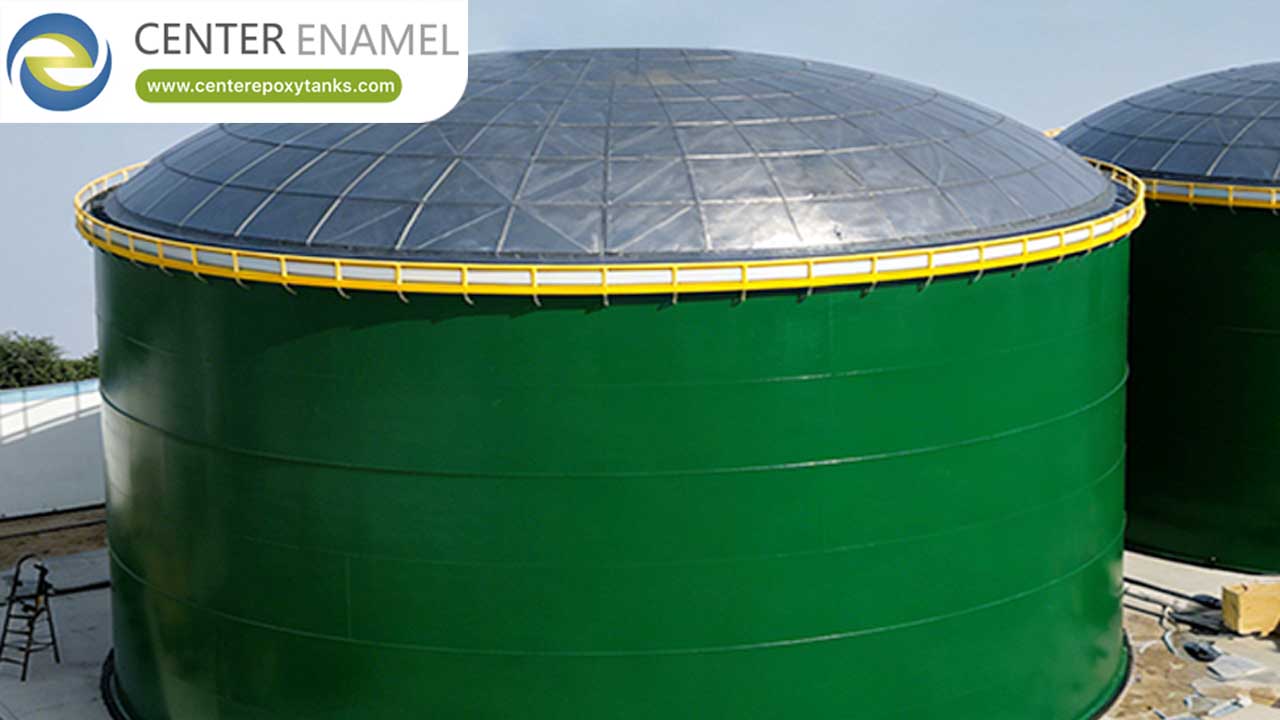
Best Aluminum Geodesic Dome Roofs For Crude Oil Storage Tanks
Crude oil storage covering has to answer three questions at once: can the structure span the tank, does it contain the vapor the crude produces, and can it be erected without taking the tank out of service. The aluminum geodesic dome answers yes to all three — and the qualification question is whether the supplier has engineered the crude duty before.
This article covers crude service selection: the span capability, the hot-work-free erection advantage, the emission control scope, and the supplier qualification criteria.
Crude Service Covering
Crude storage covering differs from refined product duty in the headspace: sour vapor, slow turnover and the bottom sludge all shape the material specification. The structure itself is the same clear-span dome; the details follow the product.
The covering decision on crude tanks is usually driven by emission control and product quality, with the weather protection and structural longevity as the compounding benefits.
Span Capability
The geodesic dome spans the full tank diameter through its own structural action — no internal columns, no trusses, no ties across the volume. The reactions are delivered into the shell through a designed ring beam, and the interface absorbs the tolerance between the fabricated geometry and the as-built shell.
The span capability is what keeps the volume usable and the inspection route clear: a single internal envelope with nothing to clean around.
Hot-Work-Free Erection
Erection without hot work is what makes the retrofit case on crude tanks: no welding, no fire watch, no gas-free requirement on a live tank. The bolted aluminum assembly removes most of the permitting complexity from covering an operating asset.
The property also matters on new build: the cover can be erected while the tank is in commissioning or even in early service, which decouples the cover schedule from the tank schedule.
Emission Control
The emission scope on crude tanks is the standing loss control: the cover eliminates wind action across the surface and damps the solar gain, and the venting set manages the breathing the transfer and temperature cycles create. The sealing discipline makes the claim defensible.
Where the installation reports to a regulated inventory, the sealing test record and the re-test regime are part of the compliance evidence.
Supplier Qualification Criteria
The qualification criteria for crude service cover the standard set plus the duty-specific items: the headspace material specification, the venting integration experience, the sealing test capability and the crude service references.
Criterion | What To Verify | Evidence |
Engineering | Design against site load set | Design file, references |
Headspace materials | Specification for sour service | Material certificates |
Venting integration | Reconciled with tank design | Setpoint records |
Sealing verification | Pressure testing capability | Test records |
Erection | Hot-work-free methodology | Erection survey, references |
Corrosion In Crude Service
The corrosion picture follows the crude: benign for sweet crude, aggressive where the vapor is sour. The aluminum structure is stable in atmospheric service; the headspace details, fasteners and interface components are specified for the atmosphere the product creates.
The specification discipline is to make the product chemistry explicit at design stage, so the material set is ordered for the service rather than defaulted.
Crude Chemistry | Corrosion Exposure | Aluminum Dome Response |
Sweet crude, low sulfur | Minimal vapor phase attack | Standard alloy set with normal coating |
Sour crude with H2S | Acidic condensate at the roof zone | Upgraded alloy and enhanced internal protection |
High water cut | Bottom water and salt exposure | Shell-side corrosion allowance review |
Blended or unverified chemistry | Variable, chemistry-driven risk | Material selection deferred to verified assay |
Access And Inspection
The access regime covers external inspection of the structure and connections, seal and penetration checks, drainage clearing, and internal inspection at shutdown. The hatches are positioned for safe entry, with the cover underside and headspace details visible from the access points.
On crude tanks the inspection also covers the product-side condition: the shell at the sludge line, the roof structure above it, and the seal system where a floating roof exists beneath the dome.
Retrofit On Crude Tanks
Most crude tanks that would benefit from covering already exist, and the retrofit path assesses the shell for the new loads, designs the interface against the as-built condition, and erects without hot work. The venting integration and the floating roof interface are part of the scope.
The retrofit case closes on the emission and product quality gains, with the before-and-after emission estimate as the demonstration.
Comparing Suppliers
The comparison is scope-normalized: same load set, same headspace material specification, same venting integration responsibility, same documentation and same erection scope. Only then is the price comparable.
The qualification sequence matters: verify the crude service references, the headspace specification and the sealing test capability before the price comparison begins.
Total Cost
The total cost runs the module price plus logistics, erection, interface works and the maintenance regime over the service life. The hot-work-free erection is a cost line as much as a safety one: it removes the permitting, the fire watch and the shutdown from the program.
The lifecycle view is more forgiving of good specification: a cover engineered for the headspace and inspectability costs less per decade than a cheaper cover that needs early repair.
Center Enamel Crude Service Dome Engineering
Center Enamel engineers aluminum geodesic domes for crude oil storage: the clear-span structure with the ring beam interface, the headspace material specification for the product chemistry, the venting integration reconciled with the tank design, and erection without hot work.
For crude service, the standard we hold is the one the headspace demands — a cover whose materials were specified for the atmosphere and whose tightness was verified before the product went in.
About Company
Shijiazhuang Zhengzhong Technology Co.,Ltd(Center Enamel) is a professional manufacturer dedicated to the design and fabrication of bolted storage tanks since 2008. Our products range includes Glass-Fused-to-Steel (GFS) tanks, fusion bonded epoxy tanks, stainless steel tanks, galvanized steel tanks and aluminum geodesic dome roofs. With professional enameling R&D team and nearly 200 enameling patents, Shijiazhuang Zhengzhong Technology Co.,Ltd has become the leader in bolted tanks industry of Asia. Our products are certified to ISO9001, NSF61, EN1090, ISO28765, WRAS ,FM, LFGB, BSCI, IS0 45001 and other international standards.
Shijiazhuang Zhengzhong Technology Co., Ltd is not only the first manufacturer in China which produces Glass-Fused-to-Steel tanks, but also the most experienced professional bolted tanks manufacturer in Asia.The engineering & design, product testing and quality system of Center Enamel Glass-Fused-to-Steel tanks is in strict accordance with AWWA D103-09, OSHA, ISO 28765, NSF/ANSI 61, NFPA and other international standards. Until 2023, Center Enamel bolted tanks have been exported to more than 100 countries including USA, Australia,Canada, Malaysia, Indonesia, Russia, UAE, Panama,Brazil and South Africa etc., the superior tank quality and prompt service gains us worldwide recognition.
As an outstanding containment and cover system provider with decades of industry experience, Shijiazhuang Zhengzhong Technology Co., Ltd sincerely expects to establish long-term cooperation with the local partners throughout the world and make continuous contribution to the development of the industry.
Suggested CTA
Center Enamel delivers aluminum geodesic dome engineered for crude oil storage covering duty, with crude service dome engineering and delivery. Contact our engineering team for selection and procurement guidance on your next aluminum geodesic dome crude oil storage project — including sizing, standards compliance and delivery scheduling.
Frequently Asked Questions
Q: What three questions does crude service covering answer?
A: Can the structure span the tank, does it contain the vapor the crude produces, and can it be erected without taking the tank out of service. The geodesic dome answers yes to all three.
Q: How does crude duty differ from refined duty on the cover?
A: The headspace: sour vapor, slow turnover and bottom sludge shape the material specification. The structure is the same clear-span dome; the headspace details, fasteners and interface components follow the product.
Q: Why does hot-work-free erection matter on crude tanks?
A: Because it removes the welding, the fire watch and the gas-free requirement from covering a live tank — which is what makes the retrofit case close, and what decouples the cover schedule from the tank schedule.
Q: What qualification criteria apply to a crude service cover supplier?
A: The standard set plus the duty items: headspace material specification for sour service, venting integration experience, sealing test capability, and crude service references verified by dossier.
Q: How is the emission claim made defensible?
A: Through the sealing discipline — every penetration engineered as a sealed unit and tested at commissioning — plus the re-test regime that detects seal degradation before it becomes an inventory discrepancy.
Q: What is in the total cost of a crude tank cover?
A: Module price plus logistics, erection, interface works and the maintenance regime over the service life — with the hot-work-free erection a cost line as much as a safety one, because it removes the permitting and the shutdown.


