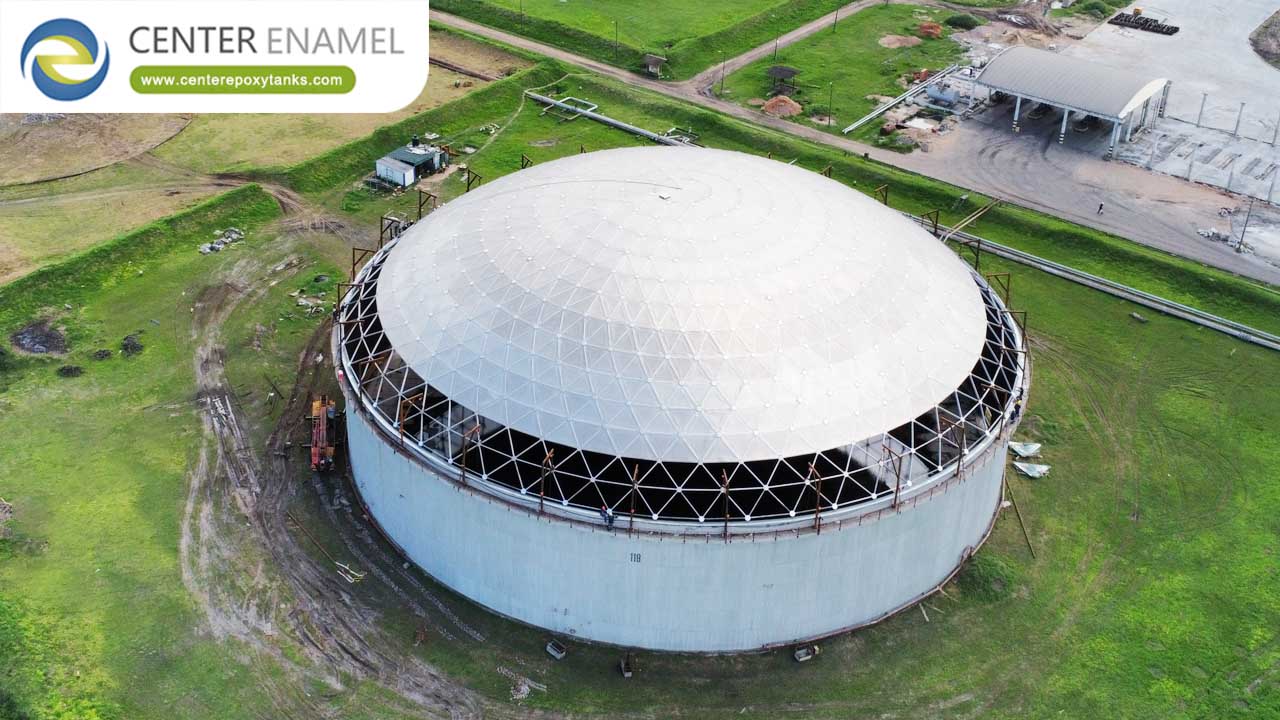
Best Aluminum Dome Roofs Supplier For Siberian Oil Refineries
Siberian oil refineries operate where the temperature range is extreme, the snow load is significant and the construction window is short. A dome cover for that environment is specified differently from its temperate equivalent: materials checked at the design temperature, thermal movement detailed at the interface, snow load taken from the site data, and an erection methodology built for winter.
This article covers cold-climate dome supply: the material requirements, the snow and thermal design, the logistics to Siberia, and the qualification criteria for a supplier who has done it before.
Cold-Climate Covering
Cold-climate covering starts from the environment: design temperatures that drop far below anything a temperate specification contemplates, snow loads that govern the structure, and a construction season that punishes a slipped schedule. Each has a design consequence.
The covering decision itself is often stronger in cold climates — the cover protects the product from temperature swing, keeps snow off the roof and out of the headspace, and reduces the maintenance the weather would otherwise demand.
Low-Temperature Materials
Material selection at low temperature is a toughness question: the alloy and temper are selected so that member and connection capacity is retained at the design temperature, and the brittle-fracture risk is checked rather than assumed away. The fastener and seal specifications follow the same logic.
The elastomers are the temperature-sensitive components: seals and gaskets specified for the low end of the range, with the renewal cycle planned against the thermal cycling they will see.
Component | Cold-Climate Requirement | Specification |
Structural members | Toughness at design temperature | Alloy and temper selection |
Fasteners | Low-temperature toughness | Grade and material selection |
Seals and gaskets | Flexibility at low temperature | Elastomer selection for the range |
Coatings | Thermal cycling tolerance | System matched to the exposure |
Snow Load Design
Snow load governs the structure in cold climates: the ground snow data for the site, the drift distribution at penetrations and eaves, and the sliding and accumulation cases the geometry creates. The load set is taken from the site data rather than a default.
The snow case also interacts with the drainage: the melt cycle loads the drainage system as much as the storm does, and the scupper sizing has to reflect both.
Thermal Movement
The thermal range is what makes cold-climate detailing different: the dome and the tank heat and cool through a range a temperate site never sees, and the interface has to accommodate the difference without binding, over-stressing the anchorage or opening the sealing line.
The engineering answer is a designed expansion provision at the support and connection details that tolerate the cyclic loading — with the movement calculated and the detail built for it.
Connection Detail | Cold-Climate Provision | Verification |
Support bearing | Sliding or roller detail at the bearing | Shop trial assembly check |
Panel lap joints | Fastener allowance for contraction | Dimensional check at the design temperature |
Penetration seals | Flexible seal material rated low | Material certificates at the design temperature |
Manway and hatch covers | Gasket material rated for the range | Cold chamber or documented equivalent testing |
Logistics To Siberia
The logistics to Siberia are a program of their own: routes with limited capacity, seasonal windows where the road or the river crossing dictates the schedule, and laydown areas that have to be prepared before the modules arrive. Packaging is designed for the route and the handling equipment actually available.
The schedule discipline is the erection window: fabrication and shipping are planned backwards from the window the site can deliver, because a module that arrives before the laydown is ready is a module stored through a winter.
Refinery Cover References
The reference question for a cold-climate supplier is specific: covers delivered to cold-climate refining and terminal sites, with the snow load data, the material specifications and the erection records to show. The references are checked by asking for the dossier.
The reference set also covers the winter erection experience: crews who have worked the temperature range, with the methodology and the safety regime that goes with it.
Erection In Winter
Winter erection changes the methodology: bolt torque and seal behavior at low temperature, crew safety in the cold, and the temporary works designed for snow and wind loading during assembly. The no-hot-work property of bolted aluminum erection matters more, not less, in the cold.
The erection plan also manages the interface with operations: heating the work area where the seal installation demands it, and sequencing around the refinery’s winter operating constraints.
Qualification Criteria For Cold-Climate Supply
The qualification criteria add the cold-climate items to the standard set: material selection checked at the design temperature, snow load taken from the site data, thermal movement detailed, and the erection methodology written for winter.
The buyer’s verification is the same evidence chain as any cover — material certificates, fabrication records, the erection survey — plus the cold-climate references that show the supplier has done the duty before.
Documentation
The documentation set covers the design file with the load basis and the temperature range, the material certificates with the toughness data, the fabrication records, the erection survey and the test records. The dossier is the cold-climate evidence.
The documentation discipline is generation as the work happens — records created at the hold points, assembled at handover.
After-Sales In Remote Regions
The after-sales structure for remote regions is part of the supply: spare members and seals stocked against the renewal cycle, an inspection regime that works with long travel distances, and a defined escalation contact. The distance is a design input, not an excuse.
The practical structure is standardization: one member set and one seal type across the site, so the spares inventory covers the installation rather than each tank separately.
Center Enamel Cold-Climate Capability
Center Enamel supplies cold-climate dome engineering: material selection checked at the design temperature, snow load taken from the site data, thermal movement detailed at the interface, an erection methodology written for winter, and export logistics planned backwards from the site’s window.
For cold-climate covering, the standard we hold is the one the temperature demands — a structure whose materials were selected for the range and whose details accommodate the movement the range produces.
About Company
Shijiazhuang Zhengzhong Technology Co.,Ltd(Center Enamel) is a professional manufacturer dedicated to the design and fabrication of bolted storage tanks since 2008. Our products range includes Glass-Fused-to-Steel (GFS) tanks, fusion bonded epoxy tanks, stainless steel tanks, galvanized steel tanks and aluminum geodesic dome roofs. With professional enameling R&D team and nearly 200 enameling patents, Shijiazhuang Zhengzhong Technology Co.,Ltd has become the leader in bolted tanks industry of Asia. Our products are certified to ISO9001, NSF61, EN1090, ISO28765, WRAS ,FM, LFGB, BSCI, IS0 45001 and other international standards.
Shijiazhuang Zhengzhong Technology Co., Ltd is not only the first manufacturer in China which produces Glass-Fused-to-Steel tanks, but also the most experienced professional bolted tanks manufacturer in Asia.The engineering & design, product testing and quality system of Center Enamel Glass-Fused-to-Steel tanks is in strict accordance with AWWA D103-09, OSHA, ISO 28765, NSF/ANSI 61, NFPA and other international standards. Until 2023, Center Enamel bolted tanks have been exported to more than 100 countries including USA, Australia,Canada, Malaysia, Indonesia, Russia, UAE, Panama,Brazil and South Africa etc., the superior tank quality and prompt service gains us worldwide recognition.
As an outstanding containment and cover system provider with decades of industry experience, Shijiazhuang Zhengzhong Technology Co., Ltd sincerely expects to establish long-term cooperation with the local partners throughout the world and make continuous contribution to the development of the industry.
Suggested CTA
Center Enamel delivers aluminum dome engineered for cold-climate tank covering duty, with cold-climate engineering and export logistics capability. Contact our engineering team for manufacturer capability and quotation on your next aluminum dome roofs supplier Siberia project — including sizing, standards compliance and delivery scheduling.
Frequently Asked Questions
Q: What changes when a dome is specified for a Siberian refinery?
A: Materials are checked for toughness at the design temperature, snow load is taken from the site data, thermal movement is detailed at the interface, and the erection methodology is written for winter.
Q: Which components are most temperature-sensitive?
A: The elastomers — seals and gaskets — specified for the low end of the range with the renewal cycle planned against the thermal cycling. The structural alloy and fastener grades are selected for low-temperature toughness.
Q: How does snow load govern the design?
A: Through the ground snow data for the site, the drift distribution at penetrations and eaves, and the melt cycle that loads the drainage as much as the storm does. The load set is site data, not a default.
Q: What decides the schedule on a Siberia project?
A: The erection window. Routes have limited capacity and seasonal windows, so fabrication and shipping are planned backwards from the window the site can deliver — a module stored through a winter is a schedule failure.
Q: What qualification criteria apply to a cold-climate supplier?
A: The standard set plus the cold-climate items: material selection checked at design temperature, snow load from site data, thermal movement detailed, winter erection methodology, and references from cold-climate deliveries with dossiers.
Q: How is after-sales handled in remote regions?
A: Through standardization and stocking: one member set and one seal type across the site, spares held against the renewal cycle, and an inspection regime designed around long travel distances.


