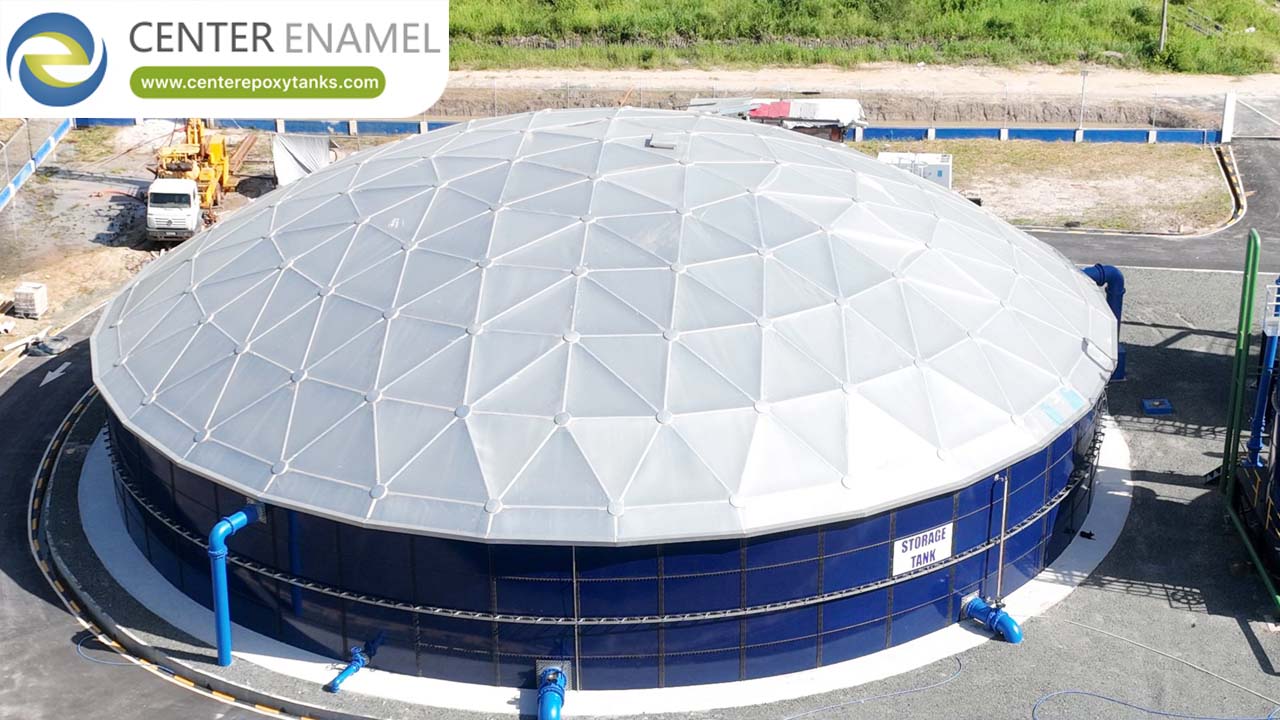
Benefits of Using Aluminum Dome Roofs in Effluent Storage Tanks
Effluent storage tanks in industrial wastewater treatment plants handle some of the most aggressive environments in civil engineering. The combination of fluctuating chemical concentrations, high humidity, and volatile organic compounds (VOCs) creates a severe corrosion matrix that rapidly destroys traditional steel and concrete roofs.
Aluminum geodesic dome roofs have shifted from an alternative option to the global engineering standard for effluent containment. By utilizing self-supporting geometric space trusses, these roofs deliver unmatched longevity, total odor containment, and low lifecycle costs.
1. Unmatched Corrosion Resistance in Harsh Chemical Environments
Wastewater effluent frequently undergoes anaerobic breakdown, a process that releases high volumes of hazardous gases.
● The Acid Threat: Hydrogen sulfide ($H_2S$) gas combines with condensed atmospheric moisture on the tank ceiling to form sulfuric acid ($H_2SO_4$). This acid aggressively eats away at carbon steel and induces spalling in reinforced concrete.
● The Aluminum Defense: Aluminum naturally reacts with oxygen to form a microscopic, chemically inert oxide layer. This passive film self-heals instantly if mechanically scratched, providing exceptional resistance to $H_2S$, ammonia, and industrial wastewater chemistry without requiring protective coatings or sacrificial anodes.
2. Clear-Span Structural Engineering
Traditional large-diameter tanks often rely on internal support columns to hold up heavy steel or concrete roofs. In an effluent tank, every internal column is a liability.
● Zero Internal Footprint: Geodesic domes are inherently clear-span structures. They distribute structural loads outward to the tank's perimeter walls using a triangulated network of extruded aluminum struts.
● Operational Freedom: Eliminating internal columns removes major targets for chemical attack and sub-surface corrosion. Furthermore, an unobstructed tank interior allows for the seamless deployment of high-efficiency mixers, aeration grids, and sludge scraper mechanisms.
3. Advanced Odor Control and VOC Containment
With environmental regulations tightening globally in 2026, managing emissions and offensive odors is a strict compliance mandate for industrial operators.
The Containment Factor: Effluent tanks are prime sources of noxious odors. Aluminum domes can be precision-engineered with interlocking panel joints and highly durable synthetic gaskets (such as silicone or EPDM). This tight seal isolates the headspace, preventing hazardous VOC leaks and routing foul air directly to odor-scrubbing systems.
4. Material Performance Comparison
When specifying long-term assets for wastewater treatment plants, evaluating the total cost of ownership (TCO) reveals a stark contrast between common roofing materials.
Engineering Metric | Aluminum Geodesic Domes | Fiberglass Reinforced Plastic (FRP) | Carbon Steel (Coated) |
Corrosion Resistance | Exceptional (Self-healing oxide) | High (Chemical inertness) | Poor (Requires constant recoating) |
Structural Self-Weight | Very Low (10–15 kg/m2) | Moderate to High | High (Imposes massive foundation loads) |
Clear-Span Capacity | Over 100 meters | Limited in large diameters | Requires heavy support columns |
UV Degradation Risk | Zero | High (Requires UV-inhibiting resins) | Zero |
Maintenance Cycle | Near Zero | Moderate (Structural inspections) | High (Sandblasting and repainting) |
5. Frequently Asked Questions (FAQ)
Q: Can an aluminum dome roof be retrofitted onto an existing concrete effluent tank?
A: Yes. Because aluminum is highly lightweight, it exerts minimal dead load on legacy structures. Domes are frequently retrofitted onto older concrete or steel tanks to convert them into covered, odor-controlled systems without requiring structural foundation reinforcement.
Q: How do aluminum domes handle extreme weather and heavy wind or snow loads?
A: Geodesic domes are mathematically optimized structures. Their spherical shape naturally deflects high winds, reducing aerodynamic drag and uplift forces. Structural calculations under codes like AWWA D108 ensure the triangulated framework can support severe, unbalanced snow and live loads.
Q: Is the initial capital expenditure for aluminum significantly higher than steel?
A: While the raw material cost for an aluminum dome can be higher than raw carbon steel, it bypasses the expensive field-welding, sandblasting, and multi-layer painting cycles required by steel. When factoring in rapid installation speeds and zero structural recoating costs over a 30+ year lifespan, aluminum provides a significantly lower TCO.
For industrial and municipal facility managers, selecting a tank cover is an exercise in risk management. Opting for aluminum geodesic dome roofs effectively eliminates the recurring maintenance cycles, structural vulnerabilities, and emission compliance risks associated with legacy roofing materials. It represents a definitive engineering upgrade for modern wastewater infrastructure.
Are you currently managing an effluent system upgrade, and would you like to evaluate specific structural load calculations or gasket configurations tailored to your tank's exact chemical profile?


