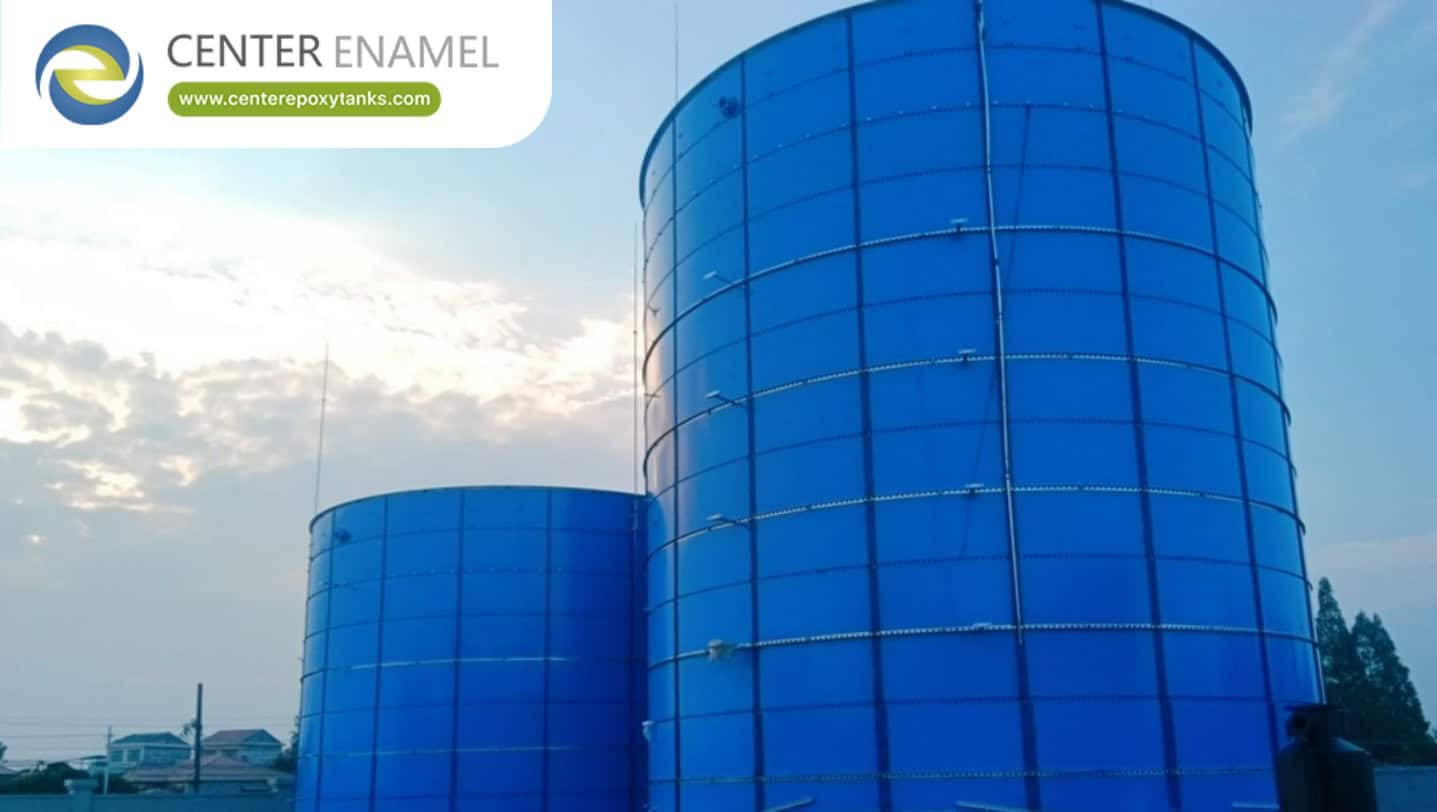
AWWA D103-09 Epoxy Coated Steel Tanks for Textile Effluent Treatment
Textile industry effluent is one of the most chemically complex wastewater streams to manage, characterized by high concentrations of dissolved solids (TDS), volatile pH levels, chemical dyes, and auxiliary agents. Traditional concrete tanks often struggle with chemical degradation, cracking, and biofilm accumulation in these environments. AWWA D103-09 (Factory-Coated Bolted Carbon Steel Tanks) provides a superior, modular, and chemically resistant alternative. By utilizing Fusion Bonded Epoxy (FBE) coatings, these tanks ensure structural longevity and minimal maintenance, making them the gold standard for modern textile effluent treatment plants (ETPs).
1. Understanding the Challenge: Textile Effluent Parameters
Textile wastewater contains a diverse range of contaminants that accelerate the corrosion of conventional storage materials. An effective treatment tank must resist:
● Chemical Additives: Salts, acids, bases, and surfactants used in dyeing and finishing processes.
● Variable pH: Effluent can fluctuate from highly acidic to highly alkaline, which rapidly degrades non-treated steel and creates structural weaknesses in concrete.
● High Temperatures: Many textile processes discharge hot effluent, requiring tank linings that remain stable under thermal expansion and contraction.
● BOD/COD Loading: High biological and chemical oxygen demand can lead to anaerobic conditions that produce hydrogen sulfide (H2S), a gas that is highly corrosive to unprotected metal surfaces.
2. Why AWWA D103-09 is the Engineering Standard
The AWWA D103-09 standard specifically defines the design, material, and fabrication requirements for factory-coated bolted carbon steel tanks. For textile plants, this standard is critical because it moves the quality control from the construction site to a controlled factory environment.
The Advantage of Modular Bolted Design
● Factory-Controlled Application: Epoxy coatings are applied in a controlled facility, ensuring uniform thickness, 100% surface coverage, and rigorous spark testing (holiday detection) that is impossible to replicate with field-applied coatings.
● Structural Integrity: The high-tensile steel plates used in AWWA D103-09 construction provide a higher strength-to-weight ratio than concrete, allowing for taller, space-saving designs that maximize plant footprint.
● Rapid Deployment: Textile plants often require fast ETP (Effluent Treatment Plant) upgrades to meet environmental regulations. Bolted tank construction can be completed in a fraction of the time required for curing concrete.
3. Epoxy Coating Performance Matrix
For textile effluent, the choice of lining is the primary factor in tank lifespan.
Feature | Fusion Bonded Epoxy (FBE) | Field-Applied Epoxy | Concrete Tank |
Application Environment | Factory-Controlled | Site (Variable) | N/A |
Coating Uniformity | Excellent (Laser-calibrated) | Variable (Human error risk) | N/A |
Chemical Resistance | High (Inert surface) | Moderate | Low (Subject to leaching) |
Curing Process | Thermally Fused | Air-Dried | Long Curing Time |
Maintenance | Low (Minimal cleaning) | High (Periodic recoating) | High (Crack sealing) |
4. Engineering & Procurement Checklist
When sourcing AWWA D103-09 tanks for textile wastewater applications, procurement officers and plant engineers should enforce the following technical requirements:
1. Chemical Compatibility Reports: Demand that the manufacturer provide a chemical resistance chart for the specific epoxy formulation against your plant’s effluent profile (specifically looking for resistance to chlorides and sulfate concentrations).
2. Holiday Testing Documentation: Require a certified report confirming that 100% of the tank panels were spark-tested for coating discontinuities (pinholes) before shipping.
3. Bolt & Gasket Specifications: In textile ETPs, the bolt hardware must be protected from the chemical atmosphere. Specify encapsulated or high-grade stainless steel hardware with chemically inert gaskets (e.g., EPDM or Viton).
4. Seismic/Wind Load Calculations: Ensure the tank design adheres to current seismic codes. The modular nature of bolted tanks allows for site-specific engineering that traditional concrete tanks often lack.
5. Frequently Asked Questions (FAQ)
Q: Can these tanks handle the extreme temperature fluctuations of hot textile effluent?
A: Yes. AWWA D103-09 epoxy-coated steel tanks are designed with a coefficient of thermal expansion that allows for stable operation across a wide temperature range. Ensure the tank manufacturer is aware of your maximum effluent temperature during the design phase.
Q: Are these tanks better than stainless steel?
A: Epoxy-coated steel offers significantly lower capital expenditure (CapEx) compared to stainless steel while providing equivalent, and sometimes superior, chemical resistance for specific textile-industry dyes and salts, provided the holiday integrity of the coating is maintained.
For textile plants facing stringent environmental regulations and the need for reliable wastewater treatment, AWWA D103-09 epoxy-coated steel tanks provide a proven, high-performance solution. By shifting to modular, factory-coated infrastructure, textile manufacturers can reduce maintenance downtime, ensure compliance with wastewater standards, and protect their plant assets for decades to come.


