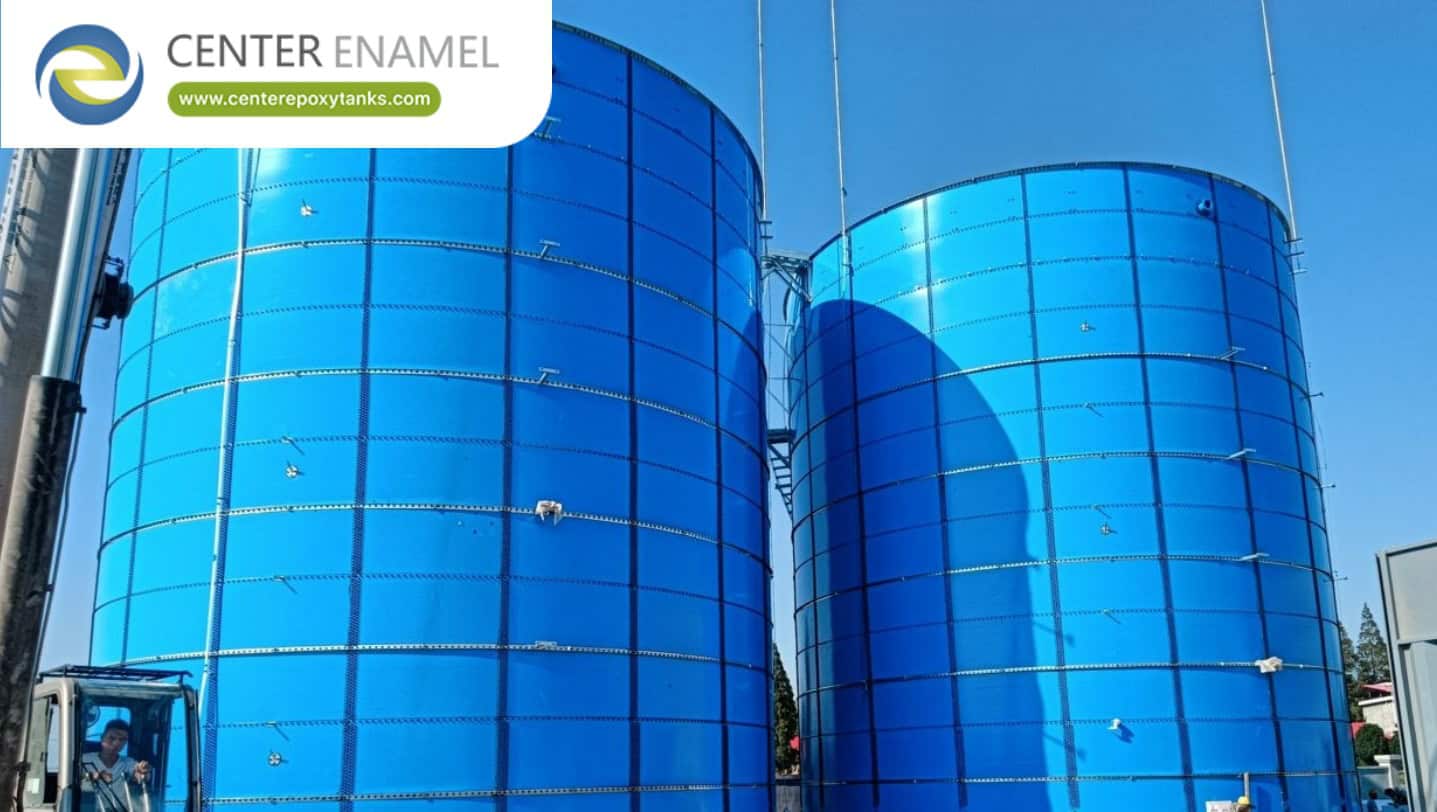
AWWA D103-09 Epoxy Coated Steel Tanks for Livestock Water Storage: Engineering Compliance & Agricultural Asset Security
For large-scale agricultural operations, commercial feedlots, and mega-dairy ranches, water security is an absolute prerequisite for operational survival. A disruption in the water supply chain directly correlates to immediate drops in livestock productivity, compromised animal health, and devastating financial losses. Securing these massive volume reserves requires containment infrastructure that moves beyond temporary, uncertified fixes. Factory-coated bolted steel tanks manufactured to AWWA D103-09 standards represent the structural benchmark for livestock water storage, offering rapid field assembly, zero-maintenance corrosion isolation, and strict compliance with global agricultural biosecurity expectations.
1. The Significance of the AWWA D103-09 Standard
The American Water Works Association (AWWA) D103-09 standard governs the design, manufacture, and installation of Factory-Coated Bolted Carbon Steel Tanks for Water Storage. When a tank is specified to meet AWWA D103-09, it means the structure is backed by verified civil engineering metrics rather than empirical guesswork.
Structural Calculation Integrity
AWWA D103-09 mandates precise safety factors regarding wind velocity handling, seismic movement mitigation, and structural snow loads. This ensures that a large-diameter, low-profile water tank deployed in an open, wind-swept pasture or a high-altitude ranch will resist buckling, overturning, or catastrophic shell failure during extreme weather events.
Strict Material Traceability
Under this standard, all structural steel plates, hardware, bolts, and mechanical appurtenances must possess certified mill test reports (MTRs). This tracking guarantees the exact carbon content, yield strength, and tensile boundaries of the steel substrate are documented and verified before fabrication begins.
2. Structural Design Metrics: Calculating Hoop Stress
To ensure the structural safety of a cylindrical vertical bolted tank under full hydrostatic load, AWWA D103-09 dictates precise calculation formulas for the tension felt by individual shell rings. The required thickness of each horizontal shell course is determined by calculating the maximum allowable hoop tensile stress.
The minimum thickness t of the steel shell plates is calculated using the following engineering formula:
By utilizing this precise mathematical distribution, manufacturers reduce material thickness on the upper rings while reinforcing the lower rings, maximizing material efficiency without sacrificing structural safety factor margins.
3. Advanced Factory Epoxy Coating & Water Biosecurity
The primary threat to the lifecycle of agricultural steel water tanks is electrochemical corrosion driven by dissolved oxygen, minerals, and localized biological activity. Field-painted coatings or low-grade galvanized finishes are highly vulnerable to localized peeling and degradation.
The Controlled Manufacturing Environment
AWWA D103-09 compliant epoxy coated tanks undergo automated surface preparation and thermal processing inside a climate-controlled factory layout:
1. Near-White Blasting (SSPC-SP10 / NACE No. 2): Raw steel sheets are blasted mechanically to remove all surface scale, achieving a precise anchor profile (50–75 microns) to ensure a permanent mechanical bond.
2. Electrostatic Epoxy Application: High-solids liquid or fusion-bonded epoxy powder is applied uniformly across both sides of the plate, including pre-punched bolt holes and exposed panel edges.
3. Thermal Cross-Linking: The plates are baked in high-temperature curing ovens at 180°C to 220°C. This converts the epoxy into a tough, high-molecular-weight polymer shield.
Promoting Herd Health and Biosecurity
Unlike bare concrete or unlined steel, which can harbor bacterial films or leach zinc and lime into the water matrix, cured factory-applied epoxy is entirely inert. Many premium formulations comply with NSF/ANSI Standard 61 for potable water. This non-leaching surface prevents the accumulation of pathogens, simplifies automated chlorine or ozone dosing cleaning cycles, and keeps livestock water fresh and appealing, which naturally maximizes daily herd water intake.
4. Capital Evaluation Matrix: Livestock Water Storage Solutions
Performance Evaluation Parameter | AWWA D103-09 Epoxy Bolted Tanks | Cast-In-Place Industrial Concrete | Uncertified Corrugated Galvanized Tanks |
Engineering Code Compliance | Absolute: Rigidly certified to global AWWA standards. | High (Requires independent structural engineering sign-off). | Low/None (Often built to empirical farm-grade guidelines). |
Corrosion & Rust Isolation | Excellent: Inert epoxy coating isolates the steel from water contact. | Poor (Subject to microbial-induced degradation and acid leaching). | Moderate/Poor (Galvanized layer sacrifices itself and rusts over time). |
Field Assembly Timeline | Rapid: Mechanical bolting with simple jack arrays; no on-site welding. | Very Slow (Requires formwork, heavy pouring, and a 28-day cure matrix). | Fast (Lightweight panels, but lacks heavy structural anchoring). |
Long-Term Capital Upkeep | Near Zero: Requires basic scheduled visual inspections and simple washdowns. | High (Requires sealing settlement cracks and specialized lining repairs). | High (Frequent leak patching and eventual structural panel swaps). |
Logistical Shipping Cost | Minimal: Disassembled panel kits pack flat into standard ocean containers. | High (Demands local concrete mixing transit trucks). | Low (Lightweight nested panels, but vulnerable to transit damage). |
5. Technical Frequently Asked Questions (FAQ)
Q: Can AWWA D103-09 epoxy bolted tanks handle geothermal or heated water setups for winter livestock operations?
A: Yes. Cured factory-applied epoxy linings maintain structural stability across a wide temperature spectrum. For freezing climates, these tanks are easily retrofitted with internal immersion heater elements or encapsulated with high-density exterior insulation blankets to prevent freeze-overs.
Q: How are individual panels sealed together to prevent localized weeping at the bolt lines?
A: The vertical and horizontal seams of an AWWA D103-09 bolted tank are sealed using heavy-duty, high-performance EPDM or Viton gaskets. These gaskets remain flexible across decades of temperature shifts, resisting UV exposure, ozone degradation, and typical agricultural chemical treatments.
Q: Is it possible to expand the storage capacity of an existing bolted tank as the herd grows?
A: One of the main benefits of the modular bolted configuration is its adaptability. If the structural foundation allows, additional rings of panels can be added to the bottom of the structure using specialized heavy lifting jacks, increasing total volumetric capacity without requiring a completely new tank installation.
Specifying AWWA D103-09 factory-coated epoxy bolted steel tanks for livestock water storage provides modern agricultural operations with a verified, highly secure asset. By isolating the underlying carbon steel behind a thermally cross-linked polymer shield and utilizing strict structural calculations, these containment systems eliminate the typical corrosion and maintenance headaches of agricultural infrastructure. They deliver a dependable, low-lifecycle-cost water network designed to safeguard your livestock assets and support steady production yields for decades to come.


