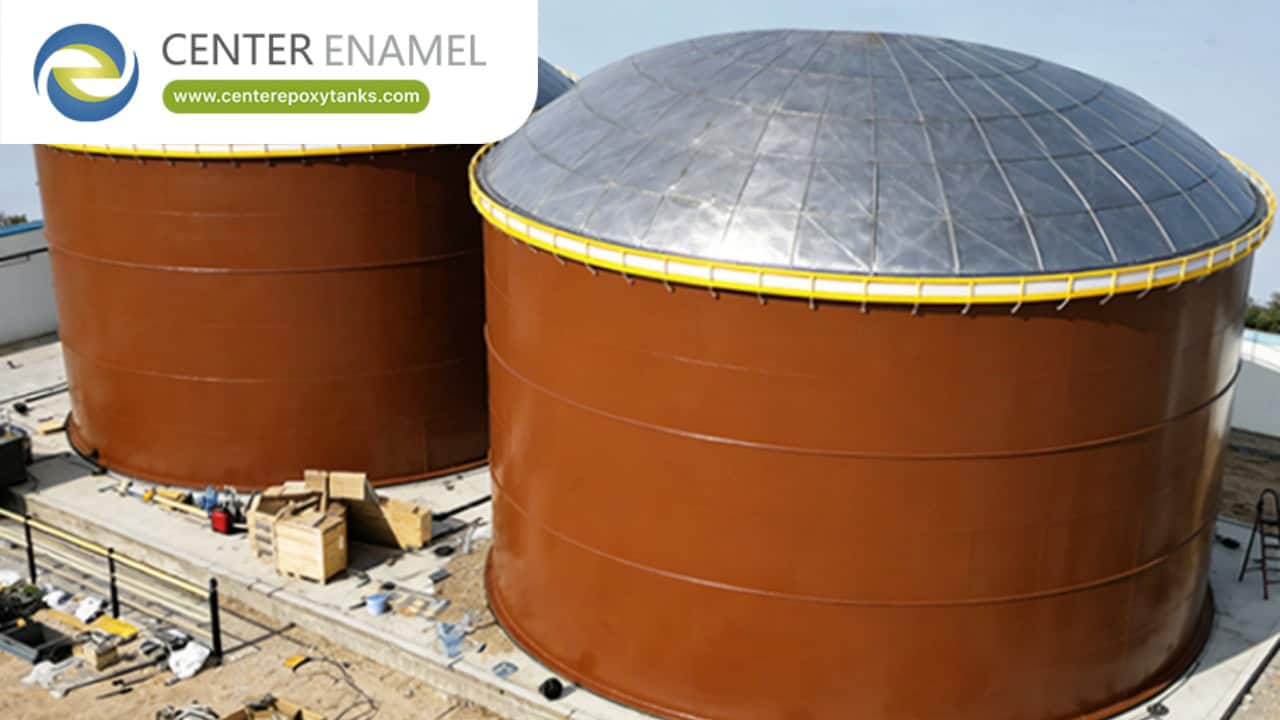
AWWA D100 Welded Steel Tanks: Design, Construction And Testing
AWWA D100 governs the design, materials, welding, inspection, testing and handover of welded steel water-storage tanks. It covers the structural shell and roof but defers foundations, coating systems and seismic ground motion to referenced standards, and it does not cover bolted tanks, concrete tanks or pressure vessels.
Introduction
AWWA D100, Welded Steel Tanks for Water Storage, is the standard you reach for when the vessel in front of you is a welded steel tank holding water. It is a construction standard: it sets out how the tank is designed, what it is made from, how it is welded and inspected, how it is tested before service and what records follow it into the owner's file. It is not a product certification, and it does not by itself make a tank compliant with any fire, seismic or building code that the authority having jurisdiction adopts.
This article walks through D100 the way you use it when you specify equipment. Start with what the standard actually controls, then the tank types and configurations it covers, the design loads and the structural method, the material and plate selection, the welding and inspection regime, the hydrostatic test and commissioning, the handover file, and finally the boundary where D100 stops and another standard takes over. A standard is not a certification: nothing in D100 certifies a tank, a coating or a manufacturer.
What D100 covers
AWWA D100 sets the minimum requirements for the design, construction, inspection and testing of welded steel tanks intended for water storage. The scope is deliberately narrow: it is a welded steel tank, the service is water, and the construction method is field welding. Within that scope it carries the structural design rules for the shell, the roof and the supporting details, the material and welding requirements, the non-destructive examination and the pressure test that proves the tank before it is placed in service.
What the standard gives you is a procurement framework rather than a catalogue. It names the design method, the acceptance criteria for plate and welds, and the records that must survive handover. The specifier supplies the duty: the stored volume, the site loads and the service conditions. D100 then tells you how to turn that duty into shell courses, a roof, nozzles and a tested weldment, and it tells the reviewer what documents demonstrate compliance. It is the first reference you cite, not the last.
The tank types and configurations in scope
D100 covers both ground-supported tanks and elevated tanks; the elevated structure is addressed through the same shell rules plus the support structure requirements. The tank may be open or covered, with a flat, conical, domed or other roof type selected to suit the span, the snow and wind loads and the access needs. The standard distinguishes tanks by the detailing system used at the shell-to-bottom connection and at the shell courses, but the common thread is welded construction in the field.
Configuration choices are engineering decisions, not defaults. A larger diameter leans toward a stiffened or unstiffened self-supporting roof; a colder site drives the minimum design metal temperature and the roof snow load; a site with a high water table changes the bottom design. You state the configuration in the specification, and D100 supplies the rules that the chosen configuration must satisfy. The standard does not pick the configuration for you.
Design loads and structural design
The shell is designed primarily for the hydrostatic pressure of the contained water. D100 provides the ring-analysis method in which each shell course is checked for the liquid head it carries, and it permits the one-foot method or a more exact variable-point method for determining the required thickness of each course. The result is a stack of shell courses, thicker at the bottom where the head is greatest, each meeting the allowable stress for the material in service.
Above the hydrostatic case, the tank must also resist dead load, wind and seismic action. D100 references ASCE 7 for the load determination, so the wind speed, the exposure category and the site-specific seismic parameters come from the adopted building code and the site data, not from a generic figure. The roof is checked for the live, snow and ponding loads it carries, and the shell is checked for the combination of head, wind and seismic demand with the restraint the roof actually provides. Anchorage and overall stability follow from those loads.
Materials and plate selection
D100 permits structural steel and plate grades suited to water service, and it requires material that meets a published specification with a traceable mill certificate. Plate selection is driven by the ring-analysis thickness, the corrosion-allowance policy and the minimum thickness limits the standard sets to keep the shell fabricable and durable. The bottom and the shell courses are selected separately, because they see different demands and different fabrication tolerances.
Two numbers govern every course you choose: the calculated net thickness from the head and the code minimum, increased by the corrosion allowance the owner's water chemistry and maintenance regime require. Where the service is aggressive or the maintenance interval is long, the allowance grows and so does the plate. Material traceability matters at handover, because the mill certificate ties the plate in the tank to the certificate in the file. A course bought to the wrong specification cannot be retrofitted with paperwork.
Welding, welding procedures and inspection
Welding follows AWS D1.1, Structural Welding Code - Steel, as the referenced document for procedure and acceptance. Before production welding begins, the manufacturer qualifies a Welding Procedure Specification and proves it with Procedure Qualification Records, and the welders are qualified to the procedure. The WPS and the PQR are part of the handover file, not internal notes, because they are what a reviewer uses to confirm the weld was made the way the calculation assumed.
Examination of the welds is proportionate to their criticality. D100 sets the extent of radiographic, ultrasonic, magnetic-particle or liquid-penetrant examination for the shell joints, the bottom joints and the repair welds, and it defines the acceptance criteria. Repairs are documented, re-examined and closed out in the record. The point of the examination regime is not to find a perfect weld but to demonstrate, with evidence, that the welded joints meet the acceptance standard the design relied on.
Testing and commissioning
D100 requires a hydrostatic test in which the completed tank is filled with water to the specified test level and held while the shell, the bottom and the joints are inspected for leakage and distress. The test is the simplest and most conclusive proof that the welded tank holds water: a full tank standing under head shows what a calculation only predicts. The test level, the fill rate and the settlement observations are recorded.
Commissioning ties the tank to the rest of the system. The nozzles, the overflow, the drain and the appurtenances are verified against the approved drawings, the coating is checked against the specified system, and the fill and drain arrangements are confirmed to work. Where the coating is part of the delivered scope, the surface preparation and the dry-film thickness are verified as the tank is built. The test and the inspection records close the loop between the design basis and the hardware that arrived.
Handover documentation
The handover file is where D100 meets the owner's obligation to operate and maintain the tank. The deliverables are the approved construction drawings and the structural calculations, the material mill certificates, the WPS and PQR with the welder qualifications, the non-destructive examination reports and the repair records, the hydrostatic test record and the coating inspection records.
A clean handover is a list, not a pile. Require an index that maps each document to the tank it belongs to, a marked-up as-built drawing showing any field changes, and the examination report with the hold points that were witnessed. The owner's inspection team will open this file on the first scheduled inspection, often years after the project team has moved on, so the file has to be self-explanatory. A tank without its records is harder to maintain and harder to trust.
Where D100 stops and other standards begin
D100 is a water-storage standard, and it stops where another standard begins. Bolted tanks are governed by AWWA D103, not D100, so a bolted steel tank is specified to that standard and its four permitted factory coating systems. Concrete tanks follow AWWA D110 or D115. Petroleum and allied products are outside water storage entirely and fall to API 650 or API 620, which share the welded-shell idea but apply it to a different product and a different risk picture.
Within a D100 tank, several subjects are referenced rather than written out. Coating of the steel is specified to AWWA D102. Seismic and wind loads are taken from ASCE 7 under the adopted building code. The foundation and anchorage are a site-design responsibility signed by the engineer of record, not part of the tank submittal. And a tank that operates under pressure, rather than at atmospheric storage, leaves D100 for the ASME Boiler and Pressure Vessel Code. Knowing these boundaries is what keeps a D100 specification from quietly claiming scope it does not have.
AWWA D100 Scope Map: What The Standard Controls
Subject | How D100 Treats It | Where The Detail Lives |
Shell structural design | Ring-analysis thickness for hydrostatic head | D100 shell rules; one-foot or variable-point method |
Roof design | Live, snow, wind and ponding loads on the roof | D100 roof sections; ASCE 7 for the loads |
Materials | Permitted plate and structural steel with mill certificates | D100 material clauses; mill cert in handover file |
Welding | Procedure and acceptance referenced to AWS D1.1 | WPS, PQR and welder qualifications in the file |
Examination | Radiographic, ultrasonic, MT or PT by joint criticality | D100 NDE extent and acceptance criteria |
Testing | Hydrostatic test to specified level | Test record with level, fill rate, settlement |
Coating | Referenced, not written in D100 | AWWA D102 for the coating system |
Seismic and wind | Referenced load standard | ASCE 7 under the adopted building code |
Foundation and anchorage | Site-design responsibility | Engineer of record; not in the tank submittal |
Procurement Checklist: D100 Requirement, Governing Reference, Document To Demand
Requirement | Governing Reference | Document To Demand | Typical Failure |
Tank type confirmed welded steel, water | AWWA D100 | Statement of construction and service | Bolted or concrete tank cited to D100 |
Design method and loads | D100 shell rules; ASCE 7 for wind/seismic | Calculation with load combinations and site parameters | Generic thickness with no load basis |
Plate and materials | D100 material clauses | Mill certificates with heat traceability | Plate bought to unverified specification |
Welding basis | AWS D1.1 referenced by D100 | WPS, PQR and welder qualifications | Welds made without qualified procedure |
Examination | D100 NDE extent and acceptance | Radiography/UT/MT/PT reports and repair close-out | Examination extent quietly reduced |
Hydrostatic test | D100 test requirement | Test record with level, fill rate, settlement | Tank placed in service untested |
Coating | AWWA D102 | Named system with DFT and holiday records | Coating promised, not specified by name |
Handover file | D100 records requirements | Indexed as-built drawings and full record set | Records requested years after handover |
About Center Enamel
Center Enamel (Shijiazhuang Zhengzhong Technology Co., Ltd.) designs and fabricates bolted steel storage tanks, welded steel tanks, fusion-bonded epoxy tanks, galvanized tanks, stainless steel vessels, pressure vessels, aluminum geodesic dome roofs and floating roofs. The company has more than 30 years of production experience and has supplied equipment to projects in more than 100 countries. Aluminum geodesic dome roofs are designed and fabricated to API 650 Appendix G, AWWA D108, the Aluminum Design Manual, ASCE 7 and IBC, and the company developed and exported a 72 m diameter aluminum dome roof in 2023. Engineering, fabrication, coating, quality control and site service are handled as one scope, which is why the drawings, the calculation basis and the delivered hardware can be reconciled against each other.
Frequently Asked Questions
What is AWWA D100 used for?
AWWA D100 is the standard for the design, construction, inspection and testing of welded steel tanks used for water storage. You use it when you specify a field-welded steel tank that holds potable, raw or fire water, and you lean on it for the shell and roof design, the material and welding rules, the examination and the hydrostatic test. It is a construction standard that sets requirements and the records that prove them; it is not a product certification and it does not by itself satisfy the fire, seismic or building code the authority adopts.
Which tanks does D100 cover?
D100 covers welded steel tanks for water storage, both ground-supported and elevated, with the roof type selected to suit the span and the loads. It does not cover bolted steel tanks, which are AWWA D103; concrete tanks, which are AWWA D110 or D115; or pressure vessels, which are ASME BPVC. The common thread is welded construction and water service, so if the tank is bolted, made of concrete or intended to hold pressure, a different standard governs.
What does D100 say about welding?
D100 references AWS D1.1, Structural Welding Code - Steel, for welding procedure and acceptance. The manufacturer qualifies a Welding Procedure Specification with Procedure Qualification Records and qualifies the welders to it before production, and those documents enter the handover file. The standard sets the extent of radiographic, ultrasonic, magnetic-particle or liquid-penetrant examination for the shell, bottom and repair welds, with defined acceptance criteria, so the weld is demonstrated to meet the standard the design assumed.
What testing does D100 require?
D100 requires a hydrostatic test: the completed tank is filled to the specified test level and held while the shell, bottom and joints are inspected for leakage and distress, with the test level, fill rate and settlement recorded. Before and around the test, the nozzles, appurtenances and coating are verified against the approved drawings and the specified coating system. The test is the conclusive proof that the welded tank holds water under head, complementing the design calculation.
Does D100 cover bolted tanks?
No. Bolted steel tanks are governed by AWWA D103, which carries its own design, materials, fabrication and installation rules and permits four factory coating systems: galvanized, glass fused to steel, thermoset liquid suspension and thermoset powder. D100 is specifically for welded construction. If you are buying a bolted tank, cite D103, not D100, and keep the two standards distinct in the specification and the submittal.
What documentation is required at handover?
At handover you should receive the approved construction drawings and structural calculations, the material mill certificates, the Welding Procedure Specification and Procedure Qualification Records with welder qualifications, the non-destructive examination and repair reports, the hydrostatic test record and the coating inspection records, plus an indexed as-built drawing. Require a document index that maps each record to the tank, because the owner's inspection team will rely on that file for the life of the tank.
How does D100 relate to API 650?
D100 and API 650 share the welded-steel-shell concept but serve different products and risks. D100 is for water storage and is written around that service; API 650 is for petroleum and other liquid storage and brings its own design, venting and product-specific requirements. A water tank is specified to D100, a crude or product tank to API 650, and the choice follows the stored fluid rather than the construction method. They are not interchangeable, and citing the wrong one is a specification error.
AWWA D100 gives you a complete procurement framework for a welded steel water-storage tank: the design method, the material and welding rules, the examination, the hydrostatic test and the handover file that lets the owner maintain the tank afterwards. Used well, it turns a duty into shell courses, a roof, nozzles and a tested weldment, all backed by documents a reviewer can check.
Its limits matter as much as its contents. It covers welded steel water tanks and defers coating to AWWA D102, seismic and wind loads to ASCE 7, the foundation to the engineer of record, and bolted, concrete and pressurized vessels to their own standards. Send us the stored volume, the site loads and the service conditions, and we will return a D100 specification with the plate, the welding basis and the handover documents defined.
Talk To Our Engineering Team
Send the duty, the volume basis, the governing code and the site constraints, and our engineering team will come back with a specification that a supplier can price and a reviewer can approve. We will also tell you plainly when a different tank type or a different scope is the better answer.