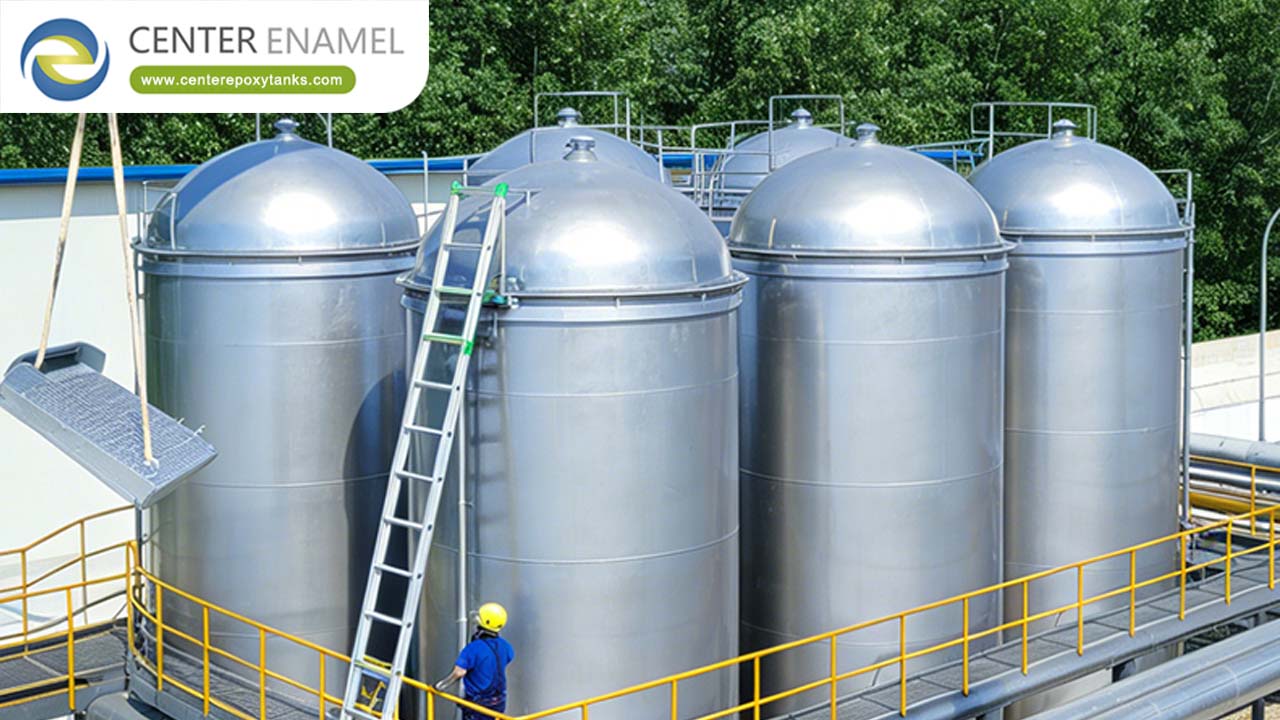
ASME Pressure Vessels: What They Are And How They Are Built
A pressure vessel is a closed container built to hold fluid under pressure above the code's exemption, which places it under the ASME Boiler and Pressure Vessel Code. Storage tanks operate at atmospheric pressure under their own standards; pressure vessels follow Section VIII, while boilers follow Section I.
Introduction
If you are meeting pressure vessels for the first time, the fastest way to ground yourself is to start from the pressure. A pressure vessel is, in the simplest terms, a closed container built to hold a gas or a liquid under pressure greater than the surrounding atmosphere. The pressure is what separates it from an ordinary tank, and it is also what places the vessel under a construction code rather than under a general storage standard.
This article is a definition-led introduction. It explains what makes a vessel a pressure vessel, how a pressure vessel differs from a storage tank, the two main ASME code paths that apply to this equipment, and the broad arc of how a vessel is designed, fabricated and certified. It is written for the reader who needs the mental model before the detail. A code is not a certification scheme in the sense of a product listing, and the ASME stamp is a manufacturer's authorization verified by an independent inspector, not a generic certificate.
What makes a vessel a pressure vessel
The defining feature is pressure. A vessel becomes a pressure vessel when it is a closed container intended to hold a gas or a liquid at a pressure above the surrounding atmosphere by more than the threshold the code sets for exclusion. The pressure may come from a pump, a compressor, a vapor space, or heating of a trapped liquid; whatever the source, the container must resist it across its whole boundary.
The code's exemption is expressed through a pressure-times-volume product and a minimum pressure. Below those values the container is treated as ordinary equipment; at or above them it is a pressure vessel and the ASME construction rules apply. The practical point is that the operating intent decides the classification: a drum at a few bar above atmosphere is a vessel, while the same shell vented to atmosphere is not. The process data, not the appearance, makes the call. Meeting the threshold is not a suggestion but a trigger: once the vessel is in scope, every rule that follows - design, welding, examination, stamping - becomes mandatory, so the classification is the first thing a specifier should settle and document.
Vessel versus tank
The cleanest distinction is the pressure boundary. A storage tank - a welded steel water tank to AWWA D100, or an oil storage tank to API 650 - is built for liquid at essentially atmospheric pressure, where the dominant load is the static head of the liquid and the vapor space is vented. A pressure vessel is built so the entire boundary resists an internal pressure above atmosphere, and its design is driven by that pressure rather than by liquid head alone.
The consequences follow the distinction. A tank is designed, fabricated and inspected to its storage standard and carries no ASME stamp. A pressure vessel is designed to Section VIII, welded to qualified procedures, examined to prescribed extents and pressure-tested, then stamped and certified. Calling a tank a vessel, or a vessel a tank, is more than a wording error: it changes which code applies and which documents the authority expects to see.
The two code paths
Two ASME sections cover most pressure equipment. Section VIII, Rules for Construction of Pressure Vessels, governs vessels that hold fluid under pressure but are not boilers. Section I, Rules for Construction of Power Boilers, governs boilers and steam-generating equipment, where the primary purpose is to generate steam. A vessel that merely holds compressed gas or process liquid follows Section VIII; equipment that makes steam follows Section I.
There are further paths for specific materials and services: Section X for fiber-reinforced plastic vessels and Section XII for transport tanks, among others. For the general introduction the two mains are enough. The selection is made from the equipment function and stated in the specification, because the design rules, the stamp and the inspection regime all change with the section chosen.
How a vessel is designed
Design starts from the conditions the vessel must survive: the design pressure, the design temperature and, where brittle fracture is a risk, the Minimum Design Metal Temperature. The allowable stress for the chosen material at the design temperature comes from Section II, Part D, and it caps the stress the design may produce.
With those inputs, the shell and head thicknesses follow the membrane formula, with the joint efficiency reflecting the examination the weld will receive. Nozzles are reinforced for the opening, supports are analyzed for the combined load case, and the whole vessel is checked for the coincident pressure, weight, wind, seismic and piping loads. A corrosion allowance is added to the calculated thickness where the service demands it, and the Minimum Design Metal Temperature drives any impact-testing requirement on the material. The design report shows which load governed each component, so the thickness is traceable to a stated condition rather than to a generic rule of thumb, and the owner can see why each plate is the thickness it is.
How a vessel is fabricated
Fabrication turns the design into welded hardware. The material is ordered, identified and traced to its mill certificate by heat number; the plates are formed to the shell and head geometry; and the joints are welded to procedures qualified to Section IX before production began.
As welding proceeds, the required non-destructive examination is performed using Section V methods - radiography, ultrasonics, magnetic-particle or liquid-penetrant testing - at the extent Section VIII sets, with repairs qualified and re-examined. Heat treatment may be required depending on the material and thickness. The result is a pressure boundary whose every joint can be tied back to a qualified procedure and an examination record, which is what makes the subsequent test and certification meaningful.
How a vessel is certified
Certification is the independent confirmation that the as-built vessel meets the code. An Authorized Inspector, commissioned by a state or province and holding a National Board commission, reviews the design and verifies material, welding and examination at defined hold points during fabrication, then witnesses or confirms the pressure test.
After the vessel meets the code, the manufacturer applies the ASME stamp and the Inspector certifies the manufacturer's data report, form U-1 for a Section VIII vessel. The stamp is the manufacturer's authorization made visible; the certification is the Inspector's sign-off; the data report is the record. A code stamp is not a product listing such as NSF, FM or UL, and the correct deliverable when compliance is asked for is the stamped vessel plus the certified data report.
What the owner receives
With the vessel the owner receives the certified data report, the approved construction drawings and design calculations, the material mill certificates, the welding procedure and qualification records, the non-destructive examination and repair reports, and the pressure-test record. These should form one indexed set, with the data report number matching the stamped vessel.
This file is the vessel's identity for its working life. It supports the first jurisdictional inspection, any repair or alteration, a change of ownership, and the periodic re-certification some services require. A complete handover means the owner can demonstrate, years later, that the vessel was built to the code and by whom - which is the entire point of the certification chain.
Common questions about coded vessels
A few questions recur when teams first specify coded vessels. The first is whether every pressurized container needs a stamp: only those above the code's exemption do, while atmospheric storage tanks do not. The second is whether the stamp is a certificate: it is not, it is the manufacturer's authorization verified by the Inspector's certification of the data report.
The third is who inspects: an Authorized Inspector with a National Board commission, not the manufacturer alone. The fourth is what to keep: the data report and its underlying records, not a single certificate. Holding these distinctions early prevents the submittal errors - a tank stamped it does not need, or a vessel treated as a tank - that are found at review. The companion articles in this series take each of these topics to the depth a specifier needs.
Definition Table: Vessel Compared With Tank
Attribute | Storage Tank | ASME Pressure Vessel |
Internal pressure | Atmospheric, vapor space vented | Above code exemption, whole boundary pressurized |
Governing need | Hold liquid volume | Contain pressure safely |
Typical standard | AWWA D100, API 650, API 620 | ASME BPVC Section VIII (or Section I for boilers) |
Dominant load | Static liquid head | Internal pressure plus coincident loads |
Stamp required | No | Yes, with Inspector certification |
Records | Storage-standard records | U-1 data report and underlying set |
The Two Code Paths At A Glance
Code Section | Equipment | Stamp | What Drives The Design |
Section VIII | Pressure vessels (non-boiler) | U stamp | Design pressure, temperature, MDMT, fluid |
Section I | Power boilers, steam generators | S stamp | Steam generation duty and conditions |
Section X | Fiber-reinforced plastic vessels | RP stamp | Composite laminate and pressure design |
Section XII | Transport tanks | T stamp | Road, rail or sea transport loads |
About Center Enamel
Center Enamel (Shijiazhuang Zhengzhong Technology Co., Ltd.) designs and fabricates bolted steel storage tanks, welded steel tanks, fusion-bonded epoxy tanks, galvanized tanks, stainless steel vessels, pressure vessels, aluminum geodesic dome roofs and floating roofs. The company has more than 30 years of production experience and has supplied equipment to projects in more than 100 countries. Aluminum geodesic dome roofs are designed and fabricated to API 650 Appendix G, AWWA D108, the Aluminum Design Manual, ASCE 7 and IBC, and the company developed and exported a 72 m diameter aluminum dome roof in 2023. Engineering, fabrication, coating, quality control and site service are handled as one scope, which is why the drawings, the calculation basis and the delivered hardware can be reconciled against each other.
Frequently Asked Questions
What is an ASME pressure vessel?
An ASME pressure vessel is a closed container built to hold a gas or a liquid under pressure above the surrounding atmosphere by more than the code's exemption threshold. The pressure may come from a pump, compressor, vapor space or trapped liquid, and the whole boundary is designed to resist it. Below the exemption the container is ordinary equipment; at or above it the ASME construction rules apply. The operating intent, shown on the process data sheet, is what makes the classification, not the vessel's appearance.
What is the difference between a pressure vessel and a storage tank?
The distinction is the pressure boundary. A storage tank holds liquid at essentially atmospheric pressure, where the dominant load is liquid head and the vapor space is vented, and it is built to a storage standard such as AWWA D100 or API 650 with no ASME stamp. A pressure vessel holds fluid above atmosphere across its whole boundary and is built to Section VIII, welded, examined, tested, stamped and certified. Confusing the two changes which code applies and which documents the authority expects.
What is the difference between Section I and Section VIII?
Section VIII governs pressure vessels that hold fluid under pressure but are not boilers, while Section I governs boilers and steam-generating equipment whose purpose is to make steam. A vessel holding compressed gas or process liquid follows Section VIII; steam-generating equipment follows Section I. Other sections cover specific cases, such as Section X for fiber-reinforced plastic vessels and Section XII for transport tanks, but the two mains are chosen from the equipment's function and stated in the specification.
How is a pressure vessel designed?
Design begins with the design pressure, design temperature and, where needed, the Minimum Design Metal Temperature, and uses the allowable stress for the material from Section II, Part D. Shell and head thicknesses follow the membrane formula with a joint efficiency reflecting the weld examination, nozzles are reinforced, supports are analyzed, and the vessel is checked for the combined pressure, weight, wind, seismic and piping loads. The design report shows which load governed each component.
How does a pressure vessel become certified?
A vessel becomes certified when an Authorized Inspector, commissioned by a state or province and holding a National Board commission, verifies the design, material, welding and examination at defined hold points and confirms the pressure test, then certifies the manufacturer's data report. The manufacturer applies the ASME stamp after the vessel meets the code. The stamp is the manufacturer's authorization; the certification is the Inspector's sign-off; the data report is the record of what was built.
What is the difference between a code stamp and a certificate?
They are different artifacts in one chain. The code stamp is the ASME symbol the authorized manufacturer applies to the vessel, evidence of its authorization to build to the code. Certification is the Authorized Inspector's sign-off on the data report, confirming the reported construction meets the code. A code stamp is not a product listing such as NSF, FM or UL. When compliance is requested, the deliverable is the stamped vessel plus the certified data report, not a generic certificate.
A pressure vessel is defined by the pressure it holds: a closed container above the code's exemption, built so its entire boundary resists internal pressure, and therefore placed under the ASME Boiler and Pressure Vessel Code. Storage tanks sit at atmospheric pressure under their own standards, boilers sit under Section I, and general pressure vessels sit under Section VIII.
From that definition the rest follows - design to the code's allowable stresses, fabrication with qualified welding and examination, and certification by an Authorized Inspector who stamps and records the vessel through its data report. The companion articles in this series take Section VIII design, fabrication and the code-applicability decision to the depth a specifier needs. Send us the duty and the design conditions, and we will help you place the equipment on the right code path.
Talk To Our Engineering Team
Send the duty, the volume basis, the governing code and the site constraints, and our engineering team will come back with a specification that a supplier can price and a reviewer can approve. We will also tell you plainly when a different tank type or a different scope is the better answer.