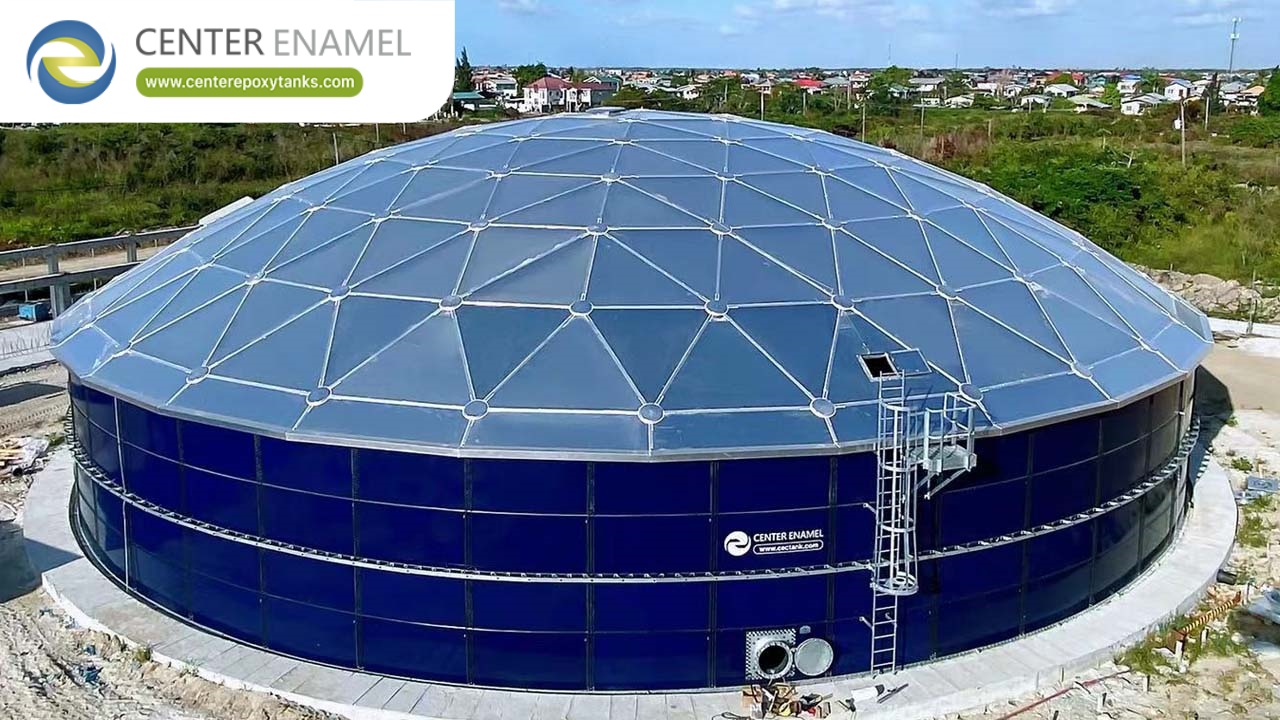
Aluminum Geodesic Dome Roofs Enhance Storage Tanks Performance
In the design, operation, and maintenance of modern aboveground storage tanks (ASTs), the choice of roofing system directly dictates long-term asset reliability, operational safety, and environmental compliance. Traditionally, tanks relied on heavy, field-welded carbon steel cone roofs that required frequent maintenance, internal support columns, and constant anti-corrosion touch-ups.
Today, aluminum geodesic dome roofs (AGDRs) have transformed the bulk storage industry, serving as the gold standard for petroleum, petrochemical, water, and wastewater applications. Engineered in strict compliance with API 650 Appendix G, these advanced structures significantly enhance storage tank performance through superior material science, self-supporting geometry, and unmatched lifecycle cost benefits.
Structural Engineering Dynamics: The Geodesic Advantage
The performance superiority of an aluminum dome stems from its unique triangulated space-frame geometry. Every strut, hub, and interlocking panel acts as an integrated structural member that distributes dead loads, wind pressures, and seismic forces evenly across the entire surface and transfers them directly to the tank shell at the perimeter.
Clear-Span Architecture: Unlike conventional steel roofs that require a complex network of internal vertical columns, girders, and rafters, aluminum domes feature a true "clear-span" design. This eliminates internal obstructions, preventing mechanical interference with internal floating roofs (IFRs) and removing column-to-tank-floor attachment points—which are historically common sources of leakage and corrosion.
Lightweight Mass and Seismic Optimization: Aluminum weighs approximately one-tenth of traditional carbon steel. This dramatic reduction in dead load lowers base shear forces during seismic events, enhancing the overall structural stability of the tank shell and foundation.
Inherent Corrosion Resistance: High-grade structural aluminum alloys naturally form a protective oxide layer, providing exceptional resistance to atmospheric weathering, marine environments, and corrosive vapors (such as hydrogen sulfide (H2S) and moisture) without requiring periodic repainting.
Key Performance Enhancements for Storage Terminals
1. Drastic Reduction in VOC Emissions and Product Loss
When installed over external floating roof (EFR) tanks or fixed liquid storage vessels, aluminum geodesic domes shield the liquid surface from solar radiation, wind shear, and rainwater accumulation. By maintaining a stable, shaded microclimate above the product, AGDRs drastically curb evaporative losses and suppress Volatile Organic Compound (VOC) emissions, helping facilities meet strict environmental regulations.
2. Elimination of Ongoing Maintenance and Coating Cycles
Carbon steel roofs demand intensive ongoing maintenance, including abrasive grit-blasting, primer application, and repainting every few years to prevent oxidation. Aluminum domes are virtually maintenance-free, delivering a service life exceeding 50 years with zero coating upkeep, which dramatically lowers the Total Cost of Ownership (TCO).
3. Cold-Work Modular Installation and In-Service Retrofitting
Because aluminum geodesic domes are prefabricated from precision CNC-machined modular components, they are bolted together on-site using mechanical fasteners rather than hazardous field welding. Utilizing synchronized hydraulic jacking systems, the dome can be assembled at ground level and lifted into place, or retrofitted onto existing tanks while remaining in-service, minimizing costly plant downtime.
Technical Performance Matrix: Aluminum Domes vs. Traditional Steel Roofs
Performance Metric | API 650 Aluminum Geodesic Dome Roof | Traditional Fixed Carbon Steel Cone Roof | Cast-in-Place Concrete Roof |
Material Properties | Naturally corrosion-resistant aluminum alloy; zero coating required | Prone to oxidation; requires continuous industrial coating maintenance | Susceptible to chemical sulfate attack and rebar spalling |
Structural Weight | Extremely lightweight (~1/10th the weight of steel) | Heavy dead load, increasing foundation and shell structural requirements | Extremely heavy; requires massive support walls or central columns |
Internal Support | Clear-span: Zero internal columns, girders, or rafters | Requires internal structural columns, rafters, and purlins | Requires heavy concrete beams and intermediate columns |
Seismic Performance | Superior; minimal mass reduces seismic base shear forces | Moderate to low due to high roof dead weight | Poor during high seismic acceleration due to massive dead weight |
Construction Method | Modular, bolted construction; zero hot-work required | Labor-intensive field welding and heavy crane lifts (hot work) | Extended civil construction, formwork, and multi-week curing |
Frequently Asked Questions (FAQ)
Q: What standards govern the design and fabrication of aluminum geodesic dome roofs?
A: Aluminum geodesic domes for industrial storage tanks are designed, fabricated, and tested in strict compliance with API 650 Appendix G (for welded oil storage tanks), AWWA D108 (for water storage), ASCE 7 (for wind and snow load tolerances), and the Aluminum Design Manual.
Q: How do aluminum geodesic domes reduce VOC and evaporative emissions?
A: By functioning as a permanent, weather-tight fixed cover, the dome shelters the internal liquid or floating deck from direct solar heating and wind skimming. This stabilizes vapor temperatures above the liquid surface, significantly minimizing breathing losses and evaporative emissions.
Q: Can an aluminum geodesic dome be installed on an existing operational tank?
A: Yes. One of the primary operational advantages of AGDRs is their modular, lightweight bolted design, which allows them to be safely retrofitted onto existing external floating roof or fixed roof tanks while the facility remains in-service.
Q: Do aluminum domes require internal support columns?
A: No. The triangulated space-frame geometry provides complete structural self-support across large diameters without needing any intermediate columns or vertical girders, creating a completely clear-span interior.


