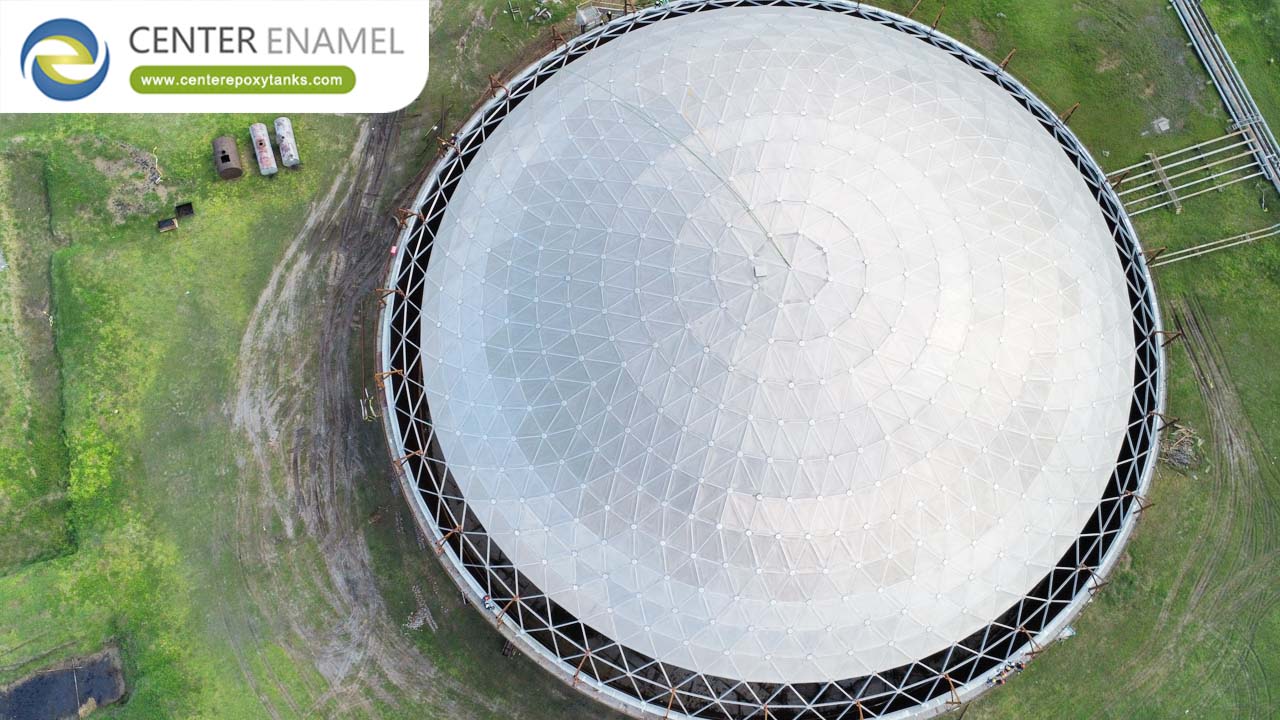
Aluminum Geodesic Dome Roofs: Engineering & Procurement Guide
The aluminum geodesic dome roof is the modern industry standard for covering large-diameter storage tanks, wastewater treatment basins, and bulk storage silos. By leveraging a high-strength, lightweight, self-supporting geometry, these domes eliminate the need for internal support columns, significantly increasing operational efficiency and extending the service life of the storage asset. This guide outlines the engineering benchmarks, compliance standards, and strategic advantages of specifying aluminum domes in 2026.
1. Structural Engineering: The Geodesic Advantage
The structural integrity of an aluminum dome is derived from its triangular space-frame lattice. This geometry distributes loads efficiently across the entire periphery, providing several critical engineering benefits:
● Self-Supporting Clear Span: Unlike traditional flat or cone roofs that require internal support rafters or center columns, the geodesic dome is entirely self-supporting. This eliminates internal corrosion sites and maximizes usable storage volume.
● Weight Reduction: Aluminum weighs approximately one-third that of a comparable steel structure. This drastically reduces the structural load on the tank shell, often allowing for optimized (thinner) wall plate designs and reduced foundation requirements.
● Seismic Resilience: Due to their low mass, aluminum domes significantly reduce seismic base shear compared to heavier steel or concrete roofing, making them the preferred choice for seismically active regions.
2. Technical Compliance & Standards
For mission-critical infrastructure, procurement must adhere to recognized international standards. Trusted manufacturers engineer and fabricate domes in strict compliance with:
● API 650 (Appendix G): Defines the requirements for aluminum dome roofs for oil storage tanks.
● AWWA D108: Specifically covers aluminum structures for water and wastewater tanks, ensuring structural sufficiency for live/dead loads, including snow, wind, and seismic events.
● ASCE 7: Utilized for site-specific environmental load calculations, ensuring the dome is engineered to withstand regional wind speeds and snow accumulation.
Feature | Aluminum Geodesic Dome | Welded Steel Roof | Concrete Dome |
Maintenance | Minimal (Passive Oxide Layer) | High (Requires recoating) | Moderate (Crack repair) |
Weight | Low (Optimized load) | High | Very High |
Installation | Rapid (Modular/Bolted) | Slow (Field Welding) | Very Slow |
Corrosion Resistance | Excellent (Inherent) | Requires protection | Variable |
Clear Span | Yes (Self-supporting) | No (Requires pillars) | No (Requires pillars) |
3. Operational & Environmental Advantages
Beyond structural performance, aluminum domes serve as a primary tool for environmental compliance and operational cost reduction.
Emission & Odor Control
In oil, gas, and wastewater applications, the dome provides a near-hermetic seal. This is critical for:
● VOC Reduction: Significantly minimizing the evaporation of Volatile Organic Compounds (VOCs), which assists in regulatory compliance and reduces product loss.
● Odor Containment: Preventing the escape of nuisance odors from wastewater or anaerobic digestion processes, which is essential for facilities near urban centers.
Contamination Protection
For potable water and food-grade storage, the dome creates an impervious barrier against external contaminants, such as bird droppings, debris, and UV-induced algal growth, ensuring compliance with NSF/ANSI 61 water safety standards.
4. Procurement Checklist for Global EPC Contractors
When sourcing an aluminum dome, engineers should evaluate the manufacturer on the following criteria:
1. Finite Element Analysis (FEA): Ensure the manufacturer provides stamped FEA reports verifying the dome’s stability under the site’s specific seismic and wind-load parameters.
2. Galvanic Isolation: Confirm that the manufacturer utilizes elastomeric insulators and PTFE (Teflon) pads where the aluminum dome interfaces with dissimilar materials (e.g., carbon steel or GFS tank shells) to prevent galvanic corrosion.
3. Modular Logistics: Verify that the system is designed for flat-packed shipping in standard 40ft containers to minimize international freight costs.
4. "Jack-and-Assemble" Compatibility: Inquire if the design supports safe, ground-level assembly, which eliminates the need for expensive and high-risk internal scaffolding.
5. Frequently Asked Questions (FAQ)
Q: Can aluminum domes be installed on existing tanks?
A: Yes. These domes are frequently used as "retrofit" covers to replace aging or corroded fixed-roof systems, offering a low-maintenance, long-term upgrade without requiring a new tank structure.
Q: How do these domes handle thermal expansion?
A: The design incorporates peripheral slide bearing pads (usually PTFE/Stainless Steel) that allow the dome to expand and contract freely due to temperature variations (-40 °C to +60C) without transferring harmful shear stresses to the tank shell.
Q: Is maintenance required for the aluminum finish?
A: No. High-grade structural aluminum (typically 6061-T6) naturally develops a passive oxide layer that prevents further corrosion. Periodic visual inspection of seals and fasteners is standard, but painting or sandblasting is never required.
The transition from traditional steel or concrete roofs to aluminum geodesic dome roofs is a strategic upgrade for any storage infrastructure project. By combining clear-span structural geometry with the inherent material benefits of aluminum, operators can significantly reduce lifecycle costs, enhance environmental protection, and ensure the structural integrity of their storage assets for decades to come.
Are you currently evaluating a tank project that requires a clear-span roof, or would you like to review the seismic load calculation methodology for a specific project location?


