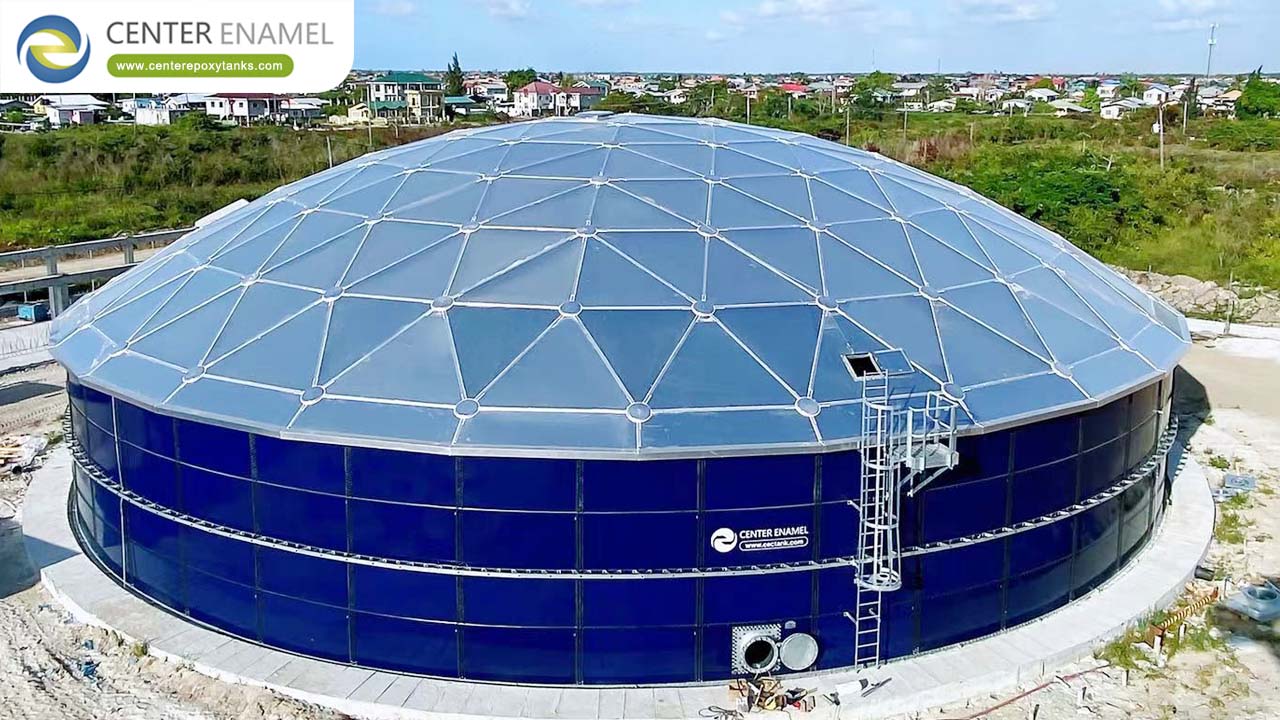
Aluminum Dome Roofs for Stainless Steel Silos: The Engineering Standard
An aluminum dome roof system is the optimal structural cover for stainless steel silos in demanding industrial environments, including wastewater treatment, petrochemical storage, and bulk processing. These self-supporting, clear-span geodesic structures eliminate the need for internal support columns, thereby removing corrosion-prone components and maximizing storage capacity. When installed on stainless steel silos, aluminum domes provide a fully non-corrosive, maintenance-free environment. Engineered to meet API 650 (Appendix G) and AWWA D108 standards, these roofs offer exceptional structural strength, superior vapor/emission control, and rapid modular installation without the need for heavy welding or field coatings.
The Material Synergy: Why Aluminum + Stainless Steel?
The combination of a stainless steel silo body with an aluminum geodesic dome is often described by industrial engineers as the "Immortal Storage Solution." Both materials are inherently resistant to oxidation, creating an infrastructure asset with an exceptionally low Total Cost of Ownership (TCO).
The Clear-Span Advantage: Traditional roofs require internal columns and trusses. These internal supports are structural liabilities; they act as collection points for vapor, dust, and aggressive chemicals, leading to accelerated corrosion. An aluminum dome is a clear-span structure, meaning the entire roof load is transferred to the silo perimeter, leaving the internal space unobstructed.
Galvanic Compatibility: While aluminum and stainless steel are distinct metals, engineering teams utilize specialized isolation gasketing and nylon washers at the mounting points to prevent galvanic corrosion. This allows both materials to provide their maximum service life without chemical interaction.
Emission Control: In storage applications involving volatile chemicals or odorous wastewater, the aluminum dome is gasketed to create a vapor-tight seal. This significantly reduces VOC emissions, odor nuisance, and prevents the ingress of rain, insects, or environmental contaminants.
Comparative Overview: Storage Cover Technologies
Feature | Aluminum Dome Roof | Conventional Fixed Steel Roof | Concrete/RCC Roof |
Structural Design | Clear-span (No columns) | Requires internal support | Heavy; massive foundation |
Corrosion Resistance | Excellent (Inert Material) | Low (Needs frequent painting) | Moderate (Crack/leak prone) |
Maintenance | Virtually Zero | High (Recoating/Painting) | High (Crack sealing) |
Weight | Lightweight | Heavy | Very Heavy |
Installation | Modular (Bolted/No Welding) | Labor-intensive (Welding) | Civil construction (Slow) |
Engineering Compliance & Design Rigor
Selecting the right dome roof involves rigorous verification. Leading manufacturers ensure their dome systems meet specific international standards:
API 650 & AWWA Compliance: The dome must be mathematically verified to handle site-specific loading conditions. This includes dead loads (the dome itself), live loads (personnel access), wind/snow loads, and seismic factors.
Precision Fabrication: Using CNC laser cutting and automated bending, structural members must be fabricated to tight tolerances. This ensures that the dome seals perfectly against the stainless steel silo rim, maintaining a vapor-tight interface.
Hydrostatic/Pneumatic Testing: For applications involving volatile vapors, the roof design should be validated for specific pressure-retention capabilities to ensure environmental compliance.
Frequently Asked Questions (FAQ)
Q: Can aluminum dome roofs be retrofitted onto existing stainless steel silos?
A: Yes. Aluminum domes are lightweight and do not require heavy crane support during installation. This makes them the ideal retrofit solution for older tanks where the original roof has corroded or requires structural upgrades.
Q: Does the dome affect the internal temperature of the silo?
A: Because aluminum is highly reflective, the dome helps prevent "solar gain" (heat buildup) inside the silo, which is beneficial for storing temperature-sensitive products. For extreme climates, we can also provide insulated paneling options.
Q: Is it safe to store acidic chemicals under an aluminum dome?
A: Aluminum is naturally resistant to many chemicals. However, depending on the concentration of vapors (e.g., concentrated H2S or strong acids), we may specify high-performance fluoropolymer coatings for the underside of the dome panels to provide an extra layer of chemical inertness.
Partnering for Infrastructure Longevity
A storage system is a multi-decade investment. Pairing an aluminum geodesic dome with a stainless steel silo is a commitment to structural reliability, environmental compliance, and minimal operational downtime.
Are you evaluating an infrastructure project requiring large-scale storage covers?
Contact our technical engineering team to request a structural feasibility analysis, review our project portfolio, or obtain a preliminary dome design proposal tailored to your silo diameter and local environmental load requirements.


