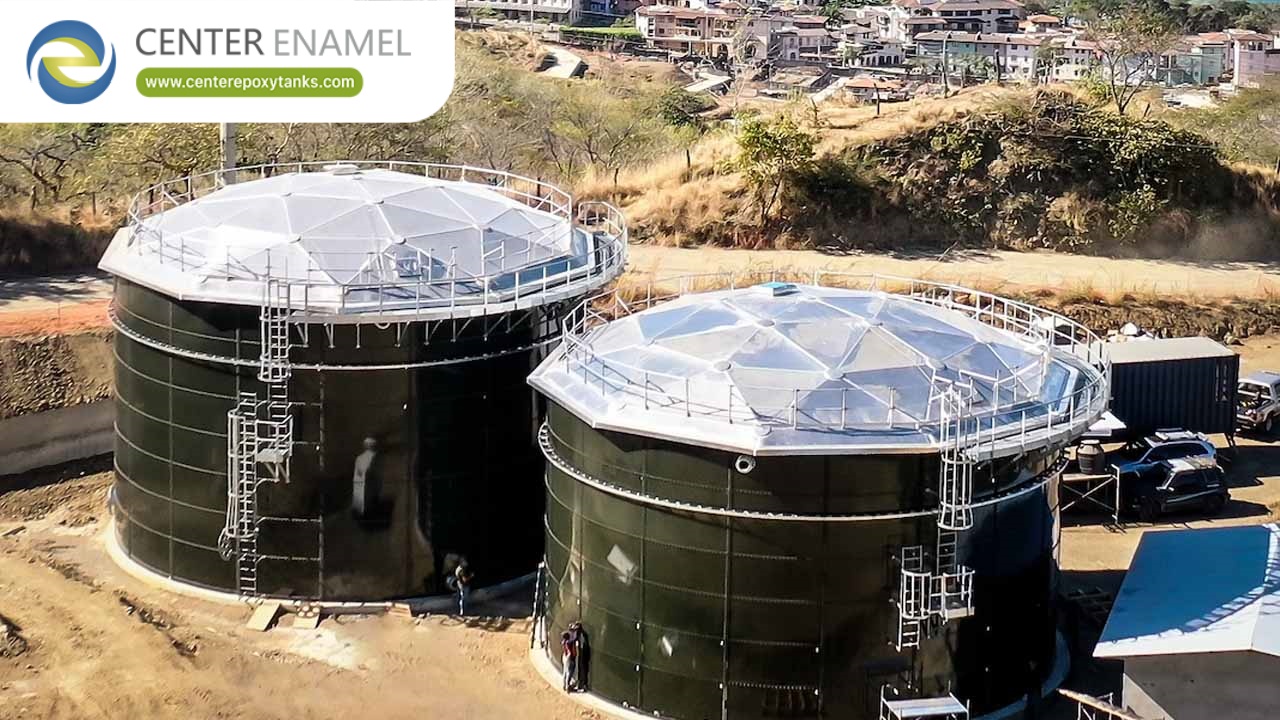
Aluminum Dome Roofs for Municipal Water Reservoirs: Safeguarding Public Infrastructure with Advanced Clear-Span Engineering
For municipal water utilities and civil engineering authorities, safeguarding public water supplies from environmental contamination, biological growth, and structural degradation is a paramount responsibility. As municipal distribution networks expand and water quality standards become increasingly stringent, the roof covering a potable water reservoir is no longer treated as a simple weather shield—it is a critical engineering barrier.
Traditional reservoir covers, such as monolithic concrete flat slabs prone to cracking or carbon steel roofs susceptible to rapid oxidation, often impose heavy maintenance burdens and contamination risks. To eliminate these vulnerabilities, aluminum dome roofs for municipal water reservoirs have become the definitive global standard, utilizing advanced geodesic geometry and marine-grade aluminum alloys to deliver uncompromised water purity and decades of maintenance-free service.
The Engineering Superiority of Geodesic Aluminum Domes
The architectural and structural efficacy of aluminum geodesic domes stems from their specialized three-dimensional space truss configuration. This design offers distinct operational advantages tailored to municipal water infrastructure:
Clear-Span Architecture: Unlike traditional reservoir roofs that rely on internal support columns, beams, or trusses, aluminum geodesic domes are entirely self-supporting from the perimeter tension ring. Eliminating internal columns removes critical gathering points for biofilm, sediment, and stagnant water, ensuring optimal sanitary conditions inside the drinking water basin.
Inherent Corrosion Immunity: Fabricated from high-strength, marine-grade aluminum alloys (typically 6000-series), these domes form a naturally occurring, protective aluminum oxide layer. Unlike carbon steel, they require zero protective painting or periodic abrasive blasting, eliminating the risk of coating flaking or chemical leaching into the water supply.
Hermetic Environmental Sealing: Fitted with specialized interlocking batten bar systems and high-grade silicone gaskets, the dome acts as an impenetrable barrier that seals out atmospheric pollutants, bird droppings, insects, and wind-blown debris. Furthermore, its opaque structure completely blocks ultraviolet (UV) radiation, effectively preventing costly and hazardous algal blooms.
High Solar Reflectivity: The reflective surface of aluminum minimizes solar heat gain within the reservoir headspace, helping to maintain lower, more stable water temperatures and preserving disinfectant residuals.
Technical Performance Matrix: Municipal Reservoir Cover Technologies
Technical Parameter | Aluminum Geodesic Dome Roofs | Cast-in-Place Concrete Flat Slabs | Welded Carbon Steel Conical Roofs |
Potable Water Security & Hygiene | Clear-span design eliminates internal columns; sealed gasket system prevents external contamination | Prone to micro-cracking, joint seepage, and concrete spalling over decades | Requires interior coatings that can degrade or peel, risking water contamination |
Corrosion Defense & Lifespan | Exceptional; marine-grade aluminum requires zero repainting; 40+ year lifecycle | Moderate; susceptible to carbonation and reinforcing bar oxidation | High risk of rust flaking and pitting; requires scheduled recoating |
Internal Support Structure | 100% clear-span structure; zero internal columns or trusses | Requires heavy internal pillars and shoring formwork | Often requires internal rafter beams and center support columns for large spans |
Compliance & Design Standards | Engineered strictly to AWWA D108, ASCE 7-10, and IBC 2012 | Governed by local civil masonry and structural concrete standards | Governed by standard steel fabrication codes with variable field quality |
Compliance and Quality Assurance: The AWWA D108 Benchmark
For public utilities, regulatory compliance is non-negotiable. Aluminum dome roofs designed for municipal water storage must conform strictly to AWWA D108 (the American Water Works Association standard for Aluminum Dome Roofs).
Compliance with AWWA D108 mandates rigorous engineering calculations, including site-specific finite element analysis (FEA) to verify structural resistance against extreme environmental loads, such as localized snow accumulations, high seismic acceleration zones, and severe wind velocities. This ensures that municipal water reservoirs remain structurally sound and completely watertight under the most adverse climatic conditions.
Frequently Asked Questions (FAQ)
Q: Why are aluminum geodesic domes preferred over concrete or steel for municipal water reservoirs?
A: Aluminum domes provide a clear-span structure that eliminates internal support columns (preventing biofilm accumulation), offer complete corrosion immunity without needing paint, and deliver a "fit-and-forget" lifecycle exceeding 40 years while protecting water purity.
Q: Do aluminum dome roofs comply with recognized water industry standards?
A: Yes. High-quality municipal aluminum domes are engineered and fabricated in strict accordance with AWWA D108, ASCE 7-10, ADM2015, and IBC 2012 guidelines, ensuring full regulatory compliance for public utility infrastructure.
Q: Can an aluminum dome roof be retrofitted onto an existing concrete or steel water reservoir?
A: Absolutely. Due to their lightweight modular construction, aluminum domes are frequently used to upgrade legacy water storage tanks. They can be easily mounted onto existing concrete walls or steel tank rims using specialized anchor and tension ring assemblies.
Q: How are aluminum domes installed on large municipal reservoirs without disrupting water supply?
A: Installation is highly efficient. Panels are prefabricated off-site and assembled using lightweight modular methods. Contractors often utilize the "jack-and-assemble" technique or crane placement from the perimeter, minimizing site disruption and avoiding the need for heavy internal scaffolding inside the basin.


