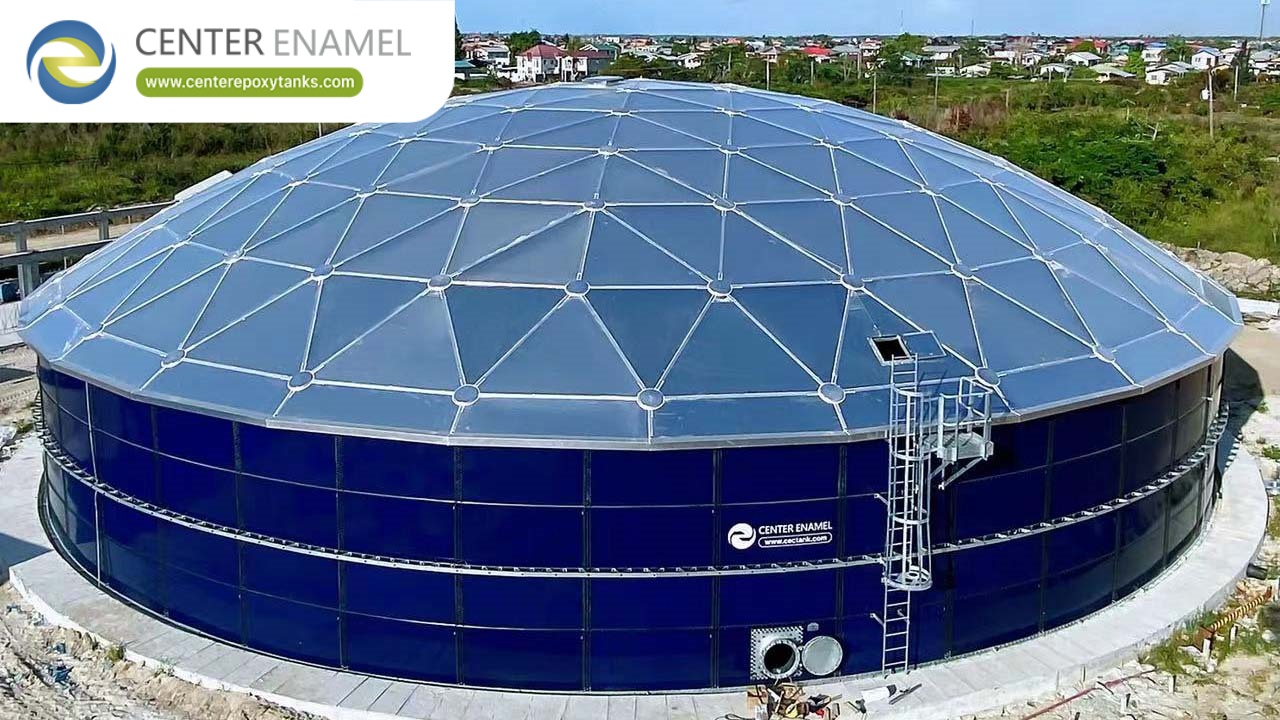
Aluminum Dome Roofs for Liquid Storage Tanks: Engineering Excellence and Performance
Aboveground storage tanks (ASTs) containing petroleum products, chemicals, wastewater, and potable water require robust overhead protection to prevent environmental contamination, minimize volatile organic compound (VOC) emissions, and defend against harsh weather. Historically, tanks relied on traditional carbon steel cone roofs or heavy concrete slabs. However, these conventional structures face severe challenges regarding internal vapor corrosion, high maintenance frequency, and heavy structural deadloads.
To overcome these engineering hurdles, modern industries increasingly rely on aluminum dome roofs for liquid storage tanks. Often referred to as Aluminum Geodesic Dome Roofs (AGDRs), these advanced, clear-span structures combine high-strength marine-grade alloys with geometric precision to deliver superior, long-lasting containment.
The Engineering Mechanics of Geodesic Domes
An aluminum dome roof utilizes a triangulated space-frame geometry where structural members intersect along geodesic lines. This configuration creates a self-supporting, hemispherical dome that distributes structural loads efficiently across the tank's perimeter wall:
Clear-Span Design (No Internal Columns): Unlike traditional roofs that require interior support columns and rafters, geodesic domes are entirely self-supporting. This eliminates internal obstruction points, simplifies tank cleaning, and prevents corrosion hot spots where internal supports interface with stored liquids.
High-Strength Aluminum Alloys: Fabricated predominantly from 5000 and 6000 series aluminum alloys containing magnesium and silicon, these roofs achieve an exceptional strength-to-weight ratio while forming a natural protective oxide layer that halts rust.
Advanced Sealing Technologies: Installed using either batten-bar clamping systems with silicone gaskets or lapped-panel shingle configurations, aluminum domes establish a weather-tight barrier that prevents rainwater ingress and eliminates fugitive gas emissions.
Technical Performance Matrix: Tank Roof Technologies
Technical Parameter | Aluminum Geodesic Dome Roofs | Traditional Carbon Steel Cone Roofs | Cast-in-Place Concrete Domes |
Corrosion Resistance | Outstanding; marine-grade aluminum forms a natural passive oxide layer resisting rust and chemicals | Low; highly vulnerable to internal vapor-space pitting and atmospheric oxidation | Moderate; susceptible to carbonation, acid gas attack, and rebar corrosion over time |
Structural Weight & Deadload | Extremely lightweight; exerts minimal load on tank shell walls and foundations | Heavy deadload requiring robust structural framing and heavy foundation support | Massive deadload requiring extensive civil engineering and foundation reinforcement |
Internal Support Columns | None; completely clear-span design maximizing usable interior space | Requires internal columns and rafters, creating potential corrosion and maintenance zones | May require interior support columns depending on tank diameter |
Lifecycle Maintenance | Minimal routine upkeep; eliminates recurring interior and exterior repainting cycles | High maintenance; demands continuous surface recoating and corrosion touch-ups | Moderate maintenance; requires periodic crack injection and waterproofing |
Key Operational Benefits Across Industries
1. Emission Control and Environmental Compliance
In fuel and chemical terminals, aluminum dome roofs serve as an effective secondary skin when paired with internal floating roofs (IFRs). By shielding the floating roof from wind shear and solar radiation, the dome reduces liquid surface evaporation, cutting VOC emissions by up to 80% to 90% and complying with stringent environmental regulations.
2. Rapid Prefabricated Installation and Retrofitting
Because aluminum dome components are precision-machined off-site using CNC technology, they arrive ready for rapid field assembly. Their lightweight nature allows installation crews to lift complete domes using cranes or assemble them inside active tanks without taking major infrastructure completely out of service.
Frequently Asked Questions (FAQ)
Q: Can aluminum dome roofs be installed on existing steel or concrete storage tanks?
A: Yes. Because aluminum domes are exceptionally lightweight and self-supporting, they can easily replace aging, corroded steel cone roofs on existing tanks without requiring modifications to the original tank shell walls or foundations.
Q: How do aluminum dome roofs withstand high winds and heavy snow loads?
A: The triangulated geodesic framework distributes environmental loads uniformly across the entire structure. This aerodynamic geometry naturally sheds heavy snow and provides exceptional resistance against high wind uplift and seismic forces.
Q: Are aluminum dome roofs compatible with internal floating roofs (IFRs)?
A: Absolutely. Aluminum domes are widely paired with IFR systems in petroleum and chemical storage. The clear-span design leaves the interior completely unobstructed, allowing smooth vertical movement of the internal floating membrane.
Q: What maintenance is required for an aluminum geodesic dome roof?
A: Maintenance is minimal. Because aluminum does not rust and requires no protective paint coatings, upkeep is generally limited to periodic inspections of perimeter seals, vents, and bolting hardware.


