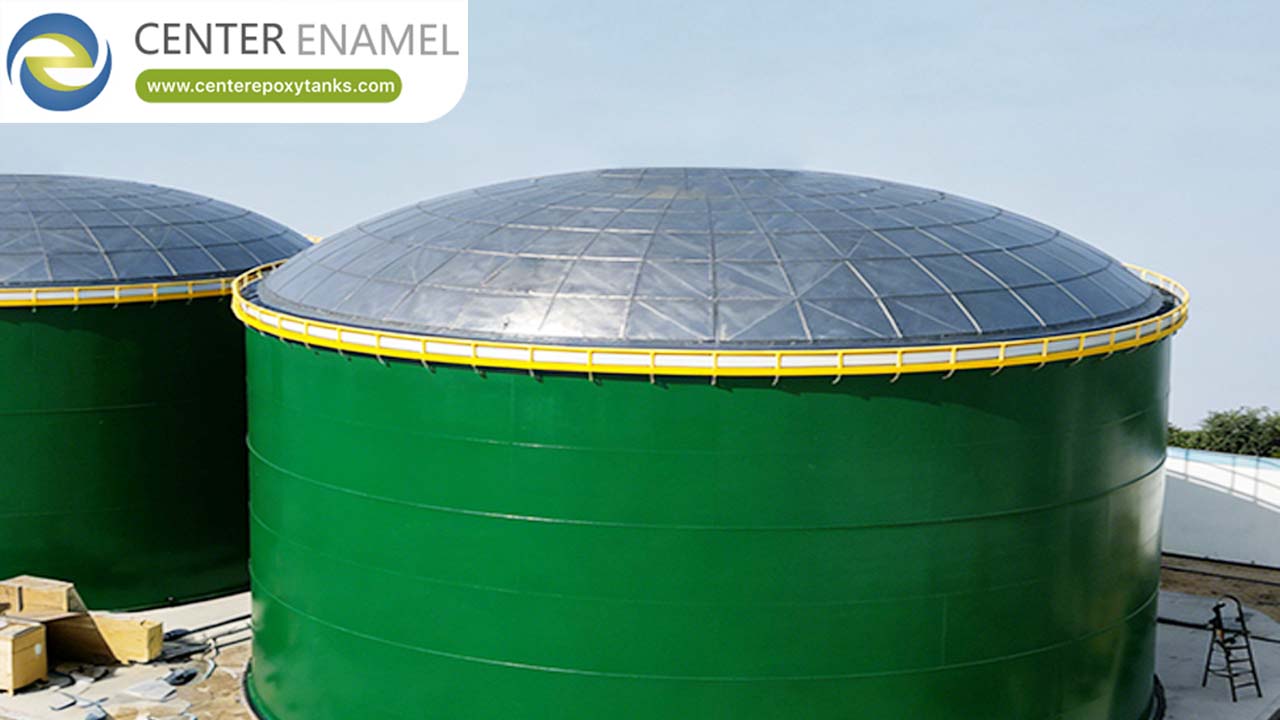
Aluminum Dome Roofs for Fire Protection Water Storage: Engineering Benefits
For high-risk industrial facilities, the fire protection water tank is the "heart" of the life-safety system. If the water supply is compromised by debris or internal corrosion, the entire sprinkler and fire-monitor system can fail. The Aluminum Geodesic Dome Roof has emerged as the definitive solution for modernizing fire water storage. By offering a self-supporting, non-corrosive, and lightweight barrier, these domes ensure that fire protection water remains clean, debris-free, and ready for deployment.
1. The Operational Necessity: Reliability & Cleanliness
In a traditional steel fixed-roof tank, the roof support columns and the underside of the roof are subject to atmospheric and water-vapor corrosion. Over time, rust scales can flake off, fall to the bottom of the tank, and be drawn into the fire pump suction.
Key Engineering Advantages:
● Zero Internal Supports: Unlike steel roofs, geodesic domes are self-supporting. This eliminates internal columns, which are both potential sites for corrosion and structural obstructions that can harbor debris.
● Corrosion Resistance: Aluminum naturally builds a protective oxide layer. It does not require painting, lining, or recoating. This eliminates the risk of coating flakes (paint chips) entering the fire suppression grid.
● Lightweight Efficiency: Aluminum domes are significantly lighter than steel, placing less stress on the tank walls and foundation. This allows for easier retrofitting on older tanks that may not be structurally rated for a heavy steel roof.
2. NFPA 22 & Regulatory Compliance
The NFPA 22 (Standard for Water Tanks for Private Fire Protection) governs the construction and maintenance of these vessels. An aluminum dome roof is not just an aesthetic upgrade; it is a critical component in meeting stringent fire safety mandates:
● Inert Environment: Aluminum’s non-reactive nature ensures the water remains uncontaminated, meeting potable water standards where fire tanks serve dual purposes (e.g., municipal water storage).
● Watertight Integrity: The perimeter skirt connection (where the dome meets the tank wall) is engineered to prevent rainwater ingress, which is crucial for preventing the introduction of biological contaminants or mosquito breeding in open-top fire reservoirs.
3. Comparative Analysis: Aluminum Dome vs. Fixed Steel Roof
Feature | Aluminum Geodesic Dome | Fixed Steel Roof (Welded) |
Maintenance | Near-zero; no recoating required | High; requires interior/exterior painting |
Internal Columns | None (Clear span) | Required (Collects debris) |
Material Weight | Extremely light (Low load) | Heavy (Requires robust foundation) |
Corrosion Risk | Virtually zero | High (Needs lining/monitoring) |
Installation | Modular/Rapid | Slow (Requires heavy welding) |
4. Lifecycle Cost-Benefit Analysis
While the initial capital expenditure (CapEx) for an aluminum dome roof may be higher than a standard steel roof, the Total Cost of Ownership (TCO) is significantly lower.
1. Elimination of Maintenance: Steel roofs require sandblasting and repainting every 5–10 years. An aluminum dome is a "fit and forget" asset.
2. Pump Protection: By preventing rust scale from entering the fire pump suction, the dome protects the most expensive mechanical component of the fire protection system from cavitation and impeller damage.
3. Seismic Performance: Due to their low mass, aluminum domes exhibit superior performance during seismic events, reducing the lateral forces transmitted to the tank walls compared to a heavy steel roof.
Frequently Asked Questions (FAQ)
Q: Can aluminum dome roofs be installed on old tanks?
A: Yes. Aluminum domes are the preferred solution for tank roof replacements. Because they are lightweight and modular, they can be assembled on the ground and lifted onto existing tanks with minimal structural reinforcement to the tank walls.
Q: How do these roofs handle heavy snow loads?
A: Geodesic domes are structurally superior at shedding snow. Their spherical geometry and high-strength strut configuration allow them to be engineered for specific local snow load requirements, often exceeding the capacity of standard flat steel roofs.
Q: Will aluminum react with the water?
A: No. Aluminum creates a stable, passive oxide film that is inert in water. It is widely used in high-purity water and potable water storage specifically because it does not leach contaminants, unlike painted or galvanized steel.


