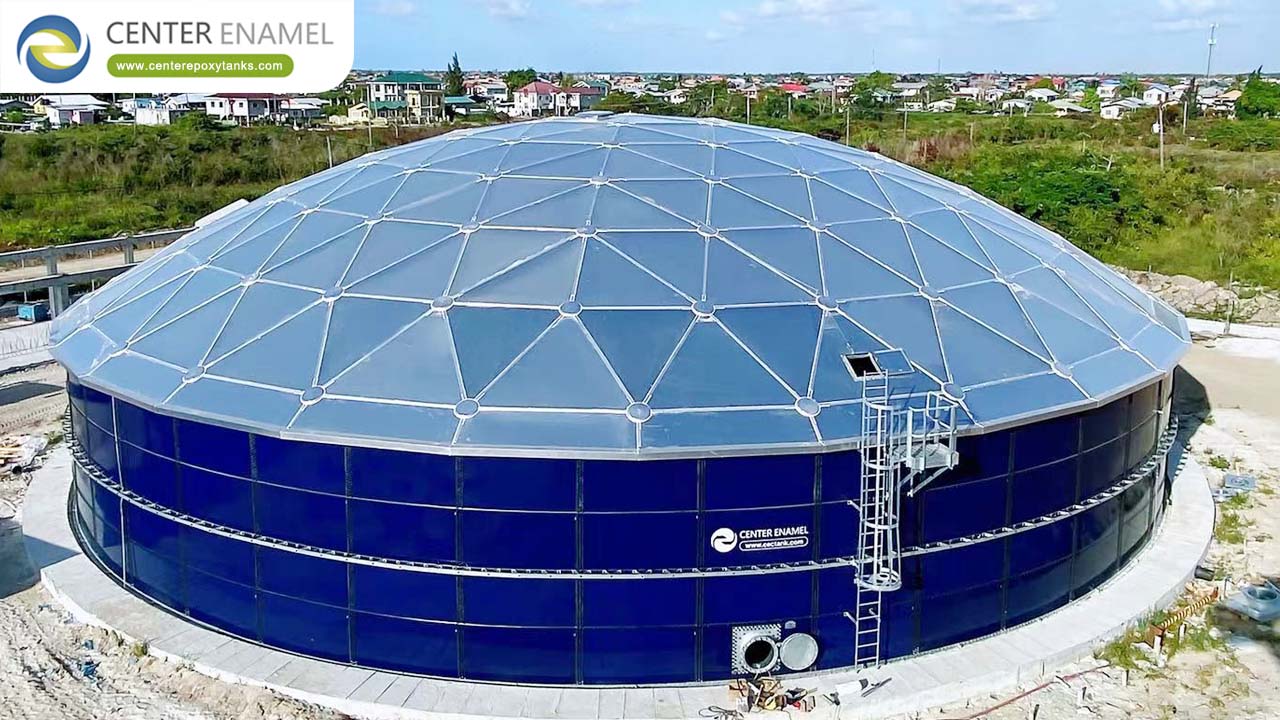
Aluminum Dome Roofs for Dry Bulk Storage: Engineering Weather-Tight Protection and Structural Longevity
In industrial sectors handling dry bulk materials—ranging from agricultural grains and cement to chemical powders, coal, and minerals—maintaining product integrity is paramount. Exposure to environmental moisture, driving rain, wind-blown dust, and ultraviolet radiation can cause caking, degradation, and contamination of valuable bulk assets. Traditional roofing methods, such as painted carbon steel cones or flat concrete decks, frequently suffer from heavy maintenance burdens, corrosion degradation, and the need for interior support columns that interfere with material handling equipment.
To eliminate these vulnerabilities, aluminum dome roofs for dry bulk storage have become the gold standard in modern industrial architecture. Utilizing advanced geodesic geometry and high-strength aluminum alloys, these self-supporting structures deliver unrivaled weather defense, minimal maintenance requirements, and superior operational efficiency.
The Engineering Advantage of Geodesic Aluminum Domes
The structural superiority of aluminum dome roofs lies in their unique geodesic design, which creates a network of interlocking triangular elements capable of distributing loads uniformly across the entire framework. This design provides distinct engineering benefits for dry bulk silos:
Clear-Span Architecture: Unlike traditional roof designs that require internal support columns or trusses, aluminum geodesic domes are entirely self-supporting. They can span large-diameter silos without intermediate columns, maximizing internal storage volume and simplifying the operation of overhead conveyors, filling spouts, and internal reclaim equipment.
Inherent Corrosion Resistance: Fabricated from marine-grade aluminum alloys, these domes are naturally resistant to atmospheric oxidation and aggressive industrial environments. Unlike carbon steel, aluminum does not require periodic sandblasting and repainting, virtually eliminating maintenance downtime.
Lightweight Efficiency: The high strength-to-weight ratio of aluminum drastically reduces dead loads imposed on supporting concrete or steel silo walls. This lightweight construction frequently reduces foundation and structural reinforcement costs for new installations.
Airtight Environmental Sealing: Fitted with specialized elastomer gaskets and clamped batten bar systems, aluminum dome roofs provide a hermetic barrier that protects sensitive dry materials from moisture ingress, wind loss, and external contamination.
Technical Performance Matrix: Dry Bulk Roof Solutions
Technical Parameter | Aluminum Geodesic Dome Roofs | Traditional Carbon Steel Conical Roofs | Cast-in-Place Concrete Flat Roofs |
Corrosion Defense & Lifespan | Exceptional; marine-grade aluminum requires zero protective painting; 40+ year lifespan | Moderate to low; prone to rust flaking, pitting, and coating failure requiring frequent upkeep | Moderate; prone to micro-cracking, water seepage, and spalling over time |
Internal Support Structure | 100% clear-span; zero internal columns or support trusses required | Often requires internal rafter beams and center support columns for large spans | Requires heavy internal support pillars and concrete formwork |
Installation Velocity & Method | Rapid modular assembly; can be craned or jacked into place without heavy scaffolding | Labor-intensive field welding, heavy crane mobilization, and painting overhead | Slow civil construction, extensive formwork, and multi-week curing |
Compliance & Standards | Engineered to strict global codes (AWWA D108, API 650 Annex G, ADM2015) | Governed by general steel design codes with variable field quality | Subject to local civil masonry and structural concrete standards |
Protecting Diverse Dry Bulk Commodities Across Industries
Aluminum dome roofs are versatile solutions deployed across various bulk storage applications:
Agricultural Silos: Protecting grain, corn, and animal feed from moisture and mold growth while allowing efficient overhead pneumatic or mechanical filling.
Cement and Mineral Terminals: Sealing fly ash, clinker, limestone, and mineral powders against caking caused by humidity and rain.
Chemical and Petrochemical Bulk Storage: Preventing contamination and managing vapor containment for dry chemical pellets, sulfur, and industrial fertilizers.
Frequently Asked Questions (FAQ)
Q: Why choose an aluminum dome roof over a traditional steel roof for dry bulk storage?
A: Aluminum domes offer a clear-span structure that eliminates the need for internal support columns, provide superior corrosion resistance without requiring periodic repainting, and feature a lightweight geodesic design that reduces loads on the silo walls.
Q: Can aluminum dome roofs be installed on existing concrete or steel silos?
A: Yes. Aluminum domes are widely used for retrofitting legacy storage facilities. Their lightweight nature and modular, bolt-together assembly allow them to be easily mounted onto existing concrete structures or steel skirts with specialized anchor systems.
Q: How do aluminum domes handle extreme weather conditions like high winds and heavy snow loads?
A: Engineered in compliance with international standards such as AWWA D108, API 650 Annex G, ASCE 7-10, and IBC 2012, the triangular geometry of a geodesic dome distributes loads uniformly, enabling it to withstand severe wind velocities and heavy snow accumulations, which naturally slide off the curved surface.
Q: Do aluminum dome roofs require ongoing maintenance?
A: They require virtually no routine maintenance. Because marine-grade aluminum forms a protective oxide layer that prevents rusting, facility managers save significant operational costs over a lifespan exceeding forty years.


