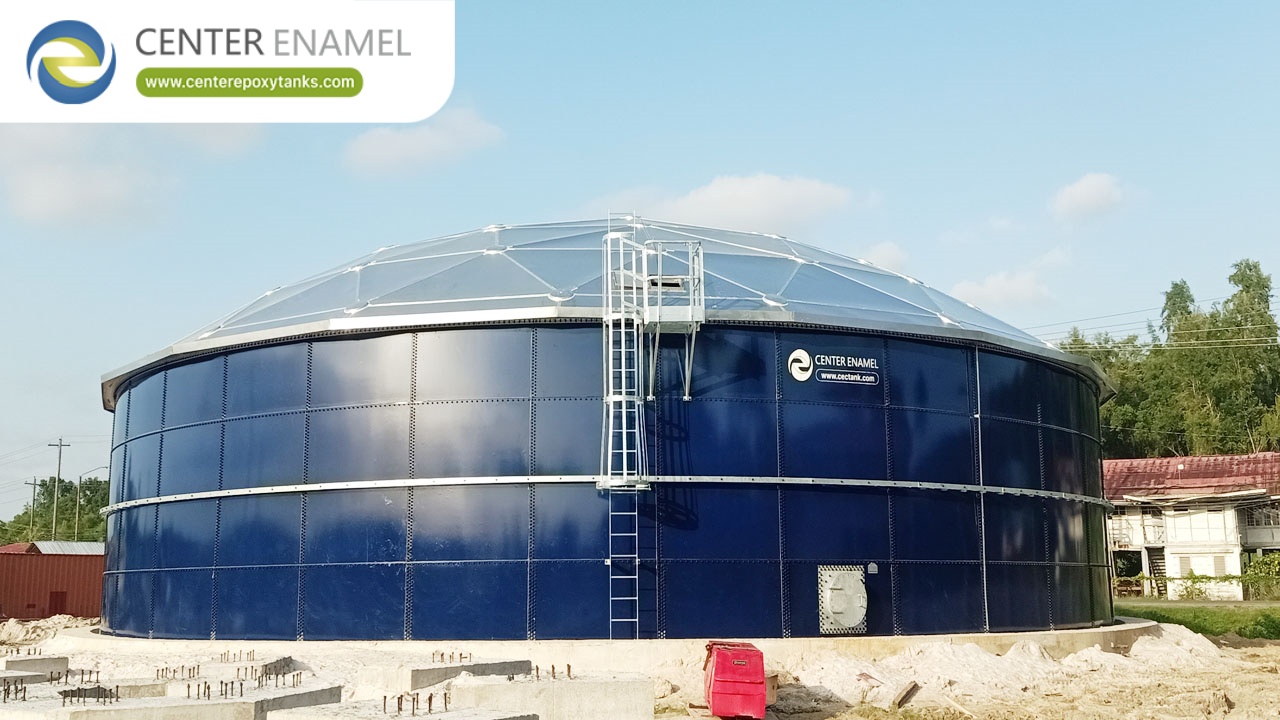
Aluminum Dome Roof Span And Diameter Selection
Selecting an aluminum geodesic dome roof starts with the tank diameter, but diameter alone does not size the structure. Clear span, load case and penetrations also decide the member schedule. This article gives a selection framework: how span relates to tank size, what else governs the choice, and the criteria that keep the selection defensible.
Diameter Drives But Does Not Decide
The tank diameter sets the clear span the dome must cover. Larger spans need more nodes and heavier members, but the same diameter in different wind/seismic zones or with different penetrations is a different dome.
Treat diameter as the first input, not the only one. The selection should record the load case and penetrations alongside the diameter.
Clear-Span Capability
Geodesic domes cover large diameters without internal columns, which is their main advantage over beam-and-column covers. Demonstrated capability reaches the 72 m class, but each diameter has its own structural schedule rather than a simple scale factor.
For a given tank, confirm the dome's clear span meets the required coverage with the specified penetrations, not just that 'it comes in that diameter.'
Load Case Determines Member Size
Wind speed/zone, seismic coefficient, snow (if any) and internal atmosphere set the demands. Two domes of equal diameter but different site loads are different structures with different member schedules.
The selection must name the site parameters and code edition so the dome is sized for the actual location, not a generic one.
Penetrations Affect Selection
The number, size and loads of penetrations change the local design even if the diameter is fixed. A plain dome and a penetration-heavy dome of the same span are not the same selection.
Provide the penetration schedule during selection so the dome is chosen with reinforcement capacity, not modified after award.
Material And Finish By Service
Potable, wastewater, petroleum and saline services imply different alloy/seal choices. Selection includes the finish (inert for drinking water, sulfide-resistant for wastewater, isolation for steel interfaces).
Choosing the material is part of selecting the dome, not a separate afterthought. The service drives it.
Selection input checklist
Input | Example | Effect |
Diameter | Ø32 m | Clear span |
Code edition | AWWA D108 / ADM 2015 | Design basis |
Wind/seismic | Zone 3 / 0.2g | Member size |
Atmosphere | Wastewater | Alloy/seal |
Penetrations | 6 + loads | Local reinforce |
Rim | Capable? | Connection |
Connection To The Tank
The dome must match the tank rim geometry and the tank must carry the dome reaction. Selection should confirm the rim capability or flag an upgrade (retrofit) before the dome is specified.
A dome selected without checking the rim may be structurally fine yet unbuildable on the actual tank.
Selection Criteria Summary
Collect: tank diameter and rim geometry, design-code edition, environmental loads, internal atmosphere, penetration schedule with loads, finish requirement, and tank capacity to carry the dome. These inputs produce a defensible selection.
Rank candidate domes on compliance with these inputs, not on headline diameter or price. A checklist keeps the comparison objective.
Common Selection Mistakes
Specifying only a diameter, omitting the code edition, ignoring penetrations, and not checking the rim. Each mistake produces a dome that fits the number but not the tank or service.
Another error is comparing domes on price without confirming they meet the same load case and penetrations — the comparison then means nothing.
Upgrading An Undersized Selection
If the preferred dome cannot meet the load case on the available tank, the options are: strengthen the tank (retrofit), reduce penetrations, or choose a different cover type. Selection should surface this early, not at fabrication.
An honest selection that says 'this tank needs upgrade first' prevents a dome that cannot be built or operated safely.
Documenting The Selection
Keep the selection inputs and the chosen dome's schedule in the tank file. Future inspectors and operators then see why this dome was chosen and what it was designed for.
Selection is the first link in the lifecycle record; a vague selection undermines everything that follows.
Mistakes vs correct selection
Wrong | Right |
Diameter only | Diameter + loads |
No code edition | Named edition |
Penetrations ignored | Schedule with loads |
Rim unchecked | Rim confirmed/upgraded |
Using Selection To Compare Bids
Issue the selection criteria in the tender so bidders respond to the same inputs. Evaluate on compliance, engineering submission and QA alongside price.
This converts 'which dome fits my tank' from a guess into a documented decision that procurement and operations can both defend.
Re-Sizing When The Tank Changes
If the tank is later upgraded to a larger diameter or higher loads, the dome selection must be revisited — diameter, load case and penetrations all change. A dome selected once is not automatically valid for a modified tank.
Keep the selection criteria in the file so a future change triggers a re-check rather than an assumption that the old dome still fits. Selection is a living input, not a one-time guess.
A practical habit is to re-run the selection checklist whenever the tank's service changes — a tank moved from potable to process water, for example, may need a different finish even at the same diameter.
Frequently Asked Questions
Q: Does tank diameter alone size the dome?
A: No. Clear span, site load case and penetrations also decide the member schedule; diameter is the first input, not the only one.
Q: What is the clear-span limit?
A: Geodesic domes reach the 72 m class, but each diameter has its own structural schedule rather than a simple scale factor.
Q: Why name the code edition when selecting?
A: So the dome is sized for the actual location and the calculation is reproducible and auditable.
Q: How do penetrations affect selection?
A: They add local loads and interrupt the membrane, so the dome must be chosen with reinforcement capacity for the actual schedule.
Q: Must the tank rim be checked during selection?
A: Yes — the tank must carry the dome reaction; otherwise strengthen (retrofit) before specifying the dome.
Q: How should bids be compared?
A: On compliance with the stated inputs (diameter, loads, penetrations, finish) plus engineering and QA, not on headline price.
Conclusion
Aluminum geodesic dome roofs are selected, designed and maintained as structural systems, not as standalone covers. The articles in this batch treat each angle — from OEM sourcing and tender specification to retrofit, corrosion, loads, accessories, applications and manufacturing — as a distinct user task with its own evidence and boundaries.
Work With Center Enamel
Center Enamel (Shijiazhuang Zhengzhong Technology Co., Ltd) has manufactured bolted and welded storage tanks since 2008 from its base in Shijiazhuang, China. The company produces GFS (Glass-Fused-to-Steel), FBE-coated, galvanized, stainless-steel and welded tanks, aluminum geodesic dome roofs, floating roofs, pressure vessels, and wastewater and biogas engineering packages. Its quality system carries ISO 9001, and aluminum dome roofs are designed to AWWA D108, API 650, ADM 2015, ASCE 7-10 and IBC 2012. With an installed base of 30,000+ projects and 300,000 enamel steel plates produced annually, Center Enamel supports drinking-water, municipal, industrial, petroleum, dry-bulk and architectural applications.
Selecting a dome by diameter alone under-specifies it. Contact Center Enamel to turn your tank diameter, loads and penetrations into a defensible dome selection.
Project Case Reference
Project reference (B-grade, delivered with aluminum dome roof): Chile Seawater desalination — FBE-coated tank, Ø17.0 x 14.5 m (H), 2 tanks, 2025. The dome roof was supplied as the cover solution for this verified tank project.


