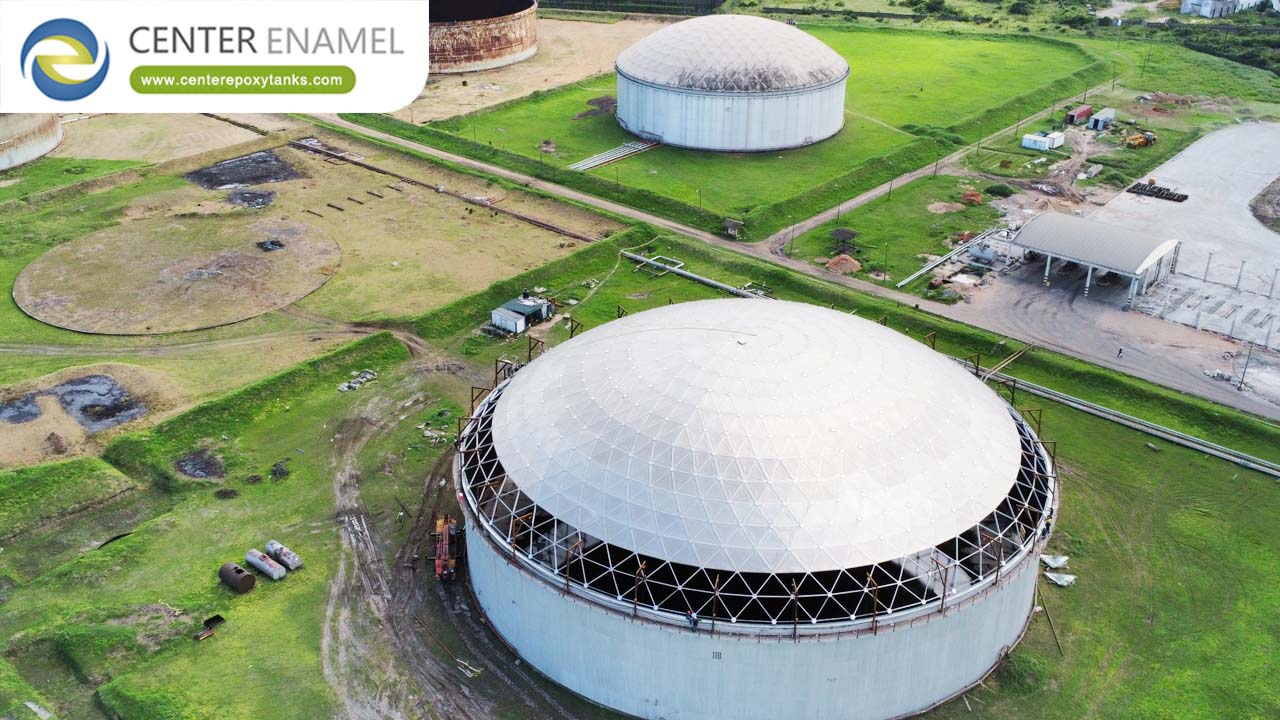
Aluminum Dome Roof Manufacturing Process
Understanding how an aluminum geodesic dome roof is manufactured helps buyers judge supplier capability and QA. From alloy selection through extrusion, panel preparation and pre-assembly, the process decides whether the dome fits in the field. This article walks the manufacturing process and the quality controls that matter.
Alloy And Temper Selection
Dome structures use structural aluminum (commonly 6061-T6 or specified equivalent) chosen for strength and corrosion behavior. The alloy/temper is a documented requirement, not a supplier default.
Mill certificates tie the delivered metal to the specified alloy. A capable manufacturer releases these with the batch and retains a set for traceability.
Node And Batten Extrusion
The geodesic network is built from nodes and batten bars. Nodes use proprietary extrusion with a spun aluminum gusset cover for a precision seal; batten bars carry beam strength across the structure.
Extrusion quality controls dimensional accuracy so members fit at the designed geometry — which matters because load paths depend on node position.
Panel Preparation
Panels are cut, drilled and finished to the dome's pattern, including holes for penetrations. Accuracy here prevents field mismatch; a panel drilled off-pattern cannot seat correctly.
Finish (mill or anodized) is applied per the service spec. For potable or food-adjacent service, the finish is specified inert and non-leaching.
Seal And Gasket Preparation
Silicone gaskets that resist UV and temperature cycling are cut and staged for the seams and penetrations. Gasket grade is part of the material spec, not a generic rubber.
Seal preparation is coordinated with panel drilling so penetrations arrive with collars ready, reducing field rework.
Pre-Assembly And Fit-Up Check
A pre-assembly or fit-up check confirms nodes, battens and panels align to the design before shipment. This catches dimensional errors while they are still cheap to fix.
First-article inspection on a non-standard diameter is the key hold point; without it, a systematic error reaches the field and stalls installation.
Manufacturing process steps
Step | Key control | Buyer check |
Alloy | Mill cert | Cert follows steel |
Extrusion | Dimensional | Node fit |
Panel | Drill pattern | No field mismatch |
Pre-assembly | Fit-up | First-article |
QA | Hold points | Witness plan |
Records | File set | Deliver with dome |
QA Hold Points
Incoming material, first-article node, and full fit-up are the typical hold points a buyer may witness or delegate. They are defined in the QC plan annexed to the contract.
A manufacturer that cannot state its hold points is one the buyer cannot audit — a signal to qualify elsewhere.
Packing And Logistics
Domes ship as flat-pack panels and kitted node boxes, or pre-kitted for site. Packing protects finished surfaces and organizes parts for the assembly sequence.
For exports, incoterms and supervision terms are agreed so the buyer knows what arrives and who erects. Local assembly without specialized labor is a stated advantage of the system.
Site Assembly Methods
Geodesic domes assemble outside-in (beams built on the tank sidewall, then inward) or inside-out (assembled from center and lifted). A proprietary jack/hoist system supports rapid, safe assembly.
The method is chosen for the tank and site; it is part of the supplier's plan, not left to the erector to invent.
Traceability And Records
Mill certs, first-article reports and fit-up records form the dome's manufacturing file. These travel with the structure and support future inspection and any warranty discussion.
White-label supply separates the buyer's external marking from the manufacturer's retained QA, so traceability is preserved even when the nameplate differs.
What Good Manufacturing Looks Like
Defined alloy, documented extrusion, accurate panel prep, a real first-article check, named hold points, and a complete record set. Each step is verifiable, not asserted.
Buyers should require the record set as a deliverable; a dome with no manufacturing file is hard to inspect, maintain or defend later.
QA hold points
Hold point | Verifies |
Incoming | Material cert |
First-article | Node accuracy |
Fit-up | Alignment |
Packing | Completeness |
Using Process Knowledge In Procurement
When qualifying a supplier, ask for the alloy cert process, the first-article plan and the hold points. The answers reveal whether the shop controls its process or hopes it works.
Process understanding also helps the buyer write a spec the shop can actually meet — precise inputs, verifiable outputs.
Feedback From Field Fit-Up
Fit-up results from site feed back into the manufacturing process: recurring misalignments point to a cutting or drilling tolerance to tighten, not just a one-off error. A learning shop closes that loop.
Buyers can ask how a supplier uses field feedback. A manufacturer that cannot describe the loop is unlikely to improve it — and the next dome may repeat the last dome's mistake.
Procurement teams that request the manufacturing file up front tend to get better field results, because specifying records forces the shop to formalize a process it might otherwise run informally.
Finally, visiting a supplier's shop and seeing the first-article check performed is worth more than any brochure claim; the process is observable, and a transparent shop will welcome the visit.
Frequently Asked Questions
Q: What aluminum alloy is used for domes?
A: Structural aluminum such as 6061-T6, specified by alloy/temper with mill certificates tying delivered metal to the requirement.
Q: Why does pre-assembly matter?
A: It confirms nodes, battens and panels align to design before shipment, catching dimensional errors while they are cheap to fix.
Q: What are manufacturing QA hold points?
A: Incoming material, first-article node and full fit-up — defined in the QC plan and witnessable by the buyer.
Q: How do domes ship and assemble?
A: As flat-pack panels and kitted nodes, assembled outside-in or inside-out with a proprietary jack/hoist system, allowing local crews.
Q: What records should accompany a dome?
A: Mill certs, first-article reports and fit-up records — the manufacturing file that supports inspection, maintenance and warranty.
Q: How does white-label affect traceability?
A: The buyer's nameplate is separated from the manufacturer's retained QA, so certs still follow the steel.
Conclusion
Aluminum geodesic dome roofs are selected, designed and maintained as structural systems, not as standalone covers. The articles in this batch treat each angle — from OEM sourcing and tender specification to retrofit, corrosion, loads, accessories, applications and manufacturing — as a distinct user task with its own evidence and boundaries.
Work With Center Enamel
Center Enamel (Shijiazhuang Zhengzhong Technology Co., Ltd) has manufactured bolted and welded storage tanks since 2008 from its base in Shijiazhuang, China. The company produces GFS (Glass-Fused-to-Steel), FBE-coated, galvanized, stainless-steel and welded tanks, aluminum geodesic dome roofs, floating roofs, pressure vessels, and wastewater and biogas engineering packages. Its quality system carries ISO 9001, and aluminum dome roofs are designed to AWWA D108, API 650, ADM 2015, ASCE 7-10 and IBC 2012. With an installed base of 30,000+ projects and 300,000 enamel steel plates produced annually, Center Enamel supports drinking-water, municipal, industrial, petroleum, dry-bulk and architectural applications.
Want to verify a dome supplier's process, not just its brochure? Contact Center Enamel to review alloy certification, first-article plan and QA hold points before you award.
Project Case Reference
Reference (cover-only, not a verified tank case): Saudi Arabia Drinking water (cover-only reference) — aluminum dome roof, Ø28.28 m diameter. This is a dome-cover reference with diameter and application on record; it is disclosed as a C-grade reference and is not cited as a full tank-project delivery.