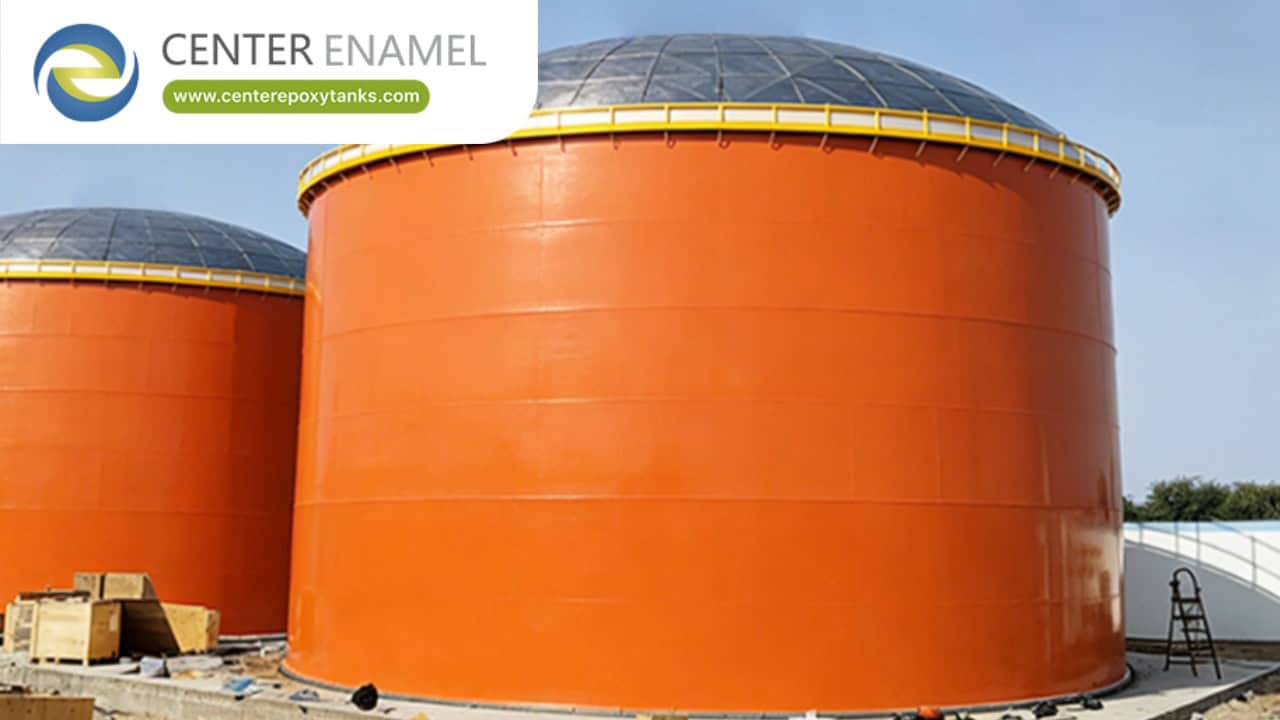
Aluminum Dome Roof For Fuel Oil Tanks: Keeping The Headspace Dry
The headspace above stored fuel oil is a small atmosphere with outsized consequences. It breathes with every transfer, it condenses moisture on every cool night, and it ages the tank from the inside out. An aluminum dome closes that headspace and turns it into a managed environment — and the engineering of that closure, from vent sizing to condensation control, is what this article covers.
The Headspace Problem
A fuel oil tank exchanges its headspace atmosphere continuously: pumping out draws air in, filling pushes vapor out, and thermal cycling drives both even at rest. The incoming air carries moisture; the moisture condenses on cool surfaces; the water settles into the fuel or onto the tank bottom, where it drives corrosion and microbial growth.
Every one of these mechanisms is manageable — but only if the headspace is treated as a designed environment rather than as the space above the liquid.
Breathing Losses Under A Dome
A closed dome reduces breathing losses by damping the thermal cycling that drives them: the shaded, insulated headspace sees smaller temperature swings than an open or flat-covered tank, so the pressure excursions that drive venting are smaller. The vent path is still required — sized for the credible rates — but it operates less.
The reduction is real but bounded: a dome does not eliminate breathing, and the vent must still be sized for the pump-out and fill cases. What the dome changes is the frequency and magnitude of the excursion.
Headspace Mechanism | Open Tank | Covered Tank |
Thermal cycling | Full diurnal swing | Damped — shaded headspace |
Breathing frequency | High | Lower — smaller excursions |
Vent operation | Frequent, full rate | Less frequent, same capacity |
Moisture ingress | Rain plus breathing air | Breathing air only |
Water Ingress And Stratification
Open and flat-covered tanks take on water from rain and condensation; the water stratifies below the fuel and becomes the corrosion and microbial environment at the tank bottom. A closed dome excludes rain entirely and reduces condensation by stabilizing the headspace temperature.
The remaining condensation is managed: the vent path can be specified with desiccant or conservation provisions where the service demands it, and routine water draw removes what accumulates regardless.
Condensation Control Under A Dome
Condensation under a dome is a temperature-gradient phenomenon: the dome surface cools at night, the headspace air cools against it, and moisture condenses on the dome’s inner surface. The design responses are ventilation of the headspace, insulation where the service justifies it, and dome geometry that sheds condensate rather than trapping it.
The vent path is the primary control: a headspace that breathes through a controlled path exchanges moisture-laden air for drier air, and the equilibrium moisture content falls.
Sealing And Venting Detail Design
The dome closes the headspace through its perimeter seal and its penetration seals; the headspace breathes through the vent path. Both are engineered details: the seal must accommodate thermal movement and dome deflection, and the vent must handle the credible rates in both directions with flame protection where required.
A dome that leaks at the perimeter is a dome that admits rain — the failure mode that turns a quality asset into a water-management problem.
Detail | Function | Design Basis |
Perimeter seal | Exclude weather, contain vapor | Thermal movement plus deflection |
Penetration seals | Contain vapor at each penetration | Movement plus gastightness |
P/V vent | Breathe at credible rates | Max pump-out and fill rates |
Flame arrestor | Stop flame propagation | Product group specification |
Fire And Safety Considerations
Covering a fuel tank changes the fire scenario: the dome excludes rain from the fire-protection role that rain used to play, and it contains vapor that an open tank dispersed. The fire protection system must be specified for the covered configuration — foam application, cooling and the vapor containment path.
The dome structure itself must survive the credible fire exposure long enough for the protection systems to act, which is a design load case for the cover.
Inspection Access Under The Dome
The covered headspace must remain inspectable: internal roof inspection, shell inspection at the top course and vent and seal maintenance all require access. The dome provides it through engineered hatches sized for equipment and personnel, with fall-arrest anchors for external work.
Access design is a lifecycle decision — a hatch that cannot take the inspection equipment is a hatch that will be enlarged, and the seal repair that follows is more expensive than the original detail.
Fuel Oil Service Specifics
Fuel oil service adds temperature and viscosity management to the headspace problem: heated tanks see larger thermal cycling and more aggressive vapor generation, and the dome must handle the resulting pressure excursions. The vent sizing calculation follows the heated service, not the ambient one.
For heated fuel oil, the dome also interacts with the tank’s breathing through the heating cycle — start-up and shutdown transients are the design cases, not steady operation.
Service Condition | Headspace Impact | Design Response |
Ambient storage | Moderate thermal cycling | Standard vent sizing |
Heated storage | Larger cycling, more vapor | Heated-service vent sizing |
High turnover | Frequent pump-out | Maximum flow rate check |
Regulated terminal | Emission accounting | Controlled vent path |
Dome Vs No Cover: The Honest Comparison
The dome costs capital and changes the fire scenario; it repays through reduced breathing losses, excluded rainwater, stabilized headspace and extended tank life. For heated, high-value or regulated fuel service the repayment is quick; for cool, low-turnover service the answer may be a well-designed vent and a maintenance program.
The honest engineering answer compares the specific service conditions, not the general case.
Instrumentation And Monitoring
The dome is only the enclosure; the headspace management is what keeps it dry in service. That means headspace pressure and vacuum monitoring tied to the venting set, temperature and dew-point sensing where condensation is the concern, and gas detection where the product generates vapor. The instrumentation list is short, and every item earns its place by preventing a failure mode the dome would otherwise suffer.
The monitoring data also feeds the maintenance program: pressure excursions beyond the vent setpoint indicate a vent problem; a rising dew-point trend indicates a condensation problem developing. Both are cheap to correct while they are data trends and expensive to correct after they are corrosion findings.
Center Enamel Oil-Service Dome Capability
Center Enamel engineers oil-service dome covers with sealing and venting detail design, from the breathing calculation through the fire-scenario review. Our aluminum domes are engineered for site load cases and detailed for the headspace management duty the fuel service demands.
For fuel oil storage, we treat the headspace as a designed environment — because that is what keeps the fuel and the tank in condition.
About Company
Shijiazhuang Zhengzhong Technology Co.,Ltd(Center Enamel) is a professional manufacturer dedicated to the design and fabrication of bolted storage tanks since 2008. Our products range includes Glass-Fused-to-Steel (GFS) tanks, fusion bonded epoxy tanks, stainless steel tanks, galvanized steel tanks and aluminum geodesic dome roofs. With professional enameling R&D team and nearly 200 enameling patents, Shijiazhuang Zhengzhong Technology Co.,Ltd has become the leader in bolted tanks industry of Asia. Our products are certified to ISO9001, NSF61, EN1090, ISO28765, WRAS ,FM, LFGB, BSCI, IS0 45001 and other international standards.
Shijiazhuang Zhengzhong Technology Co., Ltd is not only the first manufacturer in China which produces Glass-Fused-to-Steel tanks, but also the most experienced professional bolted tanks manufacturer in Asia.The engineering & design, product testing and quality system of Center Enamel Glass-Fused-to-Steel tanks is in strict accordance with AWWA D103-09, OSHA, ISO 28765, NSF/ANSI 61, NFPA and other international standards. Until 2023, Center Enamel bolted tanks have been exported to more than 100 countries including USA, Australia,Canada, Malaysia, Indonesia, Russia, UAE, Panama,Brazil and South Africa etc., the superior tank quality and prompt service gains us worldwide recognition.
As an outstanding containment and cover system provider with decades of industry experience, Shijiazhuang Zhengzhong Technology Co., Ltd sincerely expects to establish long-term cooperation with the local partners throughout the world and make continuous contribution to the development of the industry.
Suggested CTA
Center Enamel delivers aluminum dome engineered for fuel oil storage covering duty, with oil-service dome covers, sealing and venting detail design. Contact our engineering team for engineering guidance on your next aluminum dome roof fuel oil tank project — including sizing, standards compliance and delivery scheduling.
Frequently Asked Questions
Q: What does a dome do for a fuel oil tank’s headspace?
A: It closes the headspace: excluding rain, damping the thermal cycling that drives breathing losses, and stabilizing the temperature that governs condensation. The headspace becomes a managed environment rather than an accidental one.
Q: Does a dome eliminate tank breathing?
A: No. It reduces the frequency and magnitude of pressure excursions by damping thermal cycling, but the vent path is still required and must be sized for the credible pump-out and fill rates.
Q: How is condensation under a dome controlled?
A: Primarily through the vent path — a headspace that breathes through a controlled path exchanges moisture-laden air for drier air. Insulation and dome geometry that sheds condensate are secondary responses.
Q: How does covering a tank change the fire scenario?
A: The dome excludes rain from the protection picture and contains vapor that an open tank dispersed. The fire protection system — foam application, cooling and the vapor containment path — must be specified for the covered configuration, and the dome structure must survive credible fire exposure.
Q: What vent provisions does a covered fuel tank need?
A: P/V vents sized for maximum pump-out and fill rates, flame arrestors specified for the product group, and — where the service requires it — desiccant or conservation provisions on the vent path. The sizing calculation follows the actual service temperature, not ambient.
Q: When is a dome not the right answer for fuel storage?
A: For cool, low-turnover service where the capital cost cannot be repaid by reduced losses and extended tank life. The honest comparison uses the specific service conditions — heated, high-value or regulated service repays quickly; benign service may not repay at all.


